Dossier de presse no. 2121-02
Journalistes! Découvrez ce projet prêt à publier. Créez gratuitement un compte média v2com pour télécharger les images haute résolution.
Créez un compte média
Dossier de presse | no. 2121-02
Communiqué seulement en anglais
Piezoelectric Trolleybus Gardens
Margot Krasojević Architects
Harnessing vibrational kinetic movement to produce electricity
The Piezoelectric trolleybus gardens project is the second in a series of three proposals for the city of Belgrade using Piezoelectric semiconducting cells, the first, designed in 2008 was for the Piezoelectric playground in Pionirski park, Belgrade. Both projects use vibrational energy as a type of kinetic movement which generates electrical energy.
The city of Belgrade uses trolleybuses as one of it's major modes of public transport with an extensive route infrastructure stretching across the city and it's suburbs. Trolleybuses are electric vehicles making them more environmentally friendly and more responsive to pollution control than individual cars exhausting noxious gases at street level.
A trolleybus uses spring loaded trolley poles to draw power from overhead wires, which complete the electrical circuit by transferring electricity from a "live" overhead wire to the control and the electric traction motors of the trolley bus, acting as a type of current collector, this is where the idea for the design began.
The architecture uses printed piezoelectric cells which are embedded into the helix structure and the suspended cluster of conducting wires which connect the building to Belgrade's trolleybus infrastructure of overhead power lines. Piezoelectric materials generate electrical energy when subjected to mechanical strain, vibrational-energy harvesting is used in this design, generated by trolleybus pulses and kinetic movement as they pass through the station, rain falling onto the cluster of suspended cables within the terminal design itself and wind energy.
The piezocells are stacked within the folded cross section further increasing the vibration within the structure, in turn amplifying the electrical output; the design acts as an electrical amplifier, providing street lighting, Internet WiFi access for immediate neighborhoods; acting as an adaptive power port enabling commuters to charge mobiles and smart cars at these trolleybus station gardens. The generated electric current is used to stimulate roots and plant growth, the park next to the terminal benefits as the trolleybus terminal powers the irrigation sprinklers.
The trolleybus garden acts as a capacitor and transistor to step up the harnessed electrical energy, transforming AC current from the piezoelectric cells to DC current before it can be cached in the capacitors contained within the building ready for distribution.
Margot Krasojevic has been developing a dialogue between architectural form, geometry, sustainability and smart materials as an inherent part of the design process, dictating the terms of the architectural design criteria rather than referring to sustainable technology as a polite afterthought. Renewable energy and how to optimize the collaboration between program, typology and architecture has always been at the forefront of the studio's research and design approach. Following her Masters and Ph.D in 1997 and 2003 respectively architecture has become the tool through which to explore environmental change and renewable energy sources.
Pour plus d’informations
Contact média
- Margot Krasojevic Architects
- Dr. Margot Krasojevic
- margot@decodeine.org
- 00442089956651
Pièces jointes
Termes et conditions
Pour diffusion immédiate
La mention des crédits photo est obligatoire. Merci d’inclure la source v2com lorsque possible et il est toujours apprécié de recevoir les versions PDF de vos articles.
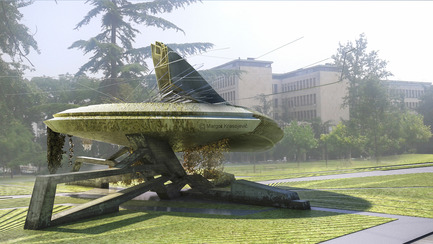
Image moyenne résolution : 10.0 x 5.63 @ 300dpi ~ 3,7 Mo
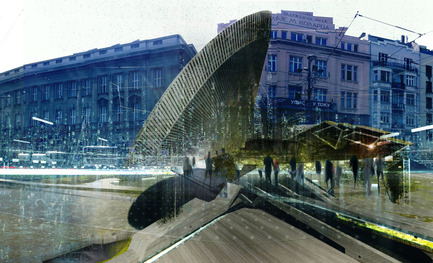
Image moyenne résolution : 6.67 x 4.05 @ 300dpi ~ 520 ko
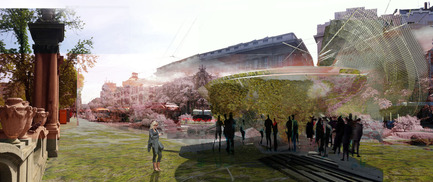
Image moyenne résolution : 6.67 x 2.8 @ 300dpi ~ 400 ko
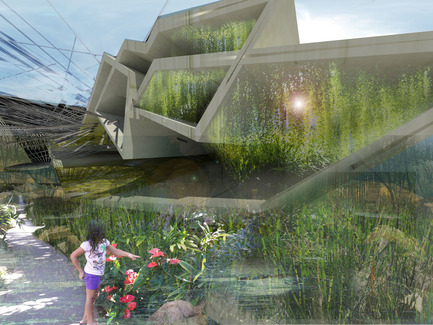
Image moyenne résolution : 6.67 x 5.0 @ 300dpi ~ 650 ko
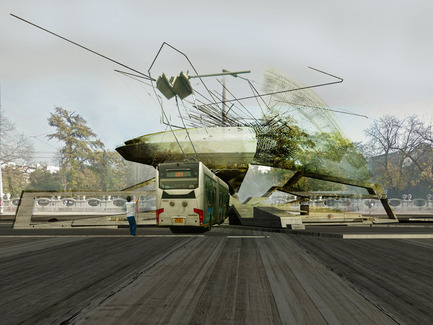
Image moyenne résolution : 6.67 x 5.0 @ 300dpi ~ 550 ko
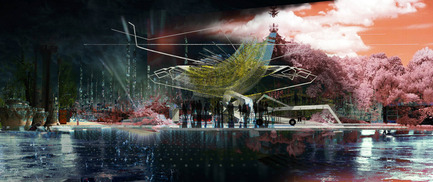
Image moyenne résolution : 6.67 x 2.8 @ 300dpi ~ 290 ko
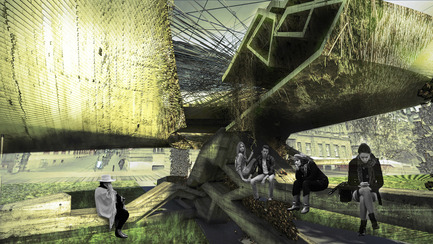
Image moyenne résolution : 6.67 x 3.75 @ 300dpi ~ 890 ko
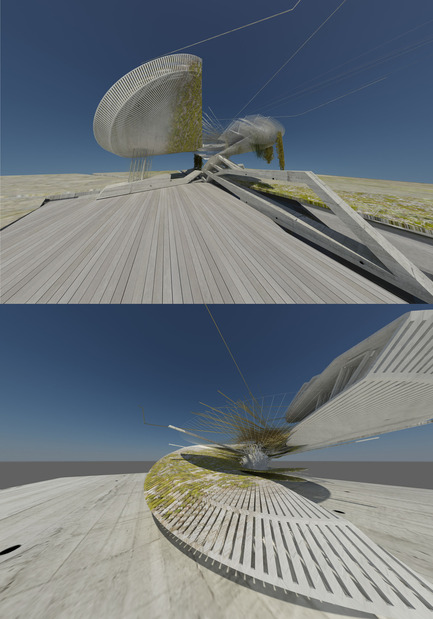
Image moyenne résolution : 6.67 x 9.52 @ 300dpi ~ 700 ko
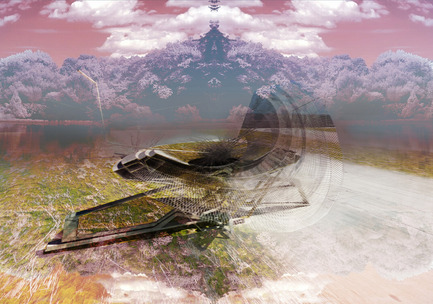
Image moyenne résolution : 6.67 x 4.68 @ 300dpi ~ 700 ko
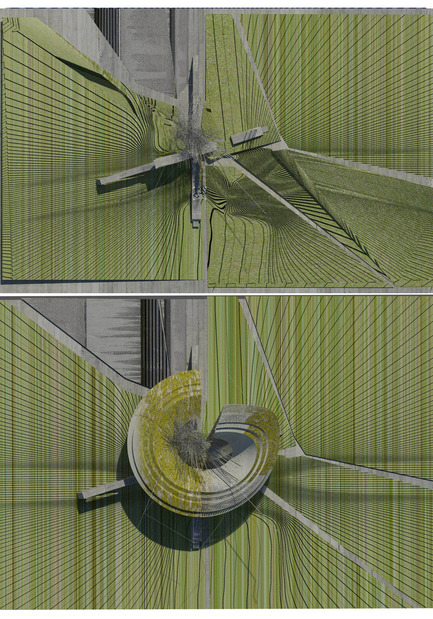
Image moyenne résolution : 5.0 x 7.14 @ 300dpi ~ 740 ko
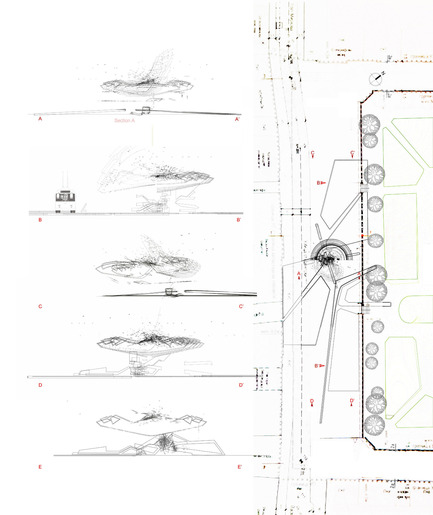
Image moyenne résolution : 6.67 x 7.93 @ 300dpi ~ 500 ko
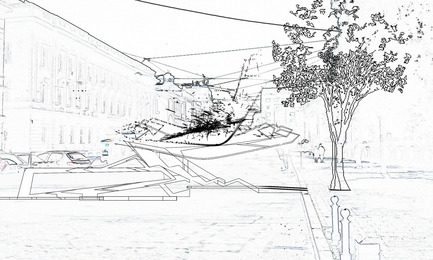
Image moyenne résolution : 6.67 x 4.0 @ 300dpi ~ 720 ko
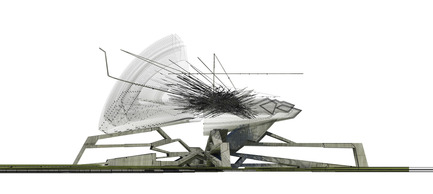
Image moyenne résolution : 6.67 x 2.99 @ 300dpi ~ 220 ko
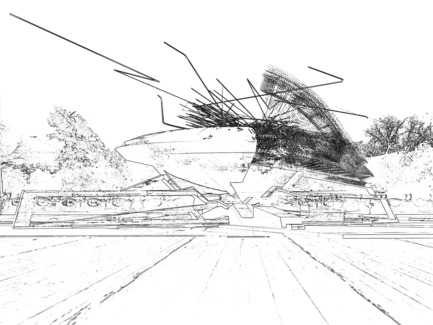
Image moyenne résolution : 6.67 x 5.0 @ 300dpi ~ 620 ko

Publicité
Vous pourriez également aimer...

Londres, Royaume-Uni, 21-05-2024
Chapelle et club de l'éolienne thermodynamique
Margot Krasojević Architects

Londres, Royaume-Uni, 25-04-2023
Geyser et bassin de marée à énergie hydrocinétique
Margot Krasojević Architects

Céragrès Studio : du projet à la matière. Un nouveau lieu pour le design.
Découvrez Céragrès Studio : un tout nouvel espace au cœur du Mile-Ex réunissant matériaux, mobilier et expertise. Conçu comme un véritable coffre à outils pour les professionnels du design et de l’architecture, le Studio met à votre disposition une matériauthèque évolutive, un laboratoire d’exploration et un réseau de collaborateurs engagés à donner vie à vos projets.
Greater London, Royaume-Uni, 22-08-2022
Terrain d'essai au coeur de dunes en mouvement
Margot Krasojević Architects
Greater London, Royaume-Uni, 06-05-2021
Un complexe hôtelier conçu à partir de plastique recyclé trouvé dans les océans
Margot Krasojević Architects

Greater London, Royaume-Uni, 30-06-2020
Spa capteur de brouillard et système d'irrigation
Margot Krasojević Architects

Greater London, Royaume-Uni, 20-11-2019
Pont à balancier piezoélectrique
Margot Krasojević Architects
Greater London, Royaume-Uni, 02-07-2019
ECO CREMATION -
Le crématorium photovoltaïque
Margot Krasojević Architects
London, Royaume-Uni, 10-10-2018
Concept pour une ferme durable de chanvre et de cannabis médical
Margot Krasojević Architects
Dumfries and Galloway, Royaume-Uni, 07-05-2018
L'hôtel qui puise son énergie grâce aux marées
Margot Krasojević Architects
Londres, Royaume-Uni, 21-12-2017
Résidence à excavation automatique pour se protéger des ouragans
Margot Krasojević Architects
Londres, Royaume-Uni, 12-06-2017
DEL à induction électromagnétique et sismique
Margot Krasojević Architects

Londres, Royaume-Uni, 19-05-2016
Abri d'urgence : une caverne artificielle de neige
Margot Krasojević Architects
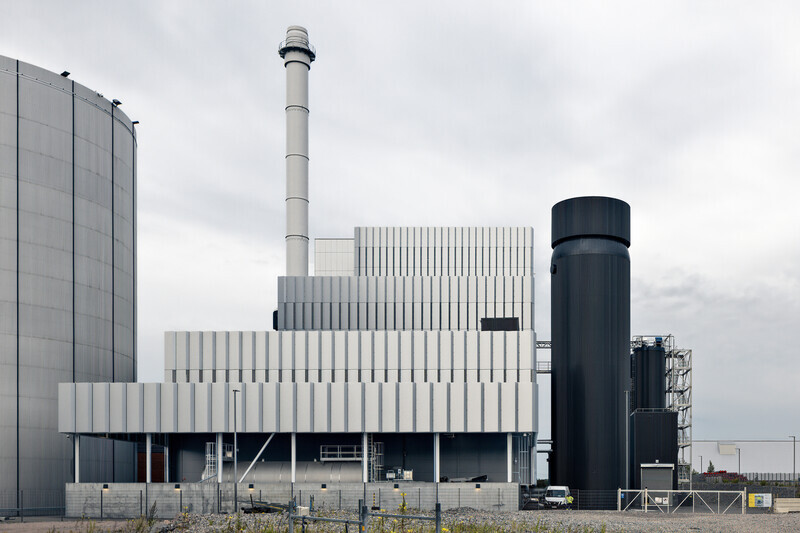
Helsinki, Finlande, 16-12-2024
Centrale de chauffage bioénergétique de Vuosaari
Kivinen Rusanen Architects