Press kit no. 5134-03
Journalists, explore this publication-ready project. Create a free v2com media account to download high-resolution images.
Create a media account
Press Kit | no. 5134-03
Press release only in English
Dexamenes Seaside Hotel
K-Studio
The history of Dexamenes dates back to the “Era of Currants”. Since the liberation of Greece in 1830, the cultivation of currants took on impressive dimensions and currants were the main export product of the Greek Kingdom. But when the “Currants’ Crisis” broke out in 1910 in Greece, the trade of currants collapsed and there was a need to convert the unsold stock of currants into alternative products, such as wine. This was when the first wineries and distilleries were created. Dexamenes was built on the sea so that ships could be loaded with wine directly from the tanks, before setting sail for the major overseas markets. The derelict, industrial structures that characterize the site were left relatively untouched since the 1920’s, sitting quietly on one of the most unspoiled and beautiful stretches of coastline in the western Peloponnese.
From the outset, it was clear that the strong history and raw beauty of the existing buildings should not only be preserved but also be showcased in a design that would breathe new life into their walls. The new design complements their brutality with elegant interventions, transforming their austere functionality into a place of calm, comfort, and relaxation. A complementary palette of concrete, steel, timber, and engineered glass ensures that new construction elements tread lightly, leaving the existing buildings relatively untouched and retaining their strong presence.
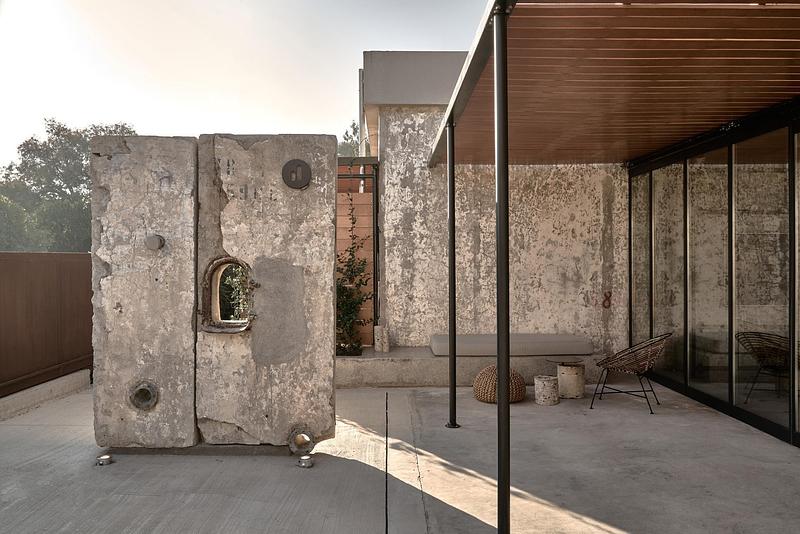
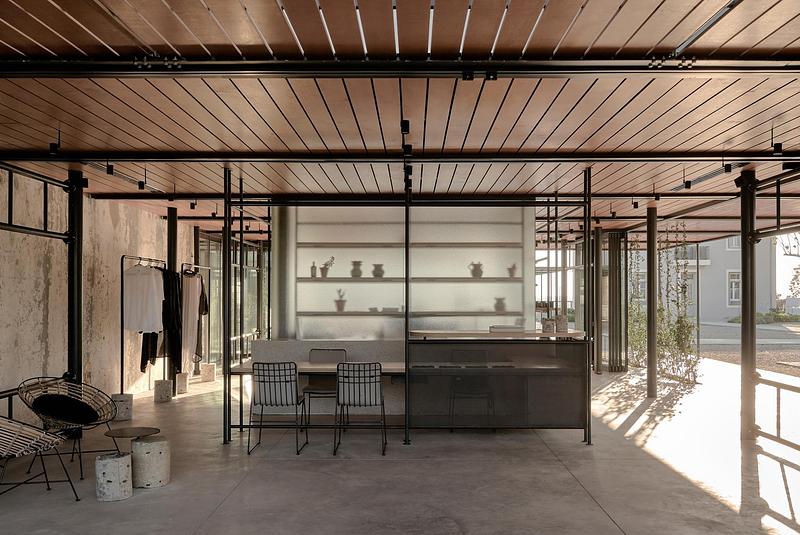
The discreet entrance point to the hotel is from the adjacent road, where you are greeted by the first of the two elegant pavilions, attached to the original concrete tank buildings. With the glass partitions fully opened, you step onto the concrete slab and enter the reception area, where, if you have arrived in the evening, the glow of the louvered plywood canopy is a warm welcome, and if you arrive during the day, the cool of the shade it creates offers welcome respite from the heat of the sun. You sense the weight of the history of the site from the surrounding concrete buildings and artfully displayed remnants, yet you are lifted by the energy of this new, light-filled space, as you move through the chicly minimalist boutique and arrive at the central courtyard.
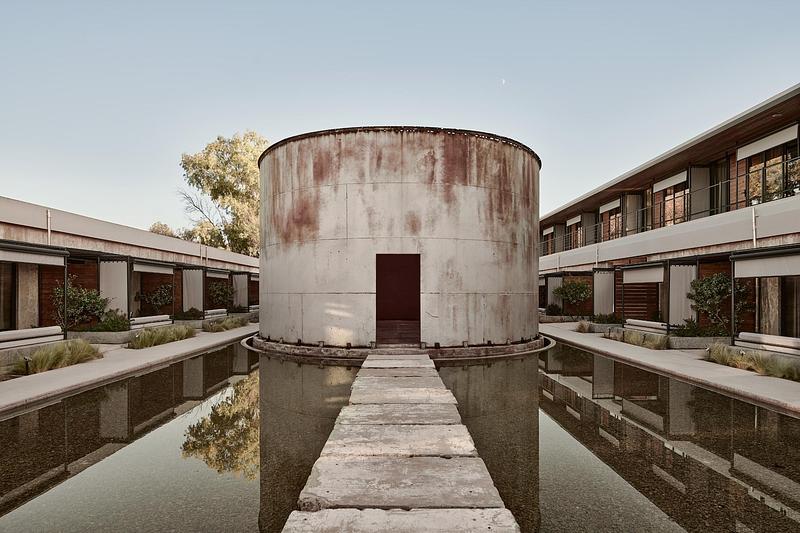
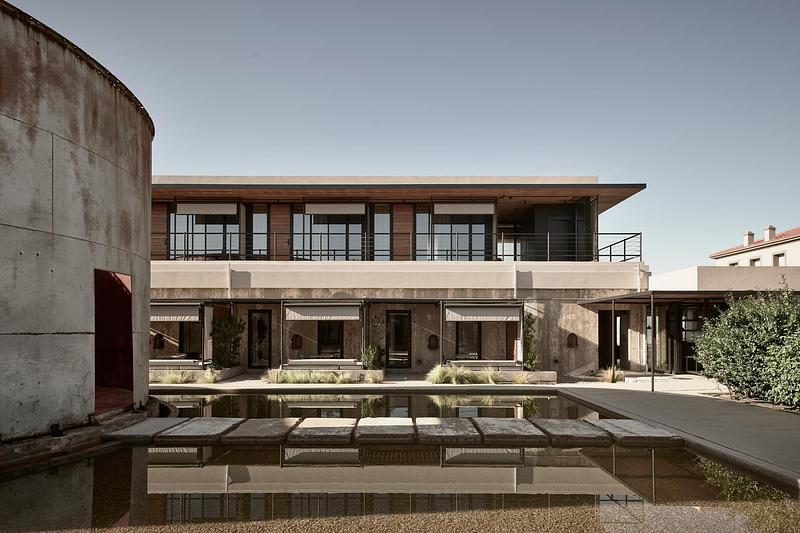
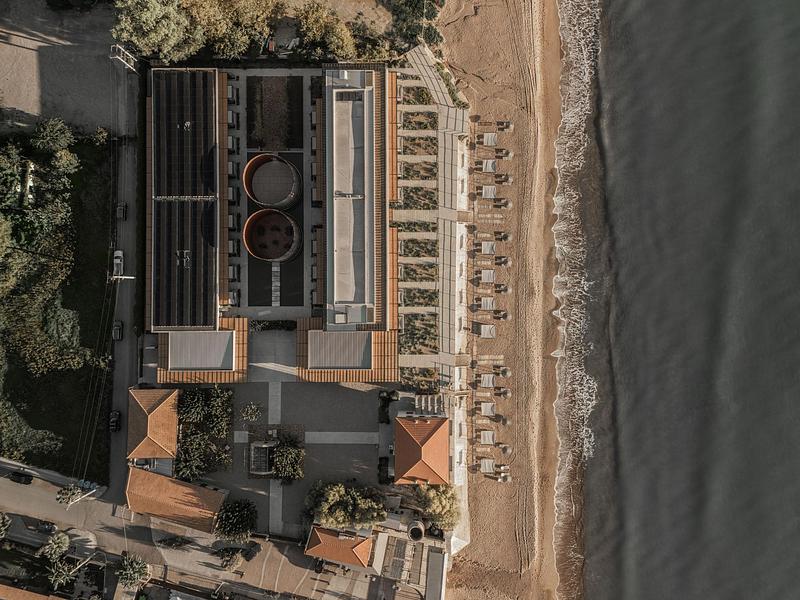
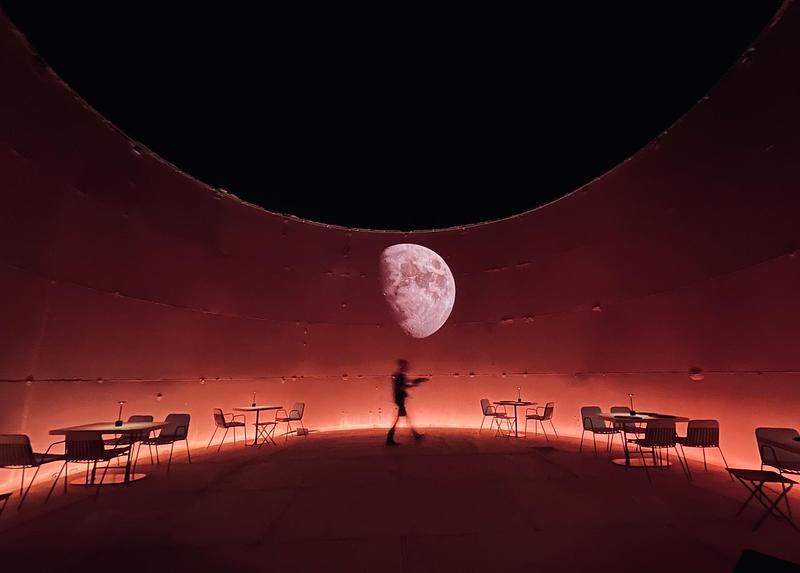
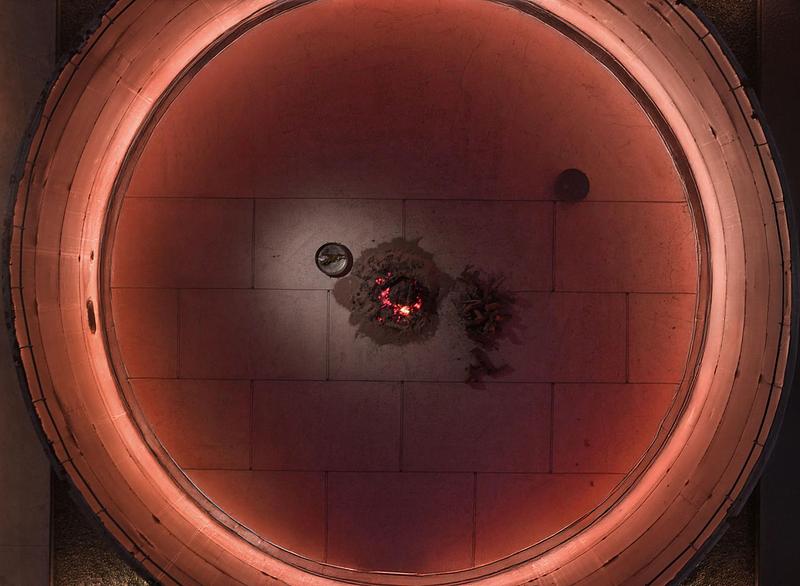
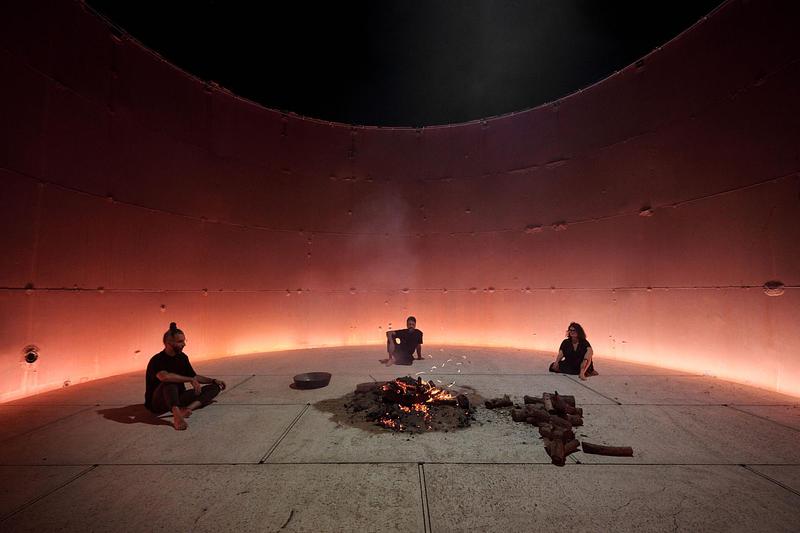
Dominating the site are the 2 concrete blocks that are each divided lengthwise into 2 rows of 10 wine-storage tanks. These tanks, measuring approximately 5m by 6m, were perfectly sized to become hotel rooms, each with ensuite bathroom and shaded patio. The space between the 2 blocks has been transformed from an industrial scrapyard into a peaceful, meditative courtyard garden. A shallow pool separates the 2 rows of rooms, reflecting light and providing a cool breeze on hot afternoons. The impressive steel drums that give the hotel its characteristic logo have been delicately preserved and stand proud in the water. Thick slabs of concrete (slices of tank wall removed to make the doorways) have been placed in the water like stepping-stones, so that guests might enter the drums and experience the way that light and acoustics play over their concave walls throughout the day. Local grape and currant varieties are becoming well established along the edges of the garden and will gradually make their contribution to the microclimate and productivity of the hotel.
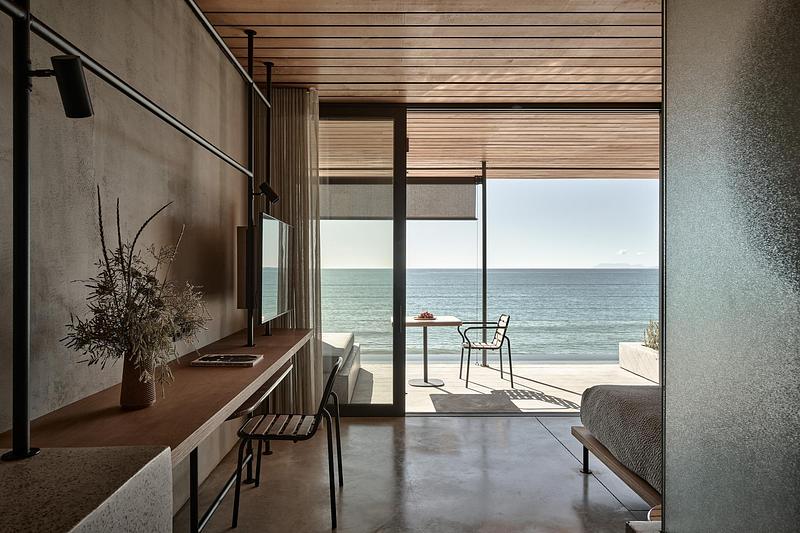
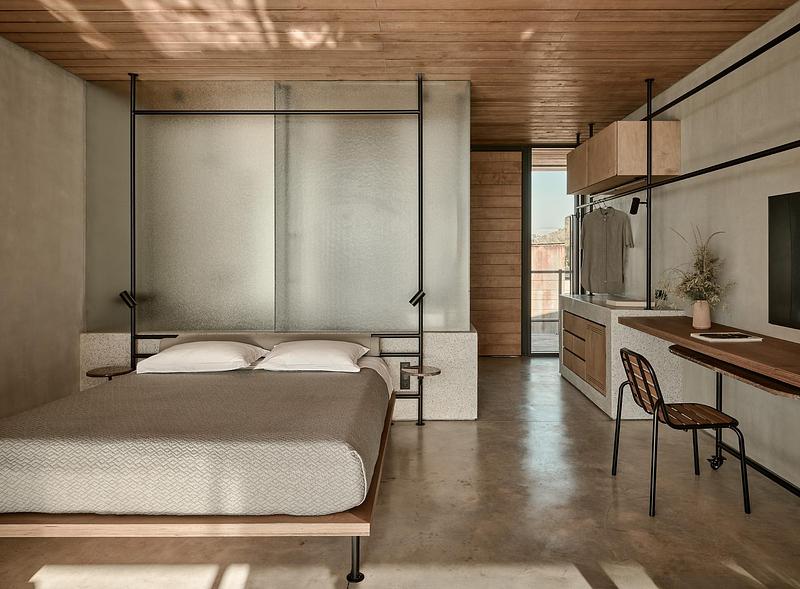
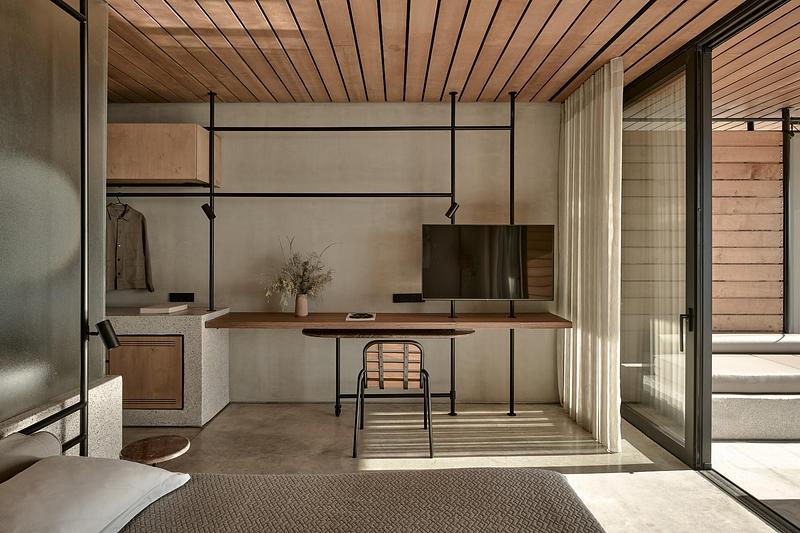
The courtyard tank rooms are identical in their ergonomic layout. Original features such as the manholes and pipes in the façade of each tank and the patina of the internal wall surfaces have been preserved. Inside, a narrow black steel framework collects together the various beautifully detailed elements within the 30sqm space, organizing them with Zen-like precision. Textured glass brings light through from the bedroom and dressing areas into the bathroom. Generous proportions in the shower and WC bring a sense of luxury to the warmly toned and textured surfaces, and polished terrazzo is a visual link to the colourful texture of beach-pebble aggregates revealed wherever the old walls have been sliced through to create new openings.
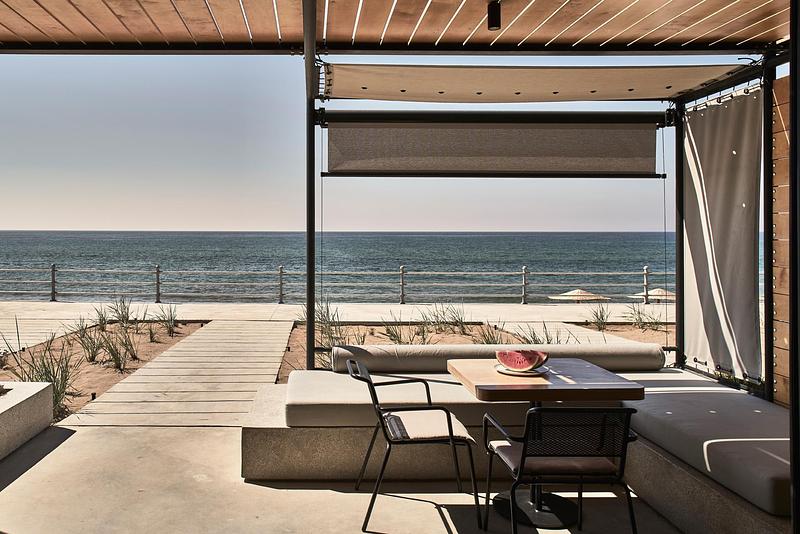
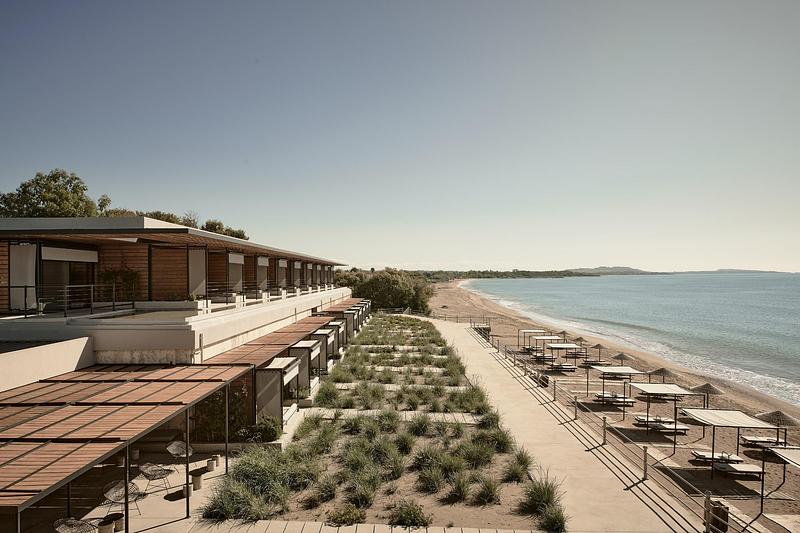
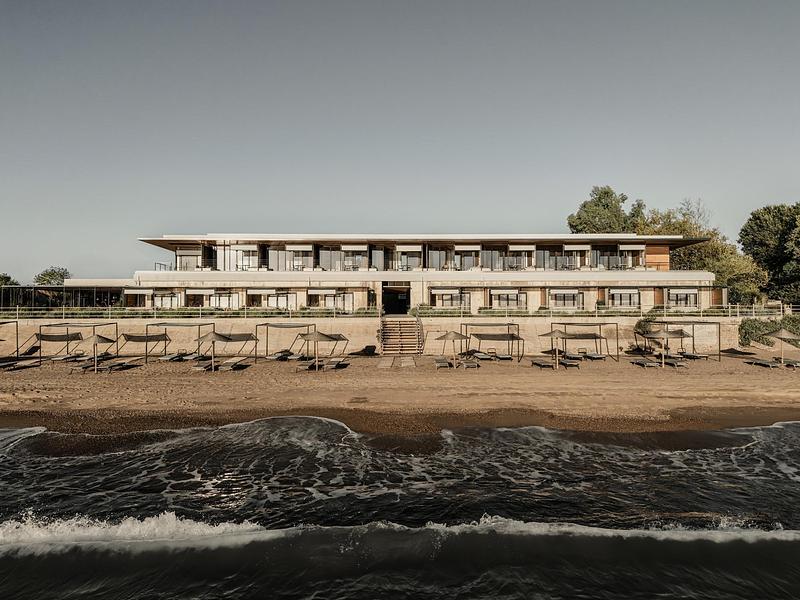
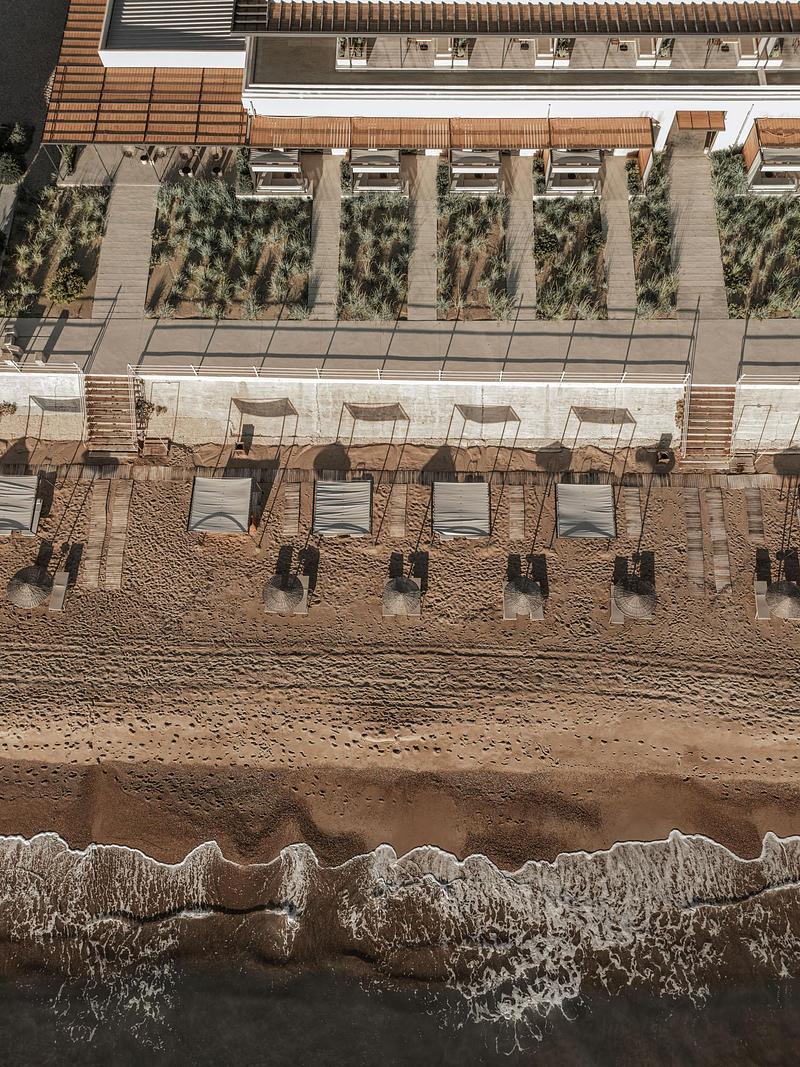
The internal layout of the sea-front tanks makes the most of their immediate connection to the beach, with beds centered on the large sliding window looking directly out over the water and a privately framed view of the sunset from beneath the canopied patio. They are connected by a wide promenade walkway raised above the sand, leading to the other parts of the hotel and down to the beach. Even the promenade railings play their part in the design, featuring parts of the reclaimed irrigation system originally installed on the tank roofs.
In addition to the tank rooms, their pavilions and the courtyard garden, the 2 original stone out-buildings have been carefully converted to provide the hotel with in-house dining and event facilities with a focus on communicating the culture of the area and the history of the building through art and cuisine. Reclaimed bricks found inside the original structures line the floors and terrace, and the pitched roofs have been restructured with bespoke ceramic tiles made locally and crafted to blend with the originals. The taverna features an open kitchen with a communal dining table for wine tastings and cooking workshops, and an external dining terrace where guests can enjoy meals prepared with local ingredients throughout the day. Facing the terrace and kitchen is a large cultural building fully equipped to host artistic events of various scales, such as exhibitions, workshops, or lectures. The hotel has an ongoing program of arts events, with resident artists presenting performances, installations, and exhibitions throughout the summer season.
The project of Dexamenes is one that matures gracefully over time, like wine — a story of continuity, gentle projection into the future, and constant entropy. Quiet reinvention has become part of its character: the hotel evolves in modest gestures, extending itself, layer by layer, season by season.
Since its inception, the hotel has continually found ways to activate its existing components. The twin silos now pulse with wellness, art, and recurring culinary events, each iteration creating a living dialogue with the past.
In parallel, the building itself has sought forms of evolution, delicately sprouting from its robust concrete base.
A few years after its opening, as the cultural and culinary programs continued to flourish, it became clear that the site could accommodate a new chapter in accommodation — a layer that would honor the original ethos while offering a fresh perspective.
In the early days of construction, when the interiors of the tanks were still inaccessible, time spent on their roofs revealed a sensation of uplift unlike any other. From there, the sky met the sea in an uninterrupted line. It was this experience — this immediate connection to the horizon—that inspired the addition of a new layer atop the concrete tanks.
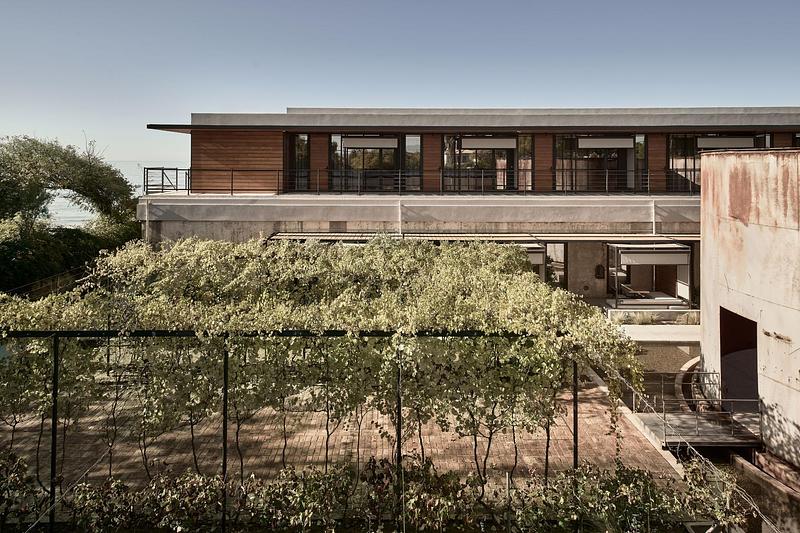
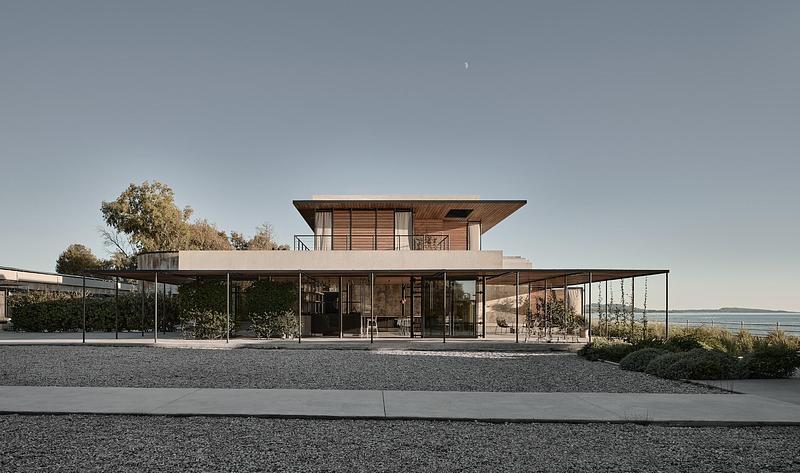
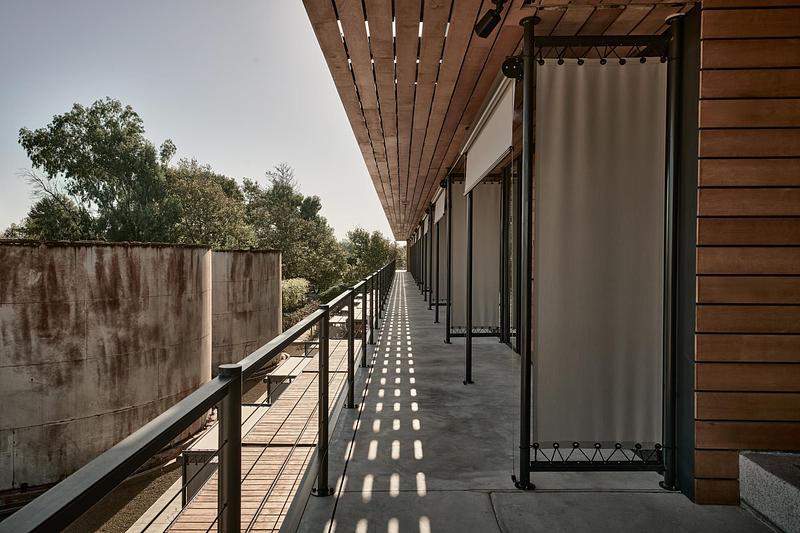
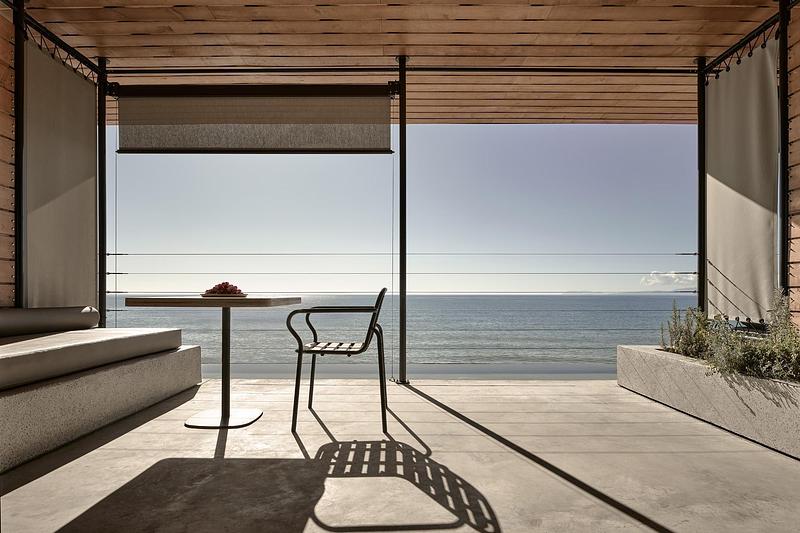
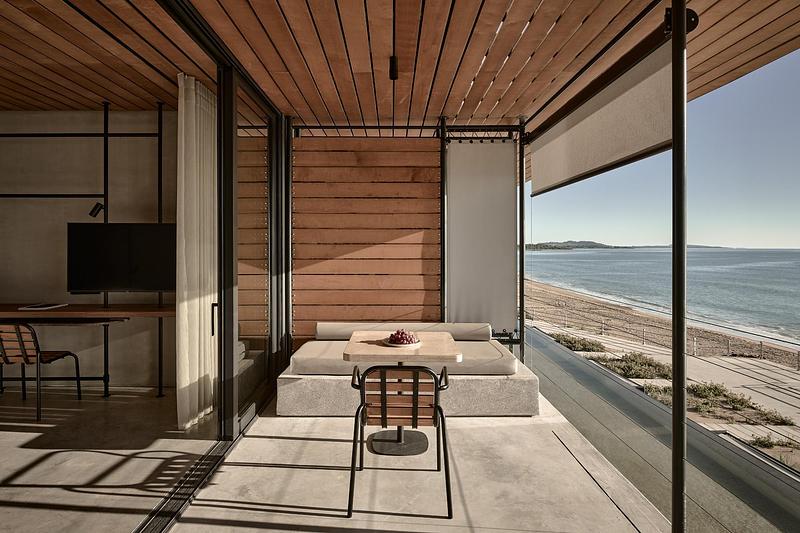
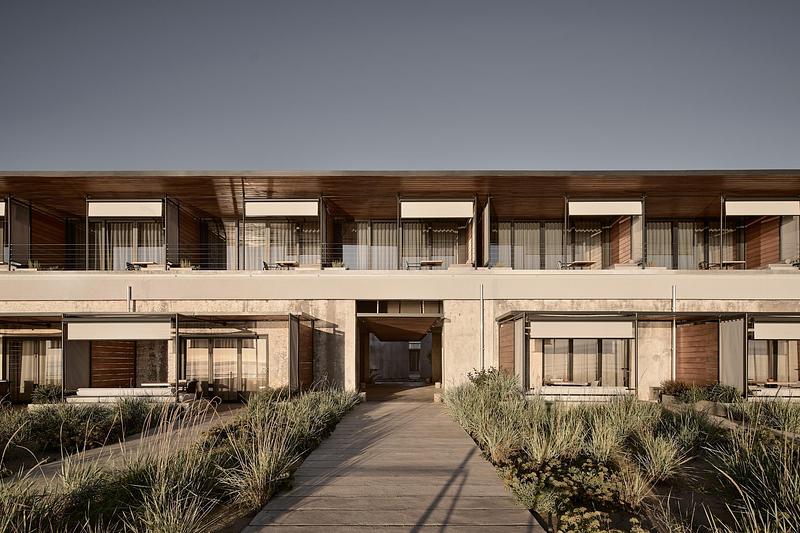
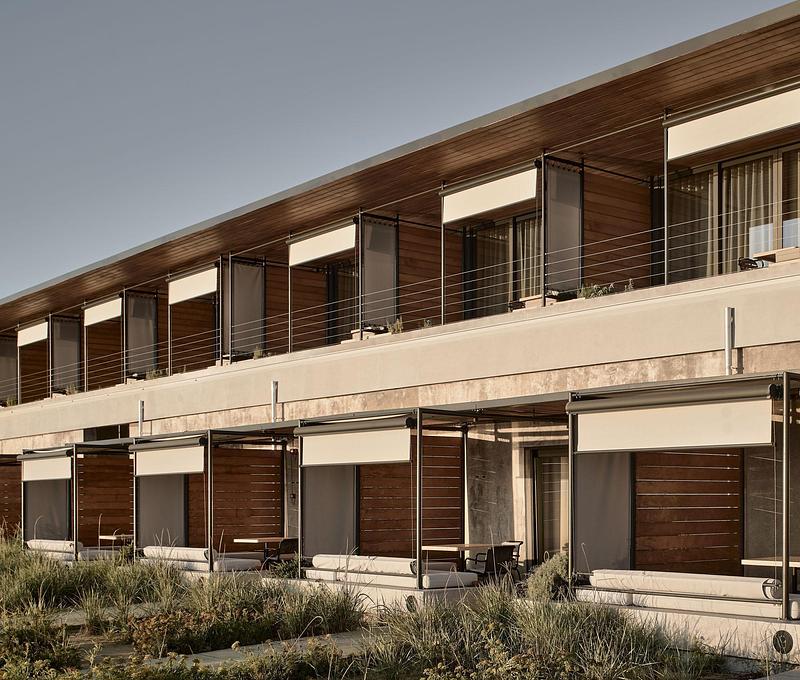
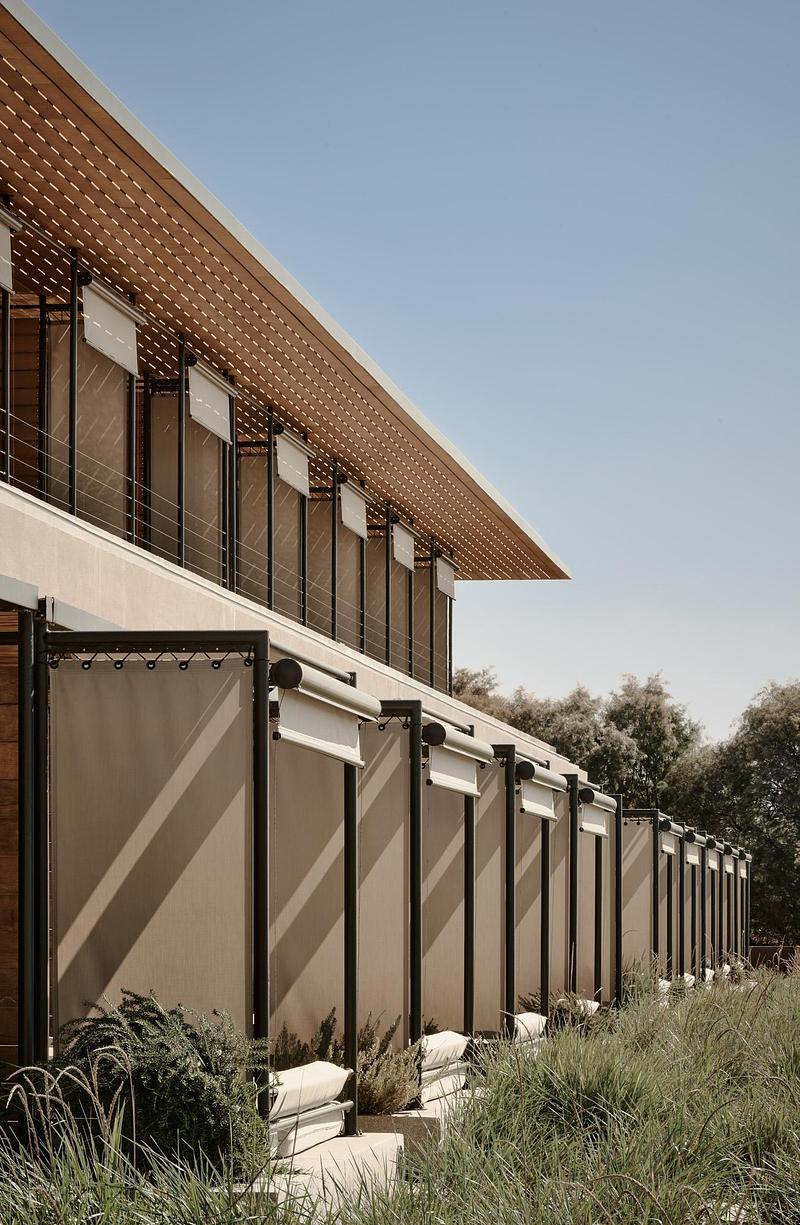
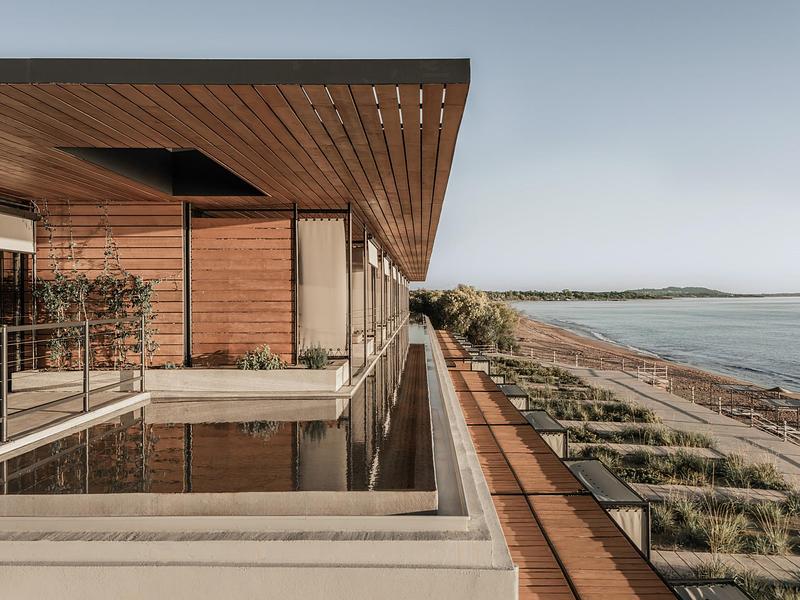
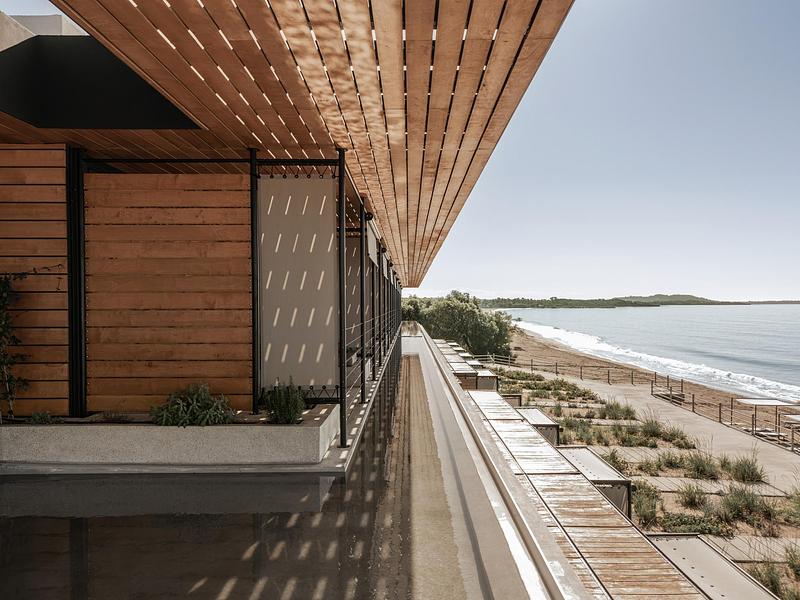
Eight new rooms now inhabit this elevated structure. A lightweight framework of slender metal tubes and warm wooden planks hovers above the solid tanks, tracing the line of the building without overwhelming it. These delicate components dematerialize the presence of the new level, allowing a thin canopy to float seemingly unsupported above the concrete box. A water channel frames the view to the horizon, visually uniting the sea and the building. The reflections of sunlight on the wooden pergola play over the surface, reinforcing the nautical, raft-like character of this new space.
The new rooms continue the palette, aesthetic, and spatial organization of their predecessors. Each opens toward the sea from a generous veranda, sheltered under the pergola, while access from the rear courtyard ties the upper layer into the life of the hotel below. From this vantage, guests can appreciate the silos, the cultivated vines of the garden, and the pulse of activity below, all from a different, elevated perspective.
This addition does more than expand accommodation — it encapsulates, fills with life, and extends the narrative of Dexamenes. What the future holds for the rooftop of the back tank remains open, a space for experimentation and discovery. And as one gazes from this elevated point, the horizon stretches, infinite and uncharted, waiting to be filled with the next chapter of the hotel’s story.
About K-Studio
K‑Studio is a design practice based in Athens, Greece for over 20 years. Founded by brothers Dimitris and Konstantinos Karampatakis, the studio comprises a multidisciplinary team working across hospitality, residential and the public realm. The practice is grounded in a considered, curious approach to its projects that produces immersive designs that are rooted in heritage and context, creating spaces that are built to last.
For more information
Media contact
- K-Studio
- Anna Rizou, Communications Head
- press@k-studio.gr
- 21 0677 7522
Attachments
Terms and conditions
For immediate release
All photos must be published with proper credit. Please reference v2com as the source whenever possible. We always appreciate receiving PDF copies of your articles.
Publication Rights for Books
The images in this press kit are not royalty-free for use in books or monographs.
You may download the material, but any publication in such media requires prior written authorization and a specific copyright negotiation for publishing (see media contact).
Medium-resolution image : 6.67 x 4.44 @ 300dpi ~ 710 KB
Medium-resolution image : 6.67 x 4.44 @ 300dpi ~ 640 KB
Medium-resolution image : 6.67 x 4.44 @ 300dpi ~ 720 KB
Medium-resolution image : 6.4 x 4.27 @ 300dpi ~ 700 KB
Medium-resolution image : 6.4 x 4.28 @ 300dpi ~ 710 KB
Medium-resolution image : 6.67 x 3.94 @ 300dpi ~ 630 KB
Medium-resolution image : 6.4 x 4.27 @ 300dpi ~ 710 KB
Medium-resolution image : 6.67 x 4.44 @ 300dpi ~ 670 KB
Medium-resolution image : 6.67 x 4.44 @ 300dpi ~ 800 KB
Medium-resolution image : 6.67 x 4.91 @ 300dpi ~ 760 KB
Medium-resolution image : 6.67 x 4.44 @ 300dpi ~ 700 KB
Medium-resolution image : 6.67 x 4.44 @ 300dpi ~ 630 KB
Medium-resolution image : 6.67 x 4.44 @ 300dpi ~ 690 KB
Medium-resolution image : 6.67 x 4.44 @ 300dpi ~ 830 KB
Medium-resolution image : 6.67 x 5.67 @ 300dpi ~ 630 KB
Medium-resolution image : 4.35 x 6.67 @ 300dpi ~ 720 KB
Medium-resolution image : 6.67 x 4.44 @ 300dpi ~ 710 KB
Medium-resolution image : 6.67 x 5.0 @ 300dpi ~ 820 KB
Medium-resolution image : 6.67 x 5.0 @ 300dpi ~ 750 KB
Medium-resolution image : 6.67 x 5.0 @ 300dpi ~ 850 KB
Medium-resolution image : 5.0 x 6.67 @ 300dpi ~ 880 KB
Medium-resolution image : 6.67 x 5.0 @ 300dpi ~ 610 KB
Medium-resolution image : 6.4 x 4.59 @ 300dpi ~ 960 KB
Medium-resolution image : 6.4 x 4.69 @ 300dpi ~ 1.4 MB
Medium-resolution image : 6.4 x 4.27 @ 300dpi ~ 1.3 MB



Advertising
You may also like...


Buffalo, United States, 2026-07-27
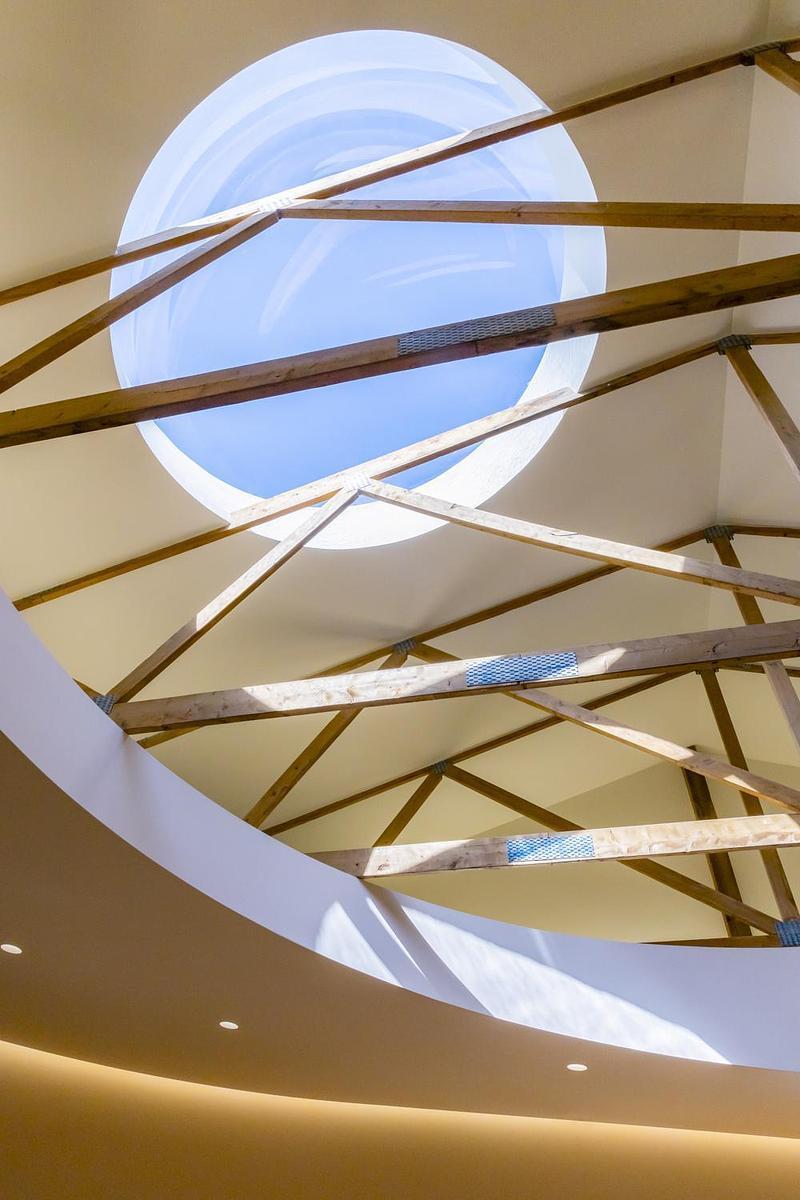
Arch&Type Shapes a Buffalo Salon with Curves, Daylight, and an Eight-Foot Oculus
Arch&Type
San Francisco, United States, 2026-07-23
CAW Architects Unveils a Trio of Transformative Theater Projects that Redefine the California Performance Landscape
CAW Architects