Press kit no. 1695-03
Journalists, explore this publication-ready project. Create a free v2com media account to download high-resolution images.
Create a media account
Press Kit | no. 1695-03
A New Sûreté du Québec Police Station in Waterloo Rooted in its Territory
STGM Architecture + Cimaise
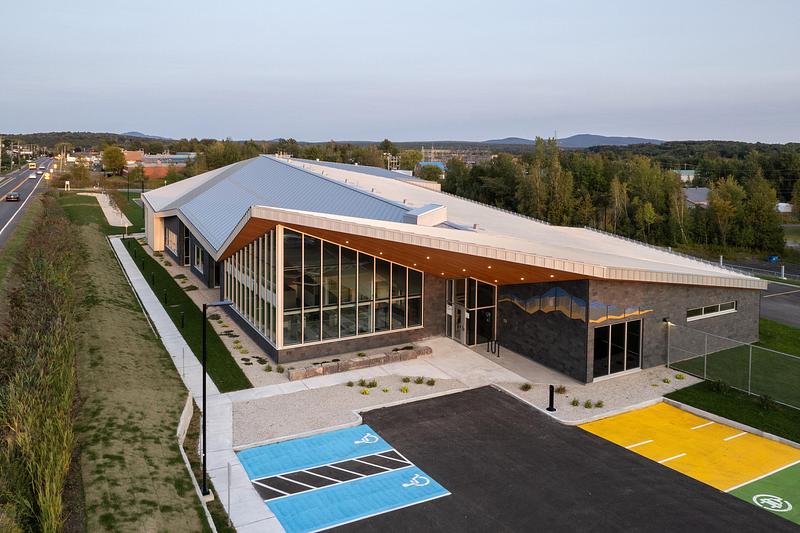
The new Sûreté du Québec police station serving the MRC of Haute-Yamaska, located in Waterloo, marks the completion of a public architecture project designed to meet the functional and security requirements specific to this type of infrastructure, while integrating environmental, territorial, and human considerations. The building was designed by STGM Architecture, in consortium with CIMAISE.
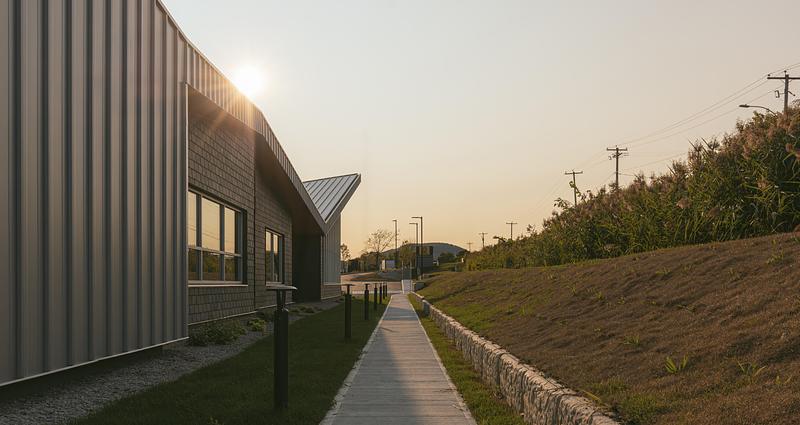
Located at the western entrance to the city of Waterloo, in the heart of the MRC of Haute-Yamaska, the project site sits at the junction between agricultural land and the urban core. This strategic location highlights the transition between the rural landscape and the existing built environment. From the earliest stages of design, the project took into account the physical and environmental characteristics of the site.
The decision to locate the building within already disturbed areas helped limit interventions in adjacent sensitive natural environments, including a wooded area and a wetland. This approach reduced the project’s footprint on the territory and preserved existing natural features. The siting of the police station reflects a commitment to responsible site management that goes beyond applicable regulatory requirements.
The landscape as an architectural reference
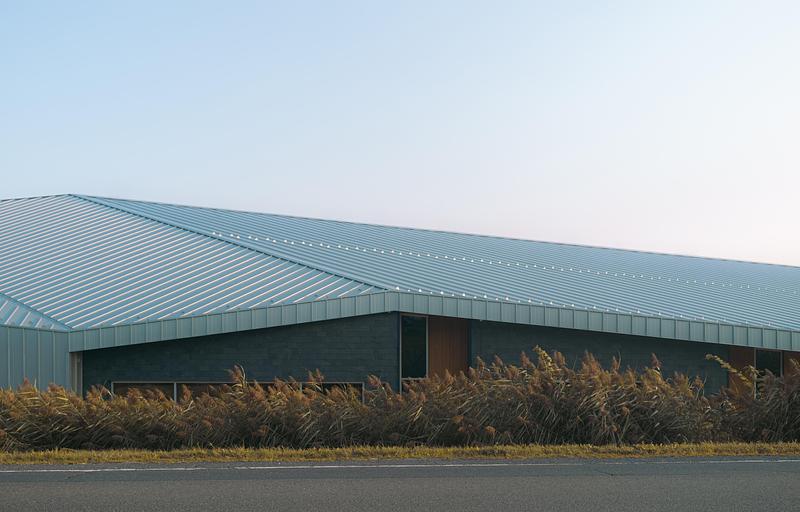
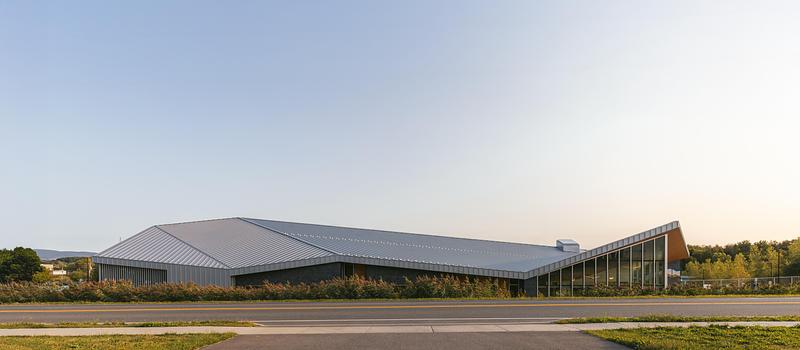
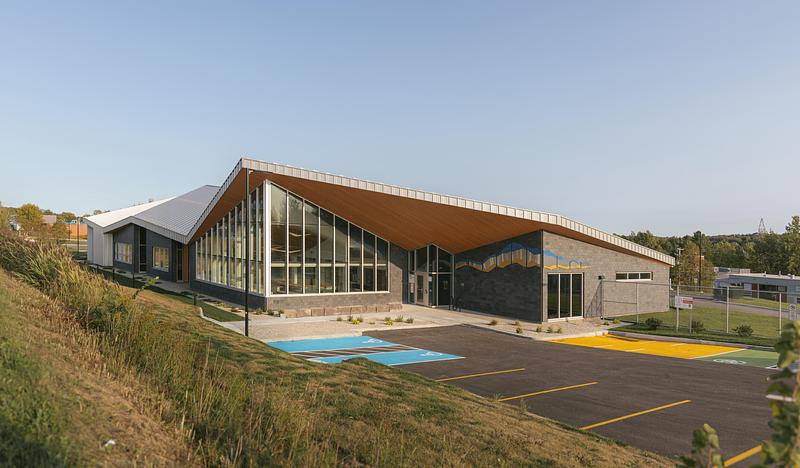
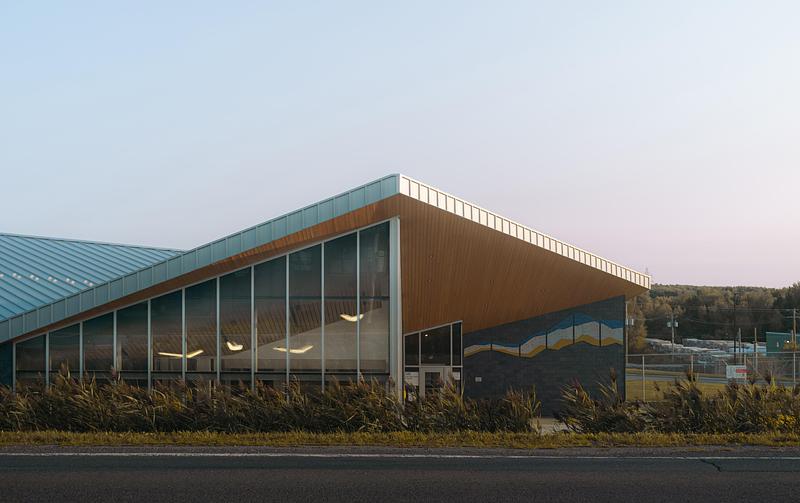
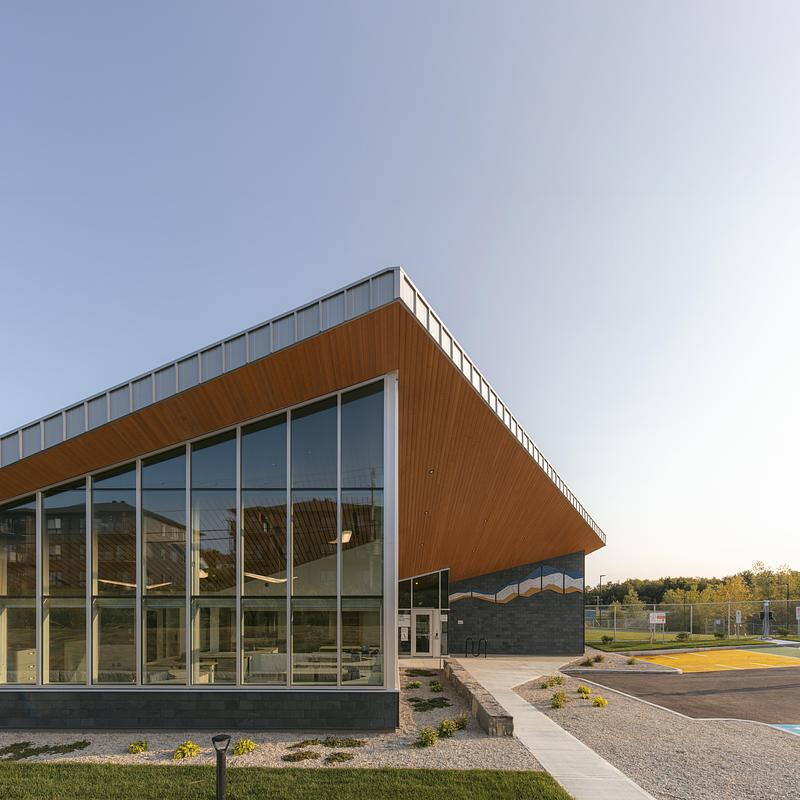
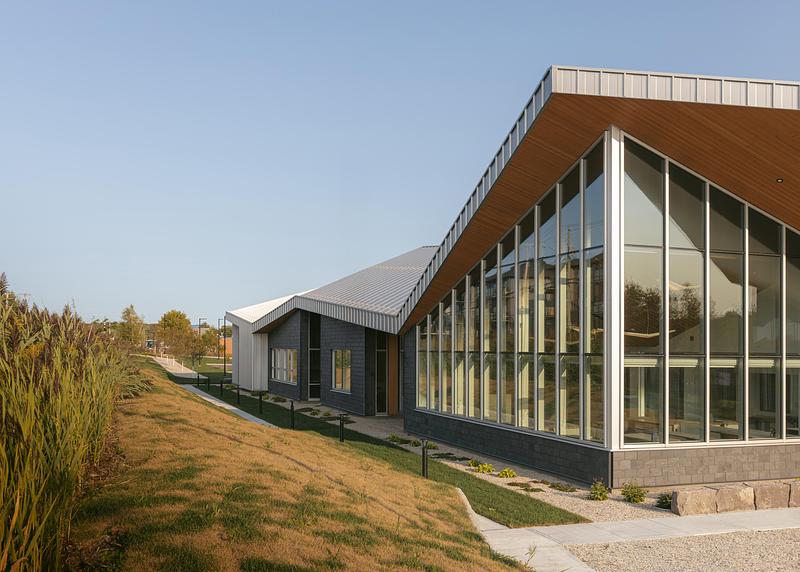
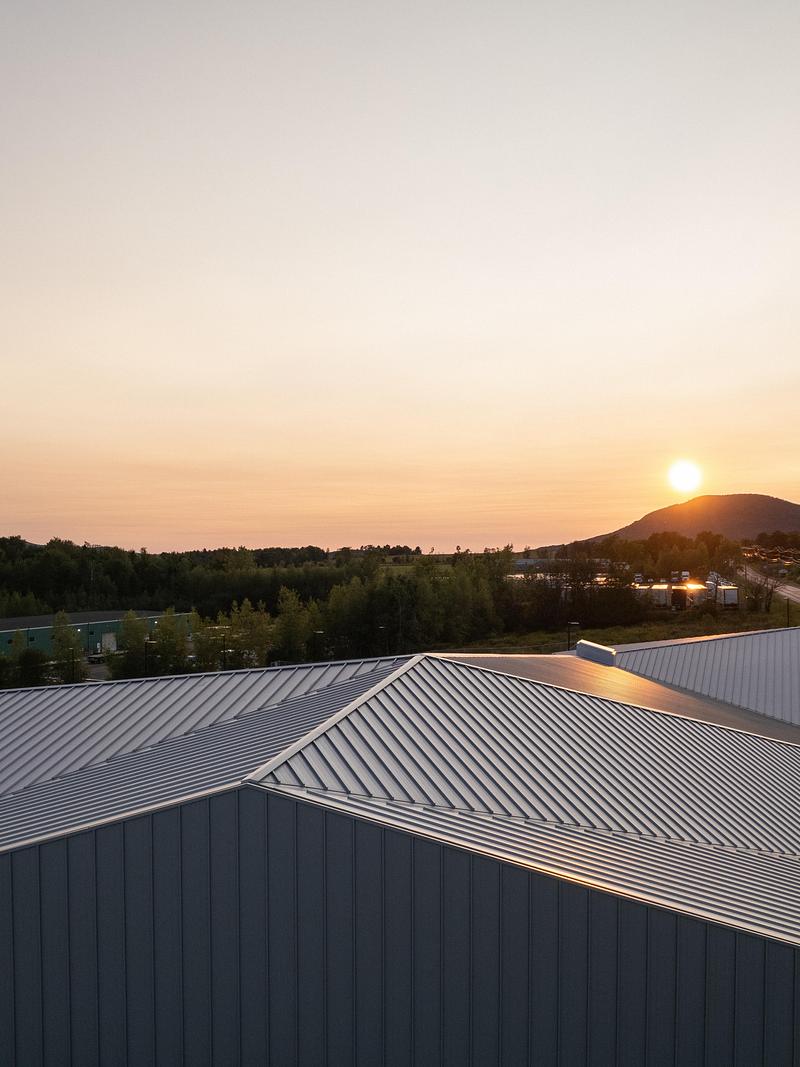
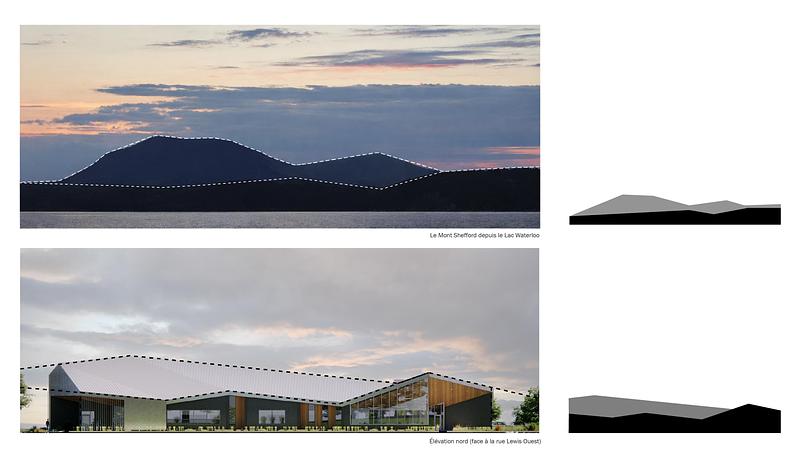
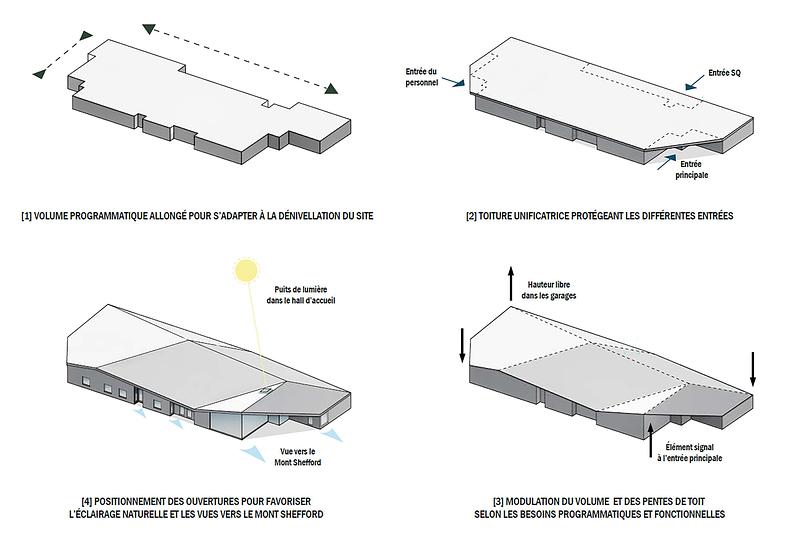
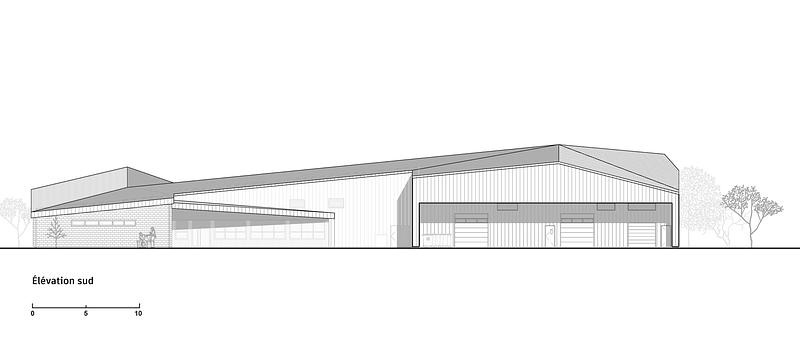
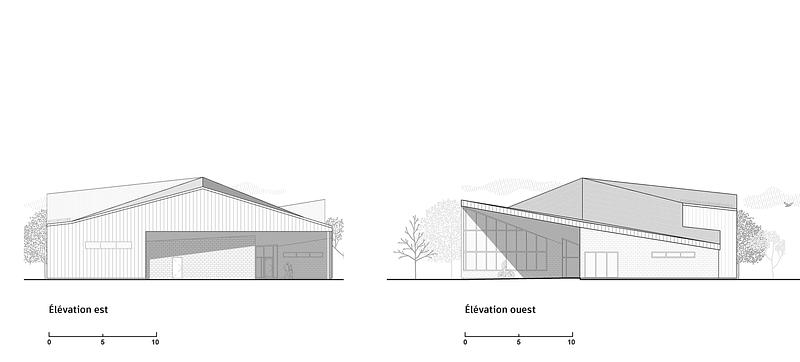
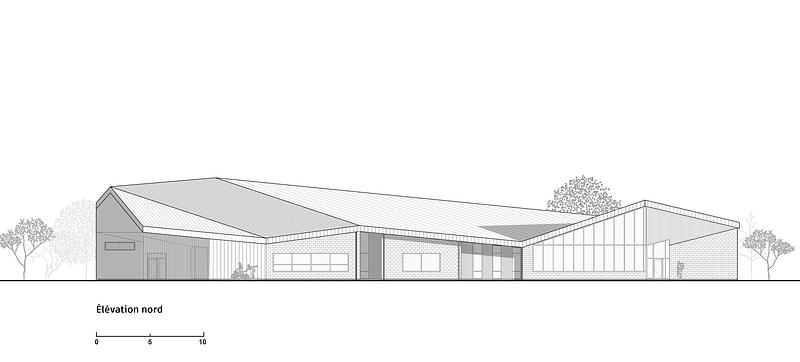
The project draws direct inspiration from the Montérégie landscape, particularly the presence of Mount Shefford and the surrounding hills, which are visible from the site. These topographic features influenced the building’s placement, massing, and architectural expression. The building’s form, roof modulation, and visual openings were designed in dialogue with the local topography.
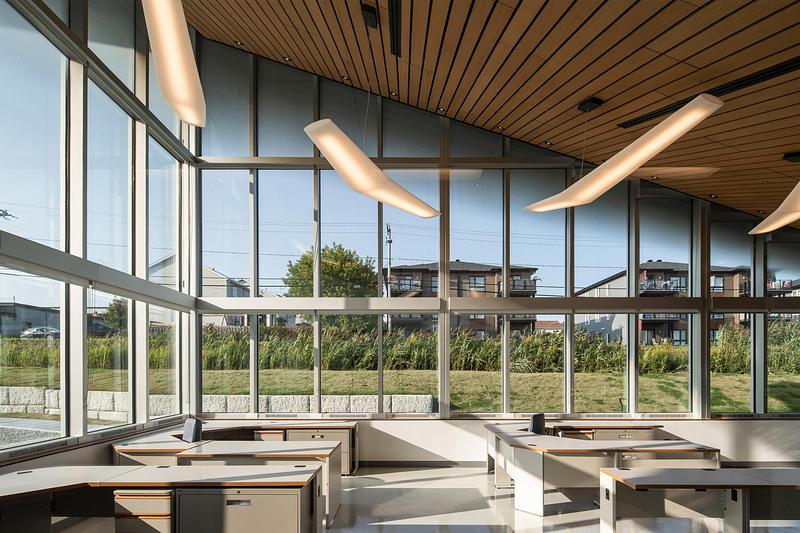
Views toward the landscape are emphasized through the orientation of spaces and the placement of openings, fostering a continuous visual relationship between the building and its surroundings. This approach supports the integration of the police station within its context and strengthens the connection between the civic facility and the territory it serves.
Functional organization and security
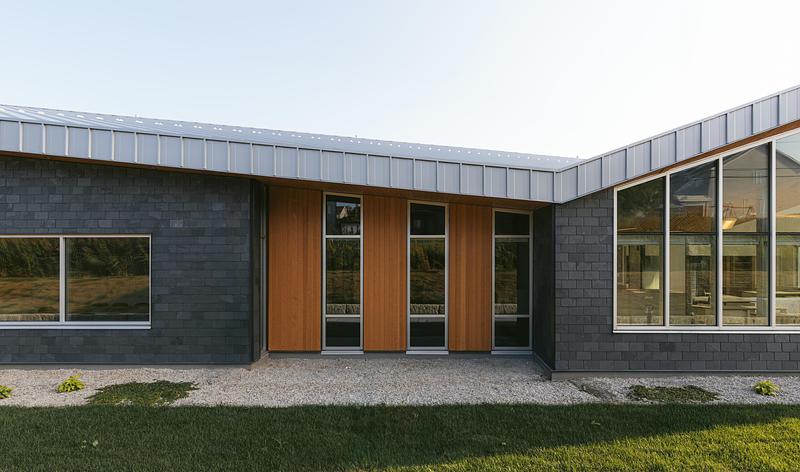
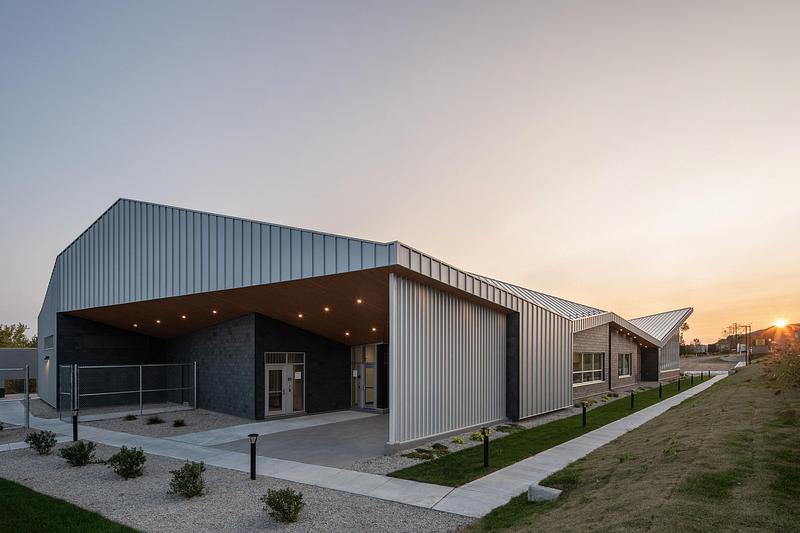
The interior organization of the police station is based on a clear hierarchy of spaces and a strict separation of circulation routes. Public areas, staff circulation, and secure zones are distinct, ensuring efficient operation and compliance with security requirements. The positioning of functions, access control, and differentiated treatment of façades all contribute to this organization.
The building’s architecture seeks to maintain a balance between openness and protection. This approach ensures a secure environment, while establishing a functional and legible relationship with the public. The project demonstrates that high security requirements can be integrated into an institutional architecture that is attentive to its context and its users.
Spatial quality and occupant well-being
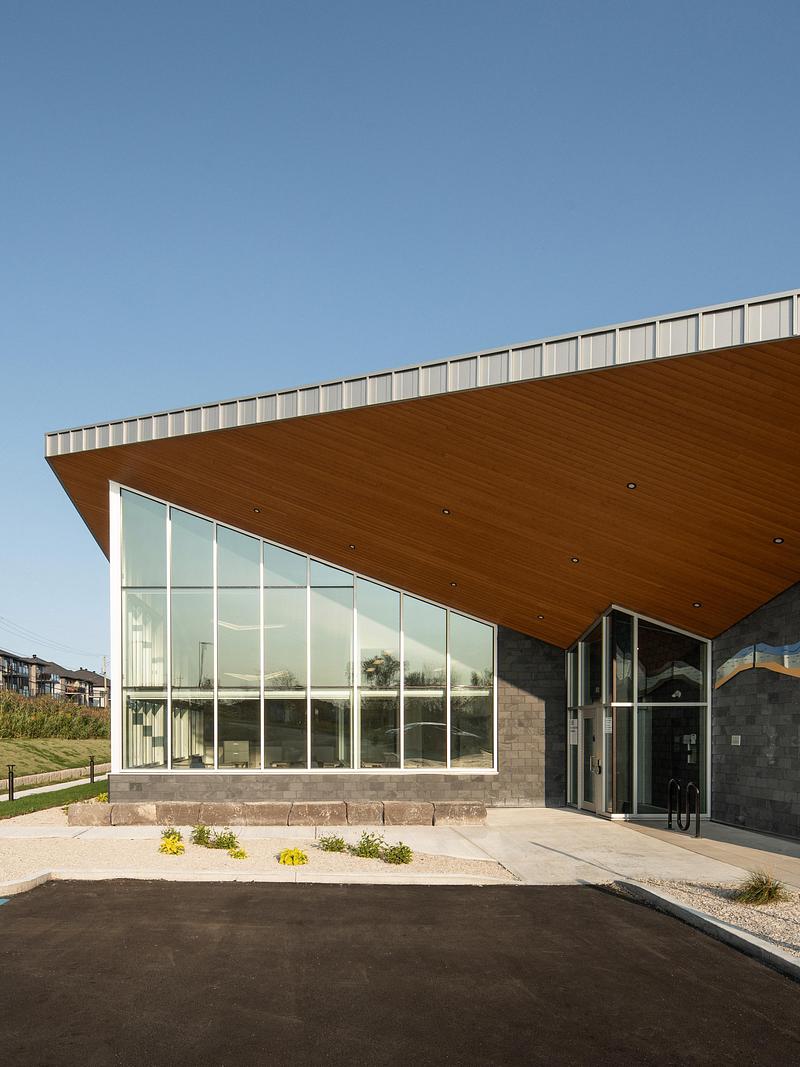
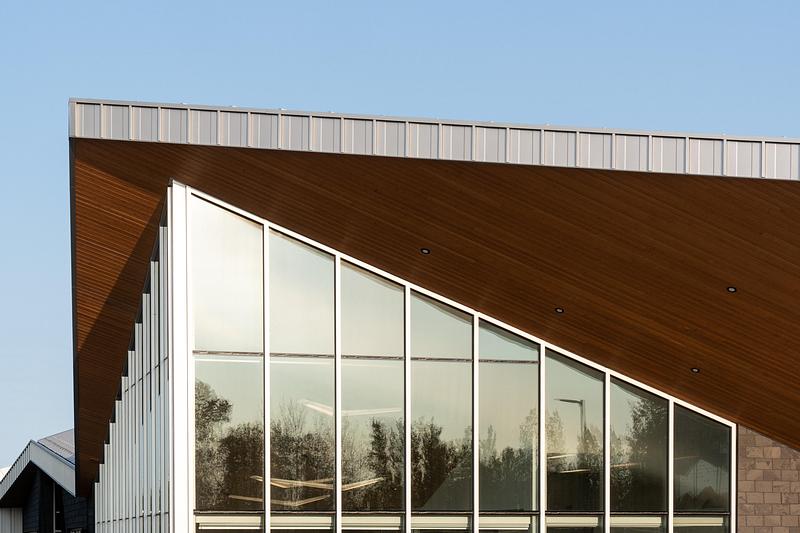
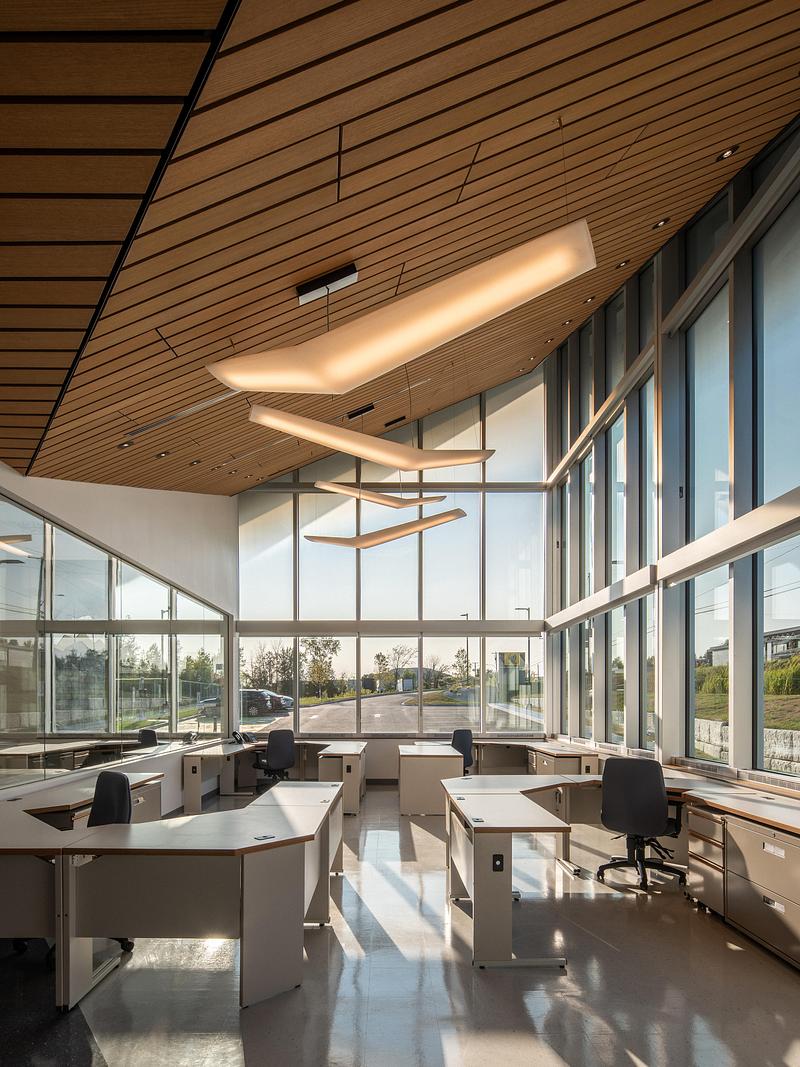
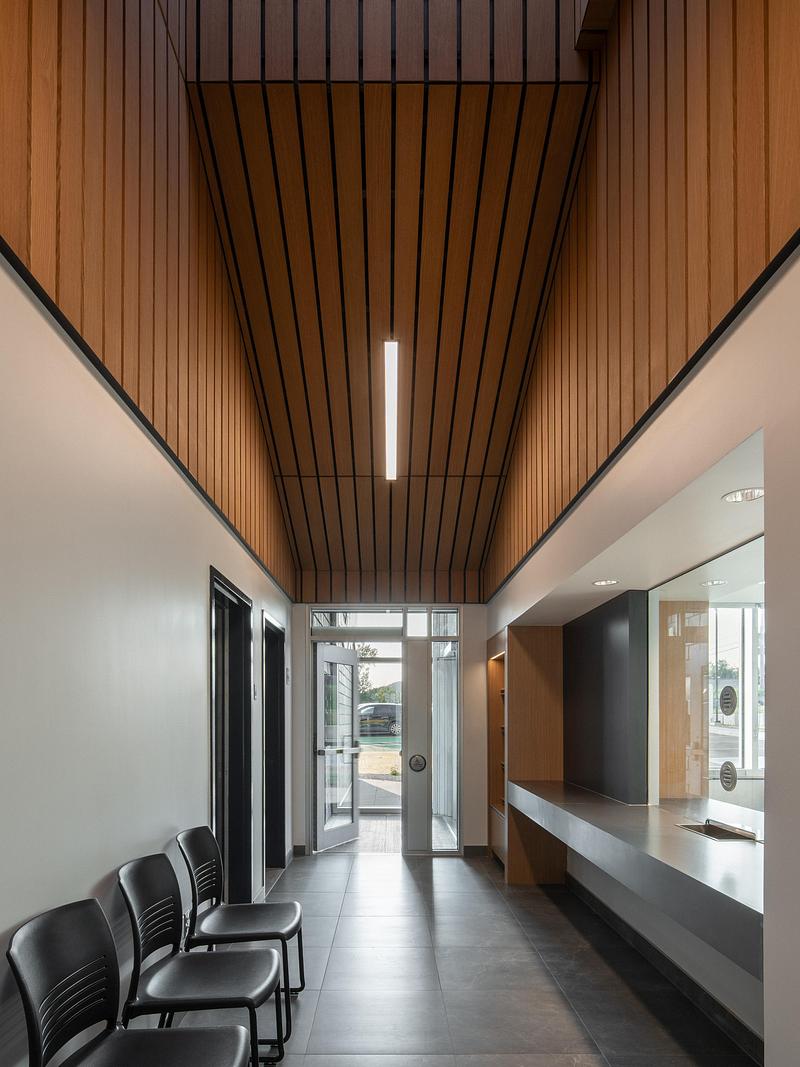
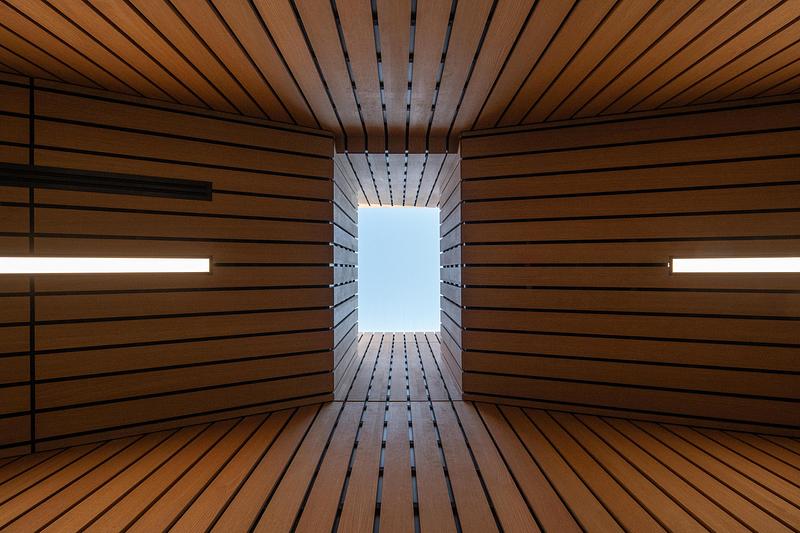
Particular attention was given to the quality of living and working environments. The main entrance is marked by a large, wood-clad canopy with generous glazing, oriented toward Mount Shefford. This feature guides the public and establishes a direct visual connection with the landscape. Inside, the use of wood, particularly in the ceilings of public spaces, combined with an abundance of natural light enhanced by a skylight in the entrance hall, contributes to bright and welcoming interiors.
Frequently occupied workspaces are primarily oriented to the north and northwest, providing consistent daylight without glare or excessive solar heat gains. Views from common areas and break spaces contribute to occupant comfort and the overall quality of the indoor environment.
Environmental performance and durability
The project, which is targeting LEED certification, is based on structural and technical choices that promote environmental performance and durability. The mixed structure, combining steel and wood, meets functional constraints, while reducing the building’s carbon footprint. The integration of wood roof trusses made it possible to add a technical mezzanine, reducing the building’s footprint in favor of vegetated surfaces.
The building envelope is designed according to the perfect wall principle, with continuous air and insulation layers aimed at minimizing thermal bridging and optimizing energy efficiency. Mechanical systems, material durability, and the management of rainwater and snow accumulation were integrated into a performance-driven approach focused on reducing long-term operating costs.
Designed to evolve over time, the building features an adaptable spatial organization and a restrained architectural language, allowing it to respond to the future needs of the Sûreté du Québec without major interventions.
The Sûreté du Québec police station in Waterloo illustrates a contemporary approach to institutional architecture that is attentive to its environment, its uses, and its durability, and reflects a long-term vision for public buildings in Québec.
Technical sheet
- Official project name: Sûreté du Québec police station – MRC de la Haute-Yamaska
- Location: Waterloo
- Client: Société québécoise des infrastructures / Sûreté du Québec
- Design: Alexandre Guérin
- Principal architect and projet lead: Guillaume Robin/ Alexandre Frenière
- Interior design: Zoé Riou
- Codes and standards: Lisa Houde (CODEX)
- Execution: Anne Lajoie, Dany Charbonneau (CIMAISE)
- Surveillance: Dany Charbonneau (CIMAISE)
- Engineers: Côté Jean (structure-civil), WSP (MEP)
- Contracteur : Alain Lizotte Construction
- Budget: 16,5 M$
- Delivery: 10 septembre 2025
- Photography: Raphaël Thibodeau and Alexandre Guérin
About STGM
STGM is an architecture firm of 170 professionals, including architects, technologists, and designers, bringing together a full range of industry expertise under one roof. From architecture to interior design, the firm supports its clients through services including real estate planning, codes and standards, and building science.
STGM has developed strong synergies between its various disciplines, enabling complementarity and fluid collaboration on responsible, sensitive, and forward-looking projects aligned with client needs.
Since its founding in 2001, STGM has established itself as one of Quebec’s leading firms in integrated design, through major projects in its key areas of practice, including heritage, public transportation, healthcare, education, and public safety.
For more information
Media contact
- STGM Architecture
- Sandra Bourdeau, Director, Communications and Marketing
- sbourdeau@stgm.net
- 438-499-1906
Attachments
Terms and conditions
For immediate release
All photos must be published with proper credit. Please reference v2com as the source whenever possible. We always appreciate receiving PDF copies of your articles.
High-resolution image : 14.14 x 9.05 @ 300dpi ~ 5.1 MB
Very High-resolution image : 21.91 x 9.59 @ 300dpi ~ 7.5 MB
Very High-resolution image : 20.35 x 12.01 @ 300dpi ~ 11 MB
High-resolution image : 16.67 x 11.1 @ 300dpi ~ 9.9 MB
Very High-resolution image : 19.72 x 11.55 @ 300dpi ~ 9.2 MB
High-resolution image : 13.35 x 8.4 @ 300dpi ~ 4.3 MB
High-resolution image : 12.5 x 16.67 @ 300dpi ~ 12 MB
Very High-resolution image : 17.76 x 17.76 @ 300dpi ~ 12 MB
High-resolution image : 16.28 x 11.64 @ 300dpi ~ 9.2 MB
High-resolution image : 16.67 x 11.11 @ 300dpi ~ 9.2 MB
High-resolution image : 16.67 x 11.11 @ 300dpi ~ 9.7 MB
Very High-resolution image : 20.65 x 10.96 @ 300dpi ~ 11 MB
High-resolution image : 12.43 x 16.57 @ 300dpi ~ 9.3 MB
High-resolution image : 12.5 x 16.67 @ 300dpi ~ 11 MB
High-resolution image : 16.67 x 11.11 @ 300dpi ~ 11 MB
High-resolution image : 12.5 x 16.67 @ 300dpi ~ 10 MB
High-resolution image : 16.67 x 11.11 @ 300dpi ~ 18 MB
High-resolution image : 12.5 x 16.67 @ 300dpi ~ 8.2 MB
High-resolution image : 14.0 x 8.33 @ 300dpi ~ 2.7 MB
High-resolution image : 13.33 x 9.09 @ 300dpi ~ 1.7 MB
High-resolution image : 13.33 x 5.7 @ 300dpi ~ 1 MB
High-resolution image : 12.79 x 5.8 @ 300dpi ~ 1000 KB
High-resolution image : 12.79 x 5.8 @ 300dpi ~ 1.1 MB
Advertising
You may also like...
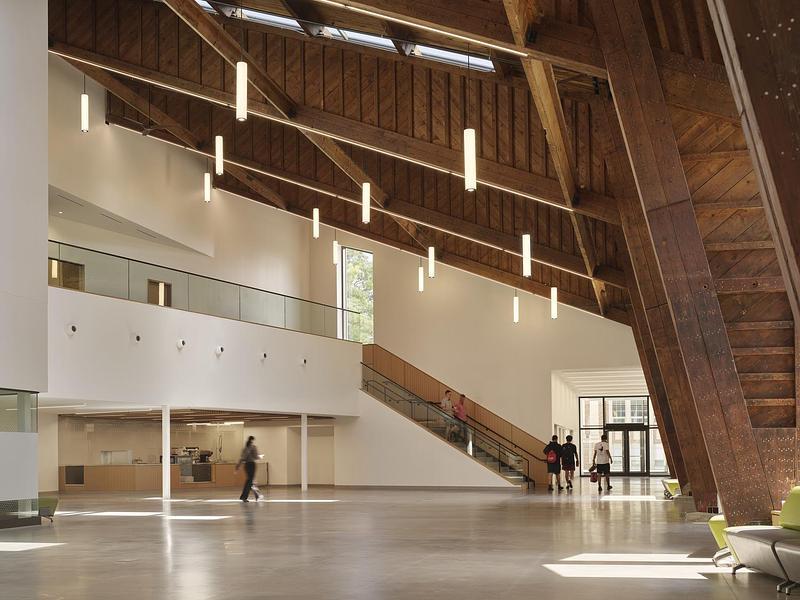
Toronto, Canada, 2026-10-21
De La Salle College John Hunt Student Life Centre
Moriyama Teshima Architects
Céragrès Studio: From Concept to Material. A New Destination for Design.
Discover Céragrès Studio: a brand-new space in the heart of Mile-Ex, bringing together materials, furniture, and expertise. Designed as a true resource hub for design and architecture professionals, the Studio offers an evolving material library, a space for exploration, and a network of collaborators dedicated to bringing your projects to life.
Montreal, Canada, 2026-10-15
KANVA Unveils the Parc Marie-Victorin Museum: Inhabiting the Topography to Reveal a Heritage Forged by Time
KANVA
Montreal, Canada, 2026-10-13
Le Grand-Espace Sherbrooke: A New Cultural Venue
Atelier Paul Laurendeau | NEUF architectes
Montreal, Canada, 2026-09-10
Eglinton Crosstown LRT : Elevating the Quality of Design in the Public Realm
Daoust Lestage Lizotte Stecker Benech
Los Angeles, United States, 2026-09-02
StudioHAU Completes Extensive Renovation and Redesign of the Berkshire Museum’s First Floor Galleries, Aquarium and Public Spaces
StudioHAU
Toronto, Canada, 2026-08-12
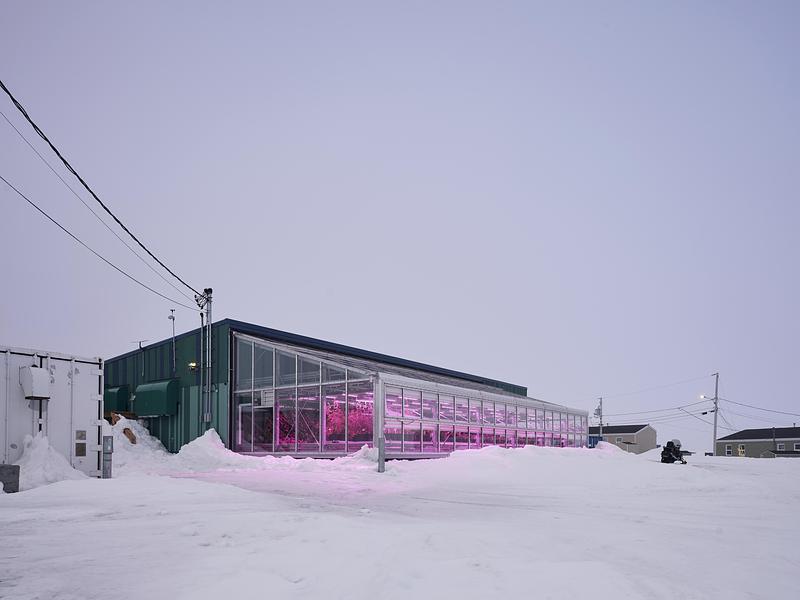
McMaster University Life Sciences Building and Greenhouse
Moriyama Teshima Architects
Philadelphia, United States, 2026-08-12
VMA Brings Lincoln University’s Cresson Hall Back to Life
Voith & Mactavish Architects, LLP (VMA)