Press kit no. 5090-02
Journalists, explore this publication-ready project. Create a free v2com media account to download high-resolution images.
Create a media account
Press Kit | no. 5090-02
Press release only in English
Red Box
Mix Architecture
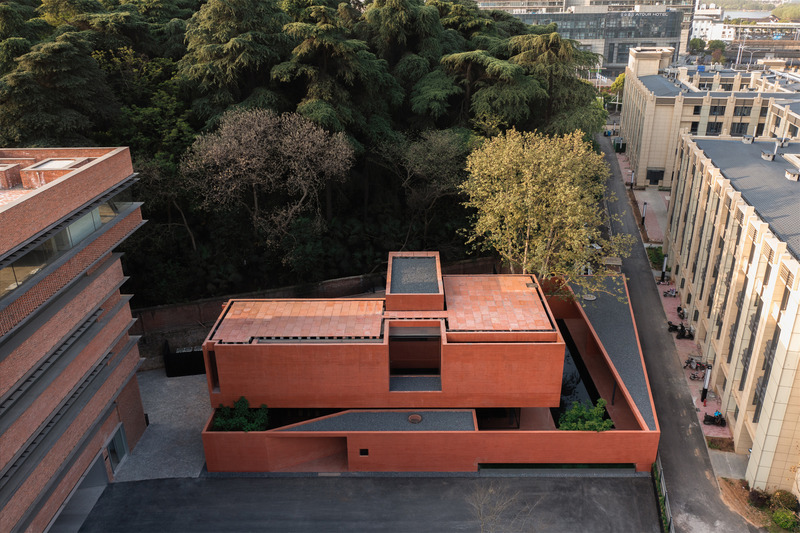
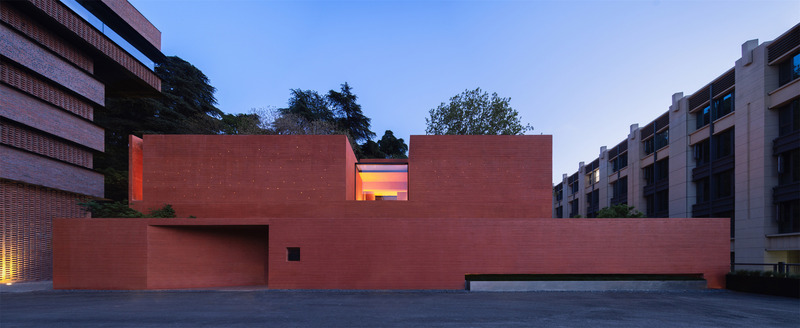
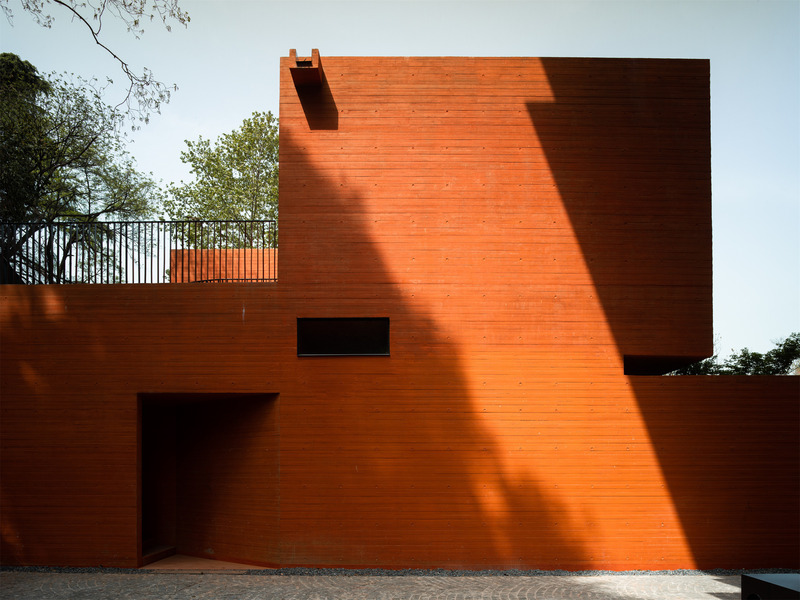
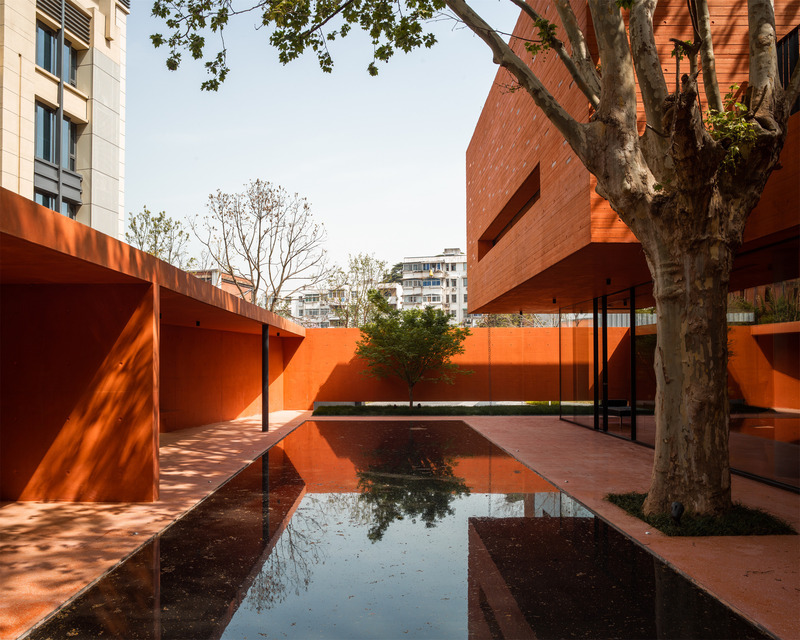
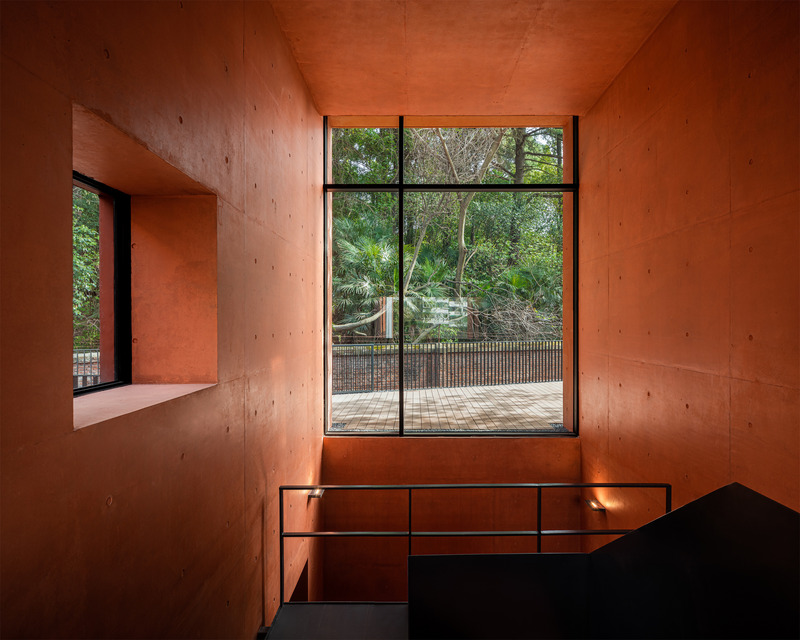
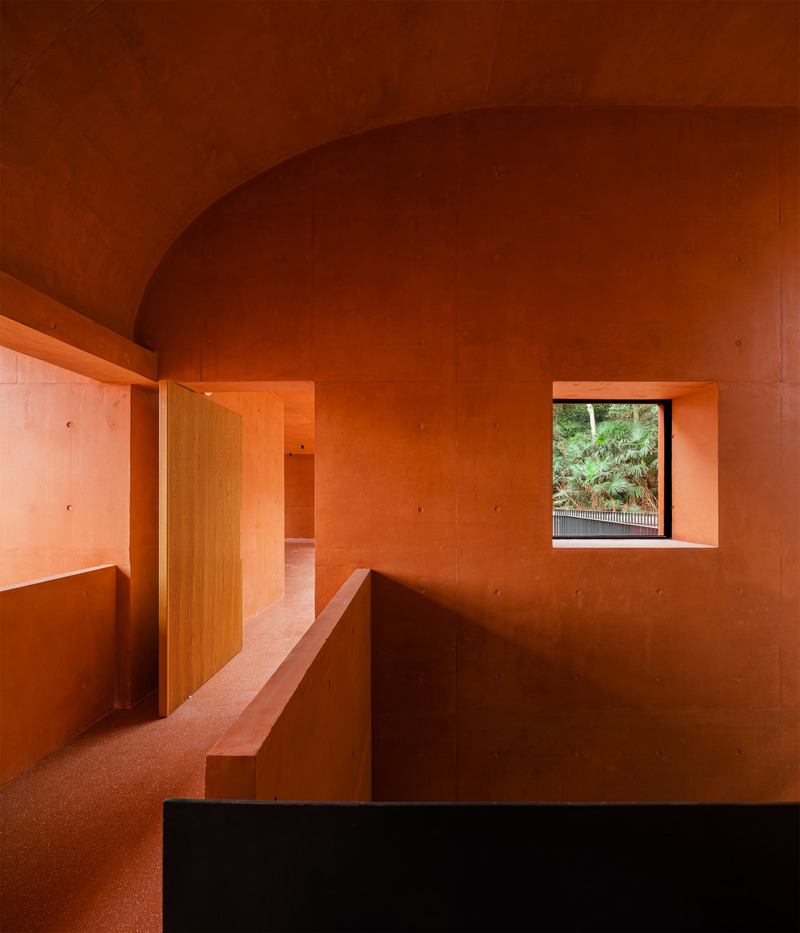
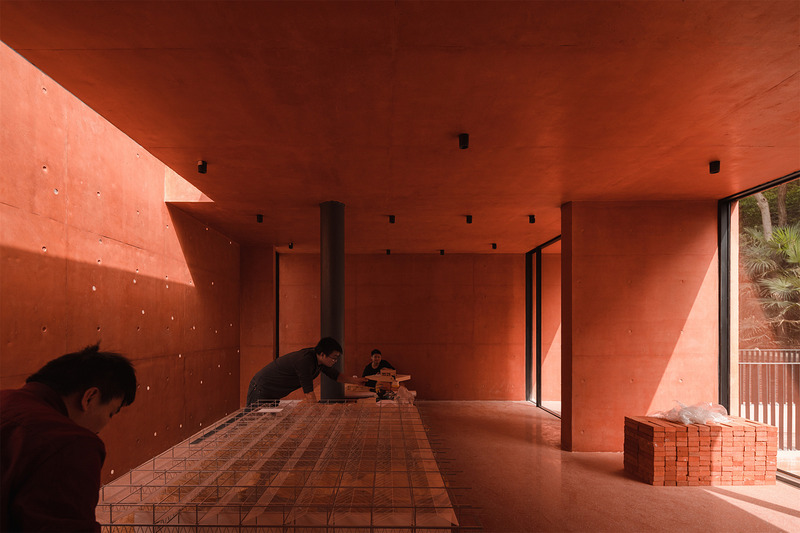
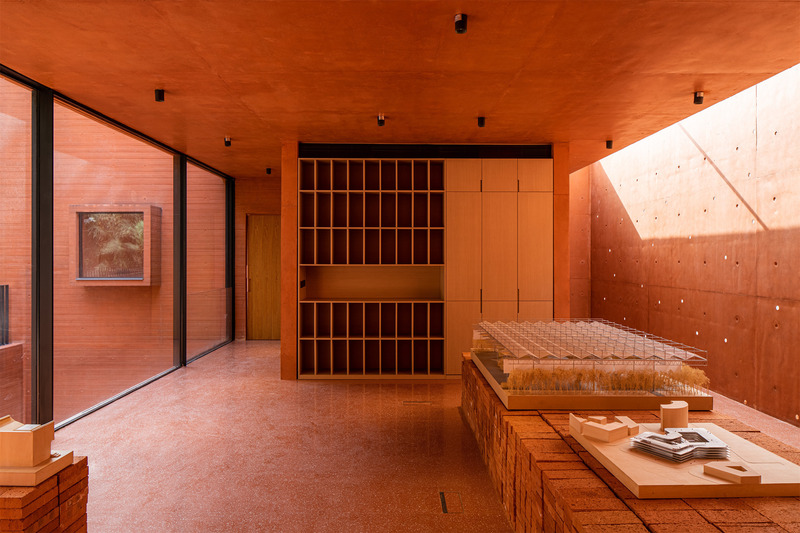
The Red Box, designed by Mix Architecture, is made up of red concrete. "Red" responds to the environment, which has three different meanings.
First, the Red Box responds to the "red" of chronological memory. Red Mountain Park, formerly known as Nanjing Combat Machinery Factory, was founded in the 1950s, and has experienced the vigorous development of the founding of the New China. The "red" memory has accompanied the growth of several generations.
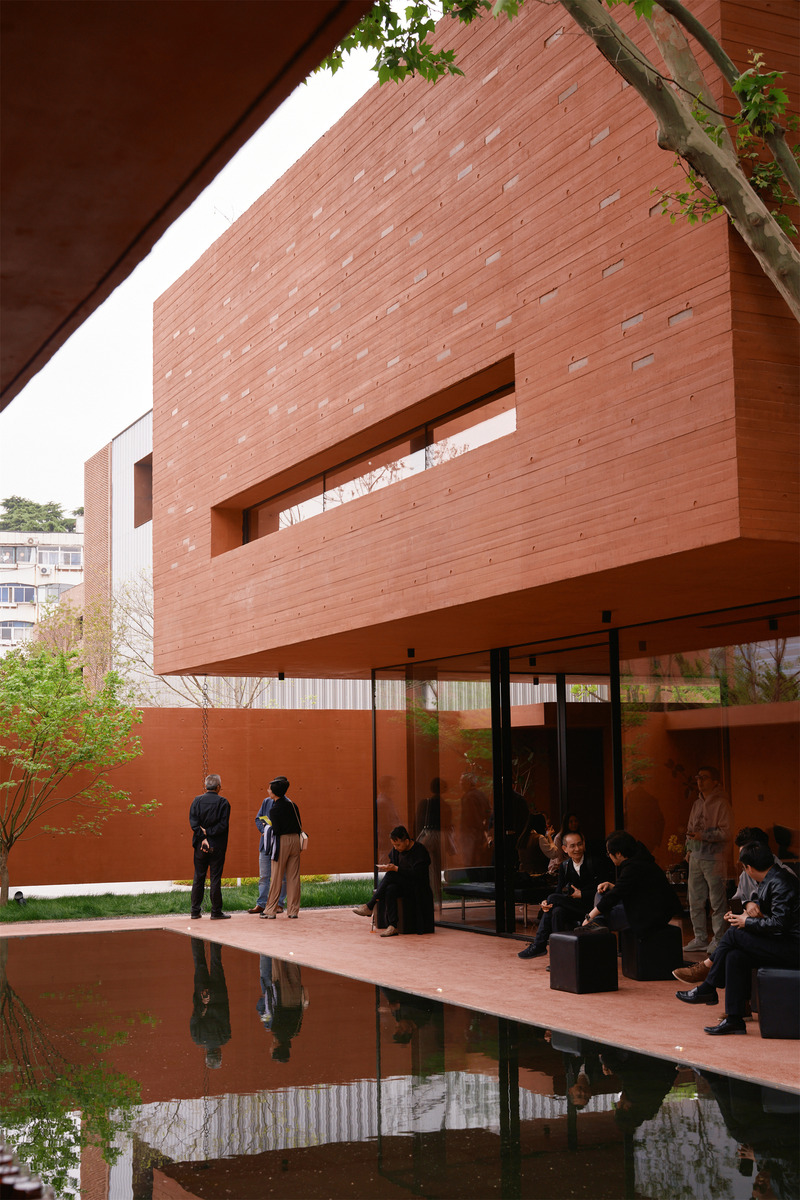
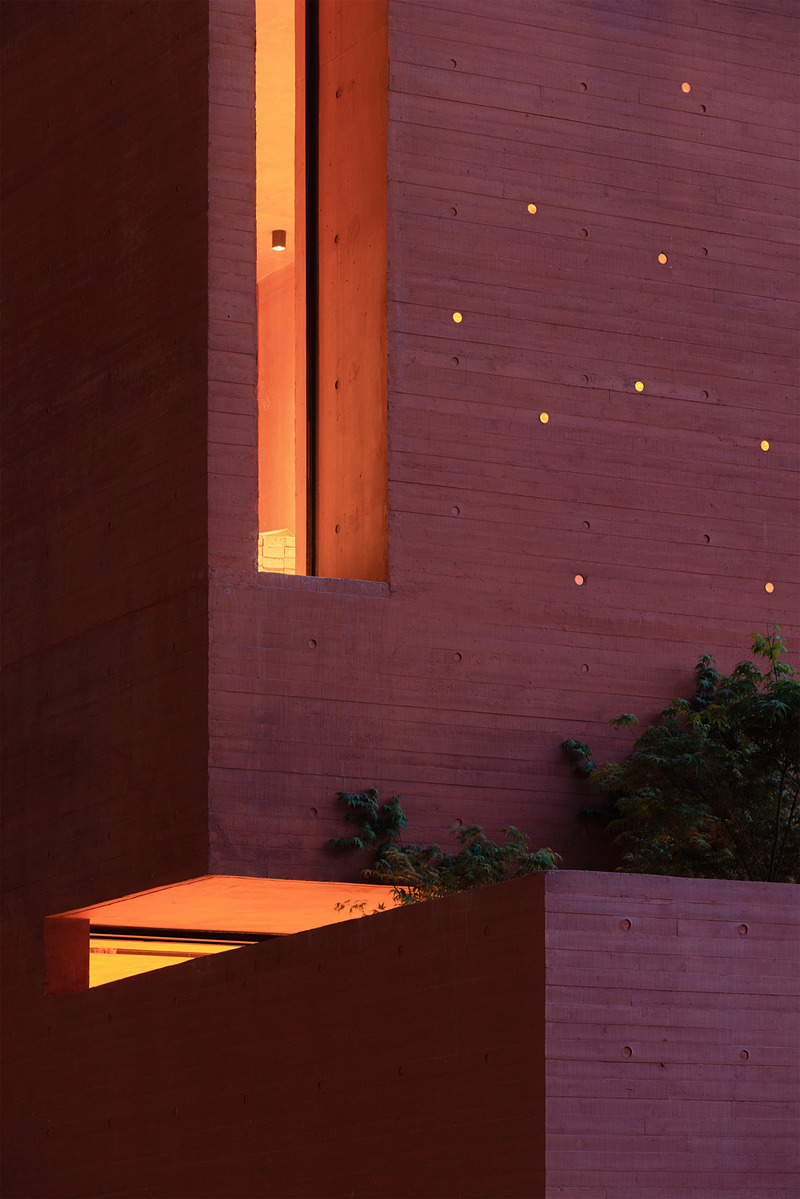
Secondly, in response to the "red" of the original red brick building of the Red Mountain Park factory area, Mix Architecture decided to make the Red Box a unique building with the same rhythm as the factory. Red concrete is poured using wooden templates, and the size of the wood texture is similar to that of existing red bricks.
Finally, the building also responds to the "red" of Red Mountain. Red Mountain was not its original name. Around 1,500 years ago, in the Six Dynasties era, people called it "Great Spectacular Mountain", where Emperor Chen Xuan once inspected the water training of Xuanwu Lake. During the Republic of China period, people noticed the redness of the mountain soil, and then discovered hematite in Red Mountain. Accordingly, the "Great Spectacular Mountain" was gradually called "Red Mountain". In 1948, "Red Mountain" had become its official name and appeared in the "Detailed Map of Nanjing Streets". The main component of hematite is iron oxide, which is exactly what red concrete does to become the main additive of "red".
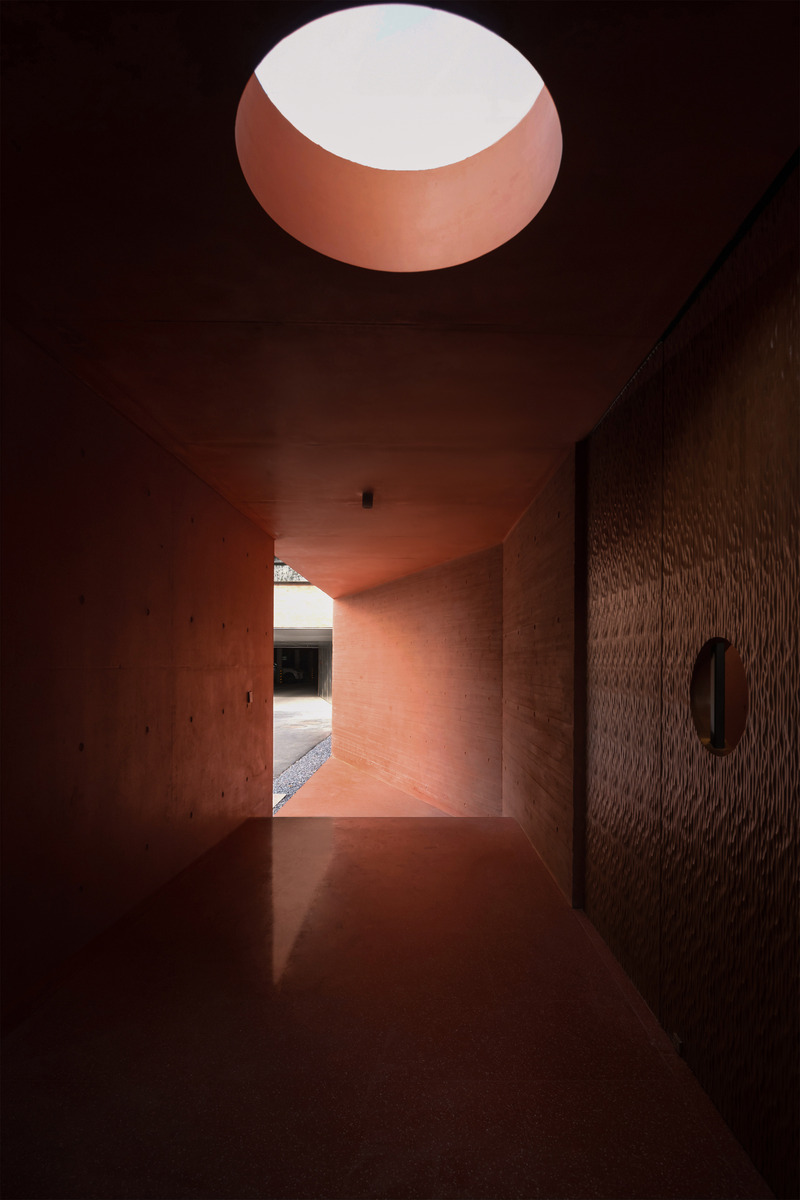
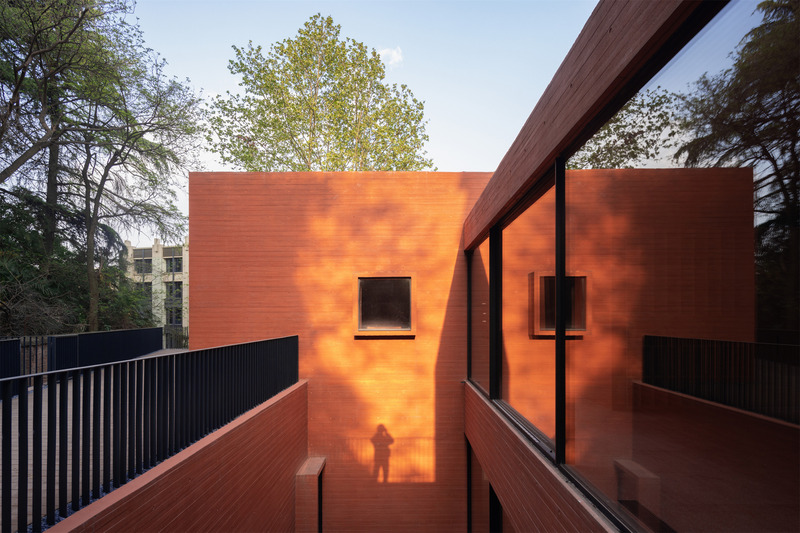
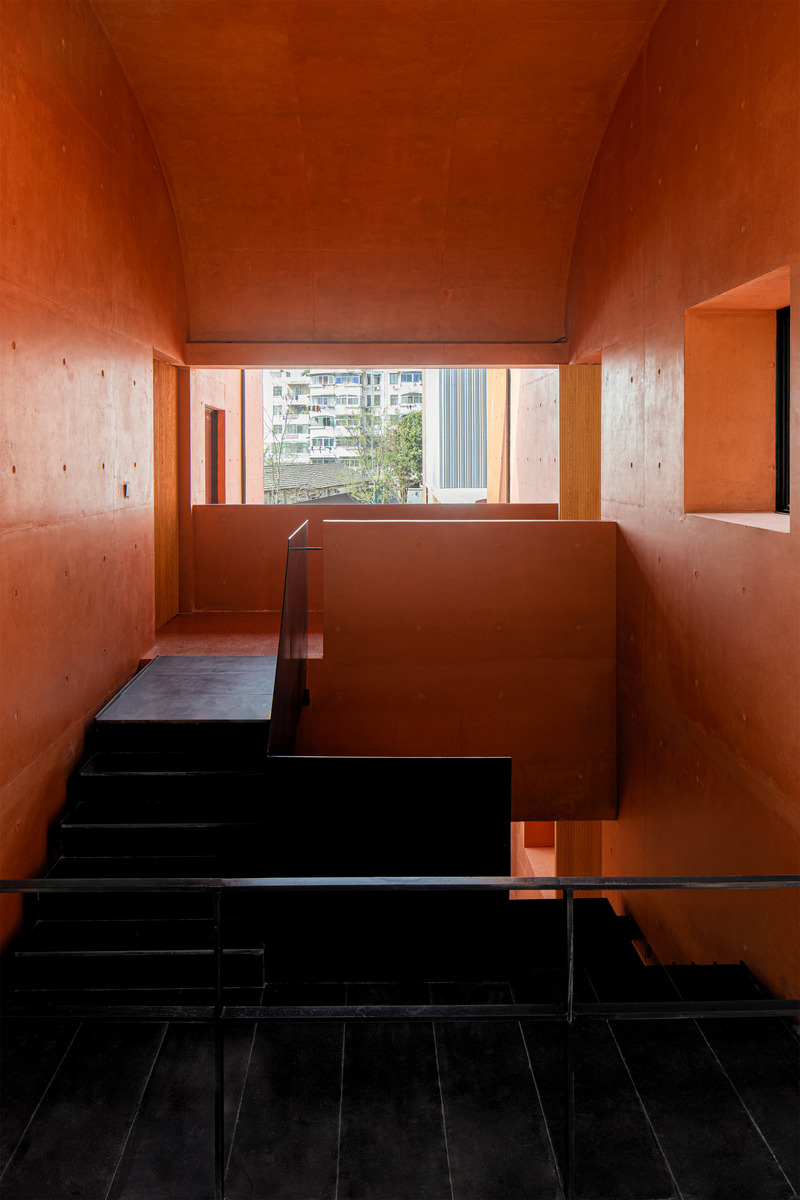
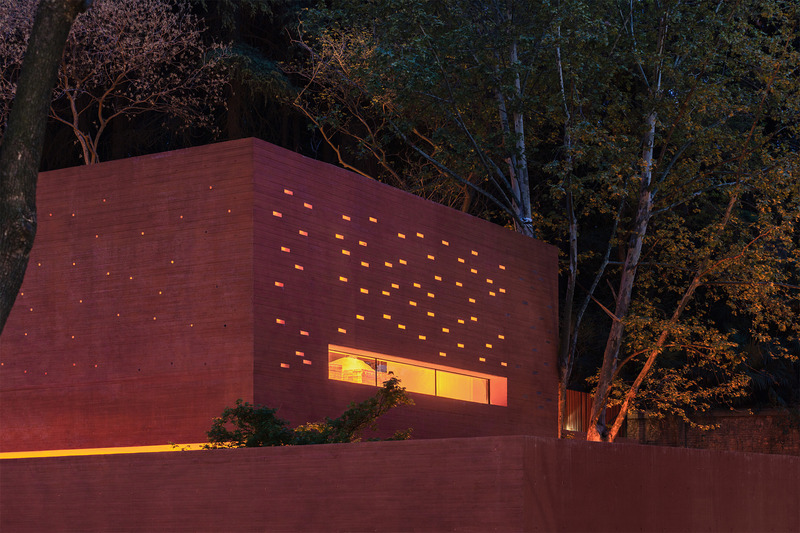
The red box is located at the foot of Red Mountain, with a large solid wall facing the park on the north side, like a rectangular volume floating on the horizontal courtyard wall. The terraces on the south side are stepping backward, echoing the Red Mountain, letting nature merge into the building. A triangle cut in the courtyard wall hides the entrance of the building, allowing the road to wind into the building. The entrance space is high, facing the six-fold staircase.
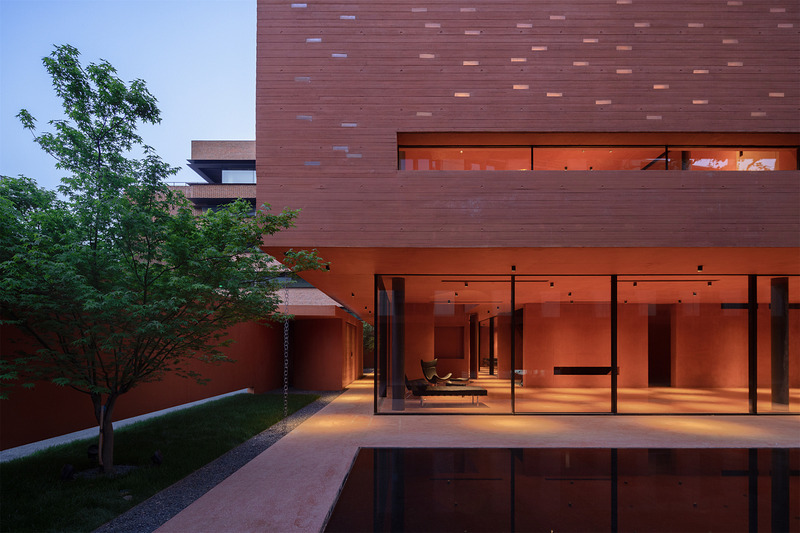
The west side is a public space, which infiltrates with the adjacent courtyard and is the largest courtyard in the red box. A large tree is preserved in the courtyard. The reflecting pool is surrounded by corridors, and the trees and water waves reflect the Red Mountain Forest into the courtyard. The space on the east side is more private.
The north side has a narrow courtyard, while the south side has a pine courtyard, which is evergreen. Walking up the stairs, the corridor connects the two usable spaces on the second floor together, like the bridge. Standing on the bridge and looking south, you see the greenery of the red mountain.
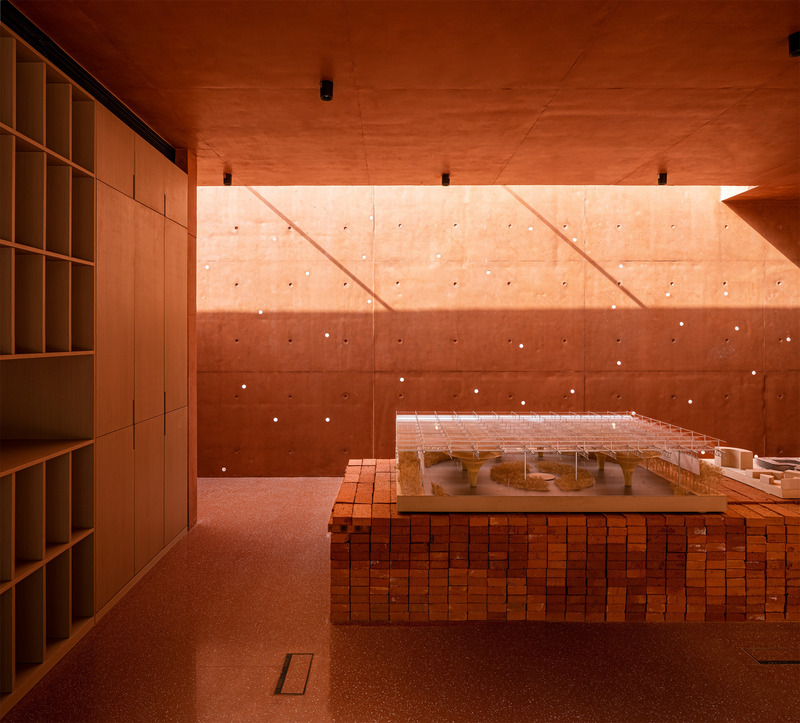
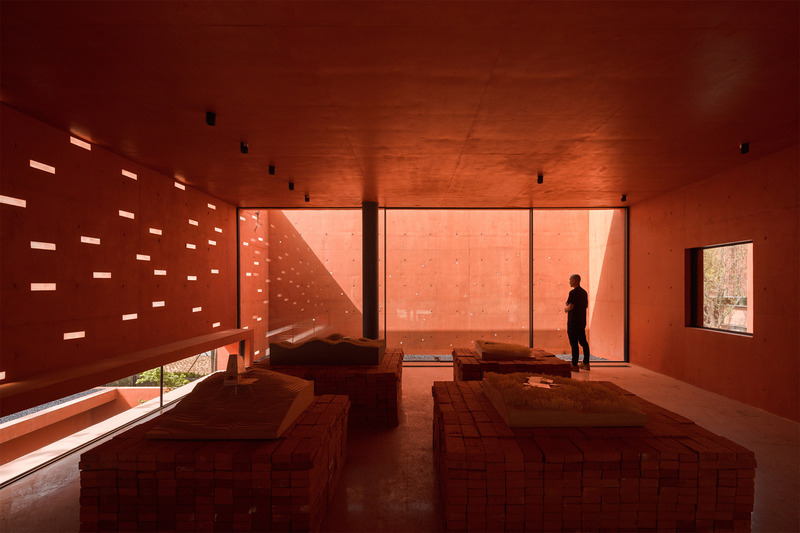
The two main walls of the two spaces on the second floor are made of acrylic semi-permeable material, seemingly randomly embedded in the red concrete wall. One is dot-shaped, which transmits light inside and outside like a starry sky; The other is brick-like, using openwork bricks that complement the red brick buildings in the park. From the interior to the large terrace, the red mountain rushes into the view, making the building a frame as the red mountain melts into the red box.
The determination of the red color of the concrete comes from multiple concrete block pouring tests. After the texture and color met the design requirements, the ratio of raw materials was accurately controlled by a computer during formal construction to ensure that the color was not biased.
The design and construction are highly industrialized, with a synchronous design of architecture, interior, and landscape. The red box is like a mechanical product, exquisite and delicate, integrating indoor and outdoor. To achieve that result, the designer worked closely with multiple manufacturers of concrete, doors and windows, air conditioning, lighting, and many other systems to ensure that all elements were interlocked.
Technical sheet
Project name: Red Box
Project location: Huangjiayu Drive, block 41-1, Hongshan high-tech factory, 16th block, Gulou district, Nanjing, China
Project Owner: Nanjing Construction Machinery Works, Co, Ltd.
Project director: Mix Architecture
Design team: Suning Zhou, Ziye Wu,Ke Yang, Tao Tang
Structural Consultant: Shanghai Wilderness Structural Des. Firm Inc.
Lighting consultant: lumia lab
Construction drawings design: Nanjing Xinghua Architecture Design and Research Institute Co, Ltd.
Landscape construction drawings design: Nanjing 2nd Architecture Design Institute Company
General contractor of construction/ fair-faced concrete: BETONBAU Shanghai Kejian New Materials Technology Co., Ltd
Systematic windows and doors: VBM architecture
Terrazzo: EST Building Materials Technology Co., Ltd
Construction Area: 500 square meters
About Mix Architecture
Founded in 2016, Mix Architecture is committed to exploring the possibility of architecture in various contexts to respond to the most primitive emotional and spiritual needs of human beings. By connecting imagination and reality, Mix Architecture creates space that enters deep consciousness through the exploration of the spirit of the site and the sensitivity to material construction, integrating people, architecture, and nature intrinsically.
As a qualified architectural design firm, its projects cover urban planning, architectural design, interior design, and landscape design. The team has long focused on the design and research of new business formats, cultural revitalization, urban renewal, and rural revitalization, offering creative and comprehensive solutions to increasingly complex and changing urban environmental, social, and cultural needs, and ensuring the integrity and quality of project completion through refined management and control processes.
For more information
Media contact
- Mix Architecture
- Ziye Wu
- mix_architecture@163.com
- +86 13515117308
Attachments
Terms and conditions
For immediate release
All photos must be published with proper credit. Please reference v2com as the source whenever possible. We always appreciate receiving PDF copies of your articles.
Medium-resolution image : 8.33 x 5.55 @ 300dpi ~ 2.1 MB
Medium-resolution image : 8.33 x 3.42 @ 300dpi ~ 910 KB
Medium-resolution image : 8.33 x 6.25 @ 300dpi ~ 1.8 MB
High-resolution image : 8.33 x 12.5 @ 300dpi ~ 1.8 MB
Medium-resolution image : 8.33 x 5.56 @ 300dpi ~ 1.7 MB
Medium-resolution image : 8.33 x 6.67 @ 300dpi ~ 2.2 MB
High-resolution image : 8.33 x 12.5 @ 300dpi ~ 3.2 MB
Medium-resolution image : 8.33 x 5.56 @ 300dpi ~ 1.8 MB
High-resolution image : 8.33 x 12.5 @ 300dpi ~ 2.2 MB
Medium-resolution image : 8.33 x 6.67 @ 300dpi ~ 1.6 MB
Medium-resolution image : 8.33 x 9.72 @ 300dpi ~ 1.7 MB
Medium-resolution image : 8.33 x 5.56 @ 300dpi ~ 1.4 MB
Medium-resolution image : 8.33 x 7.53 @ 300dpi ~ 2 MB
Medium-resolution image : 8.33 x 5.56 @ 300dpi ~ 1.7 MB
Medium-resolution image : 8.33 x 5.56 @ 300dpi ~ 1.3 MB
Medium-resolution image : 8.33 x 5.56 @ 300dpi ~ 2.2 MB
High-resolution image : 8.33 x 12.49 @ 300dpi ~ 3 MB
Advertising
You may also like...

Buffalo, United States, 2026-07-27
Arch&Type Shapes a Buffalo Salon with Curves, Daylight, and an Eight-Foot Oculus
Arch&Type
San Francisco, United States, 2026-07-23
CAW Architects Unveils a Trio of Transformative Theater Projects that Redefine the California Performance Landscape
CAW Architects