Photo gallery
Competition

Find images by browsing the photo gallery by category. Add them to your Pinterest boards. Access the press kit to download the image or view project details.

Create a media account
A’ Design Awards 2014 Winners Announced
A' Design Award and Competition

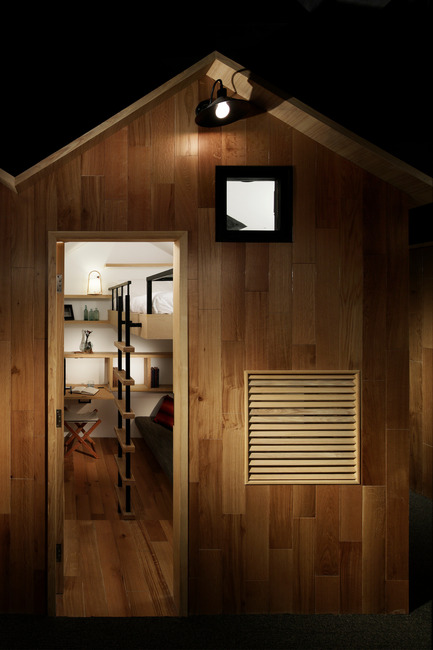
Baan Dinner set cupboard by Mr.Paitoon Keatkeereerut,Chawin HanjingPROJECT DESCRIPTION:"Baan" is a type of cupboard which is specifically designed for the purpose of dinner usage. The strengths and unique appearance is narrative that is related by function. There are several distinguishing features of cabinet systems. The different functions and features of cupboard that are separated by story, such as The Cutlery insert and Box of tissues are represented by fireplace and chimney. Furthermore, The wine glasses are represented by a chandelier and Dish rack is symbolized by the staircase. There are four main components of house whereby narrative ideas can be used to support daily life.

Photo credit:
Paitoon Keateereerut,Supanee suriwong,BAAN,2013.

A’ Design Awards 2014 Winners Announced
A' Design Award and Competition

Baan Dinner set cupboard by Mr.Paitoon Keatkeereerut,Chawin HanjingPROJECT DESCRIPTION:"Baan" is a type of cupboard which is specifically designed for the purpose of dinner usage. The strengths and unique appearance is narrative that is related by function. There are several distinguishing features of cabinet systems. The different functions and features of cupboard that are separated by story, such as The Cutlery insert and Box of tissues are represented by fireplace and chimney. Furthermore, The wine glasses are represented by a chandelier and Dish rack is symbolized by the staircase. There are four main components of house whereby narrative ideas can be used to support daily life.

Photo credit:
Paitoon Keateereerut,Supanee suriwong,BAAN,2013.

A’ Design Awards 2014 Winners Announced
A' Design Award and Competition

Tensegrity Space Frame Light Lighting Structure by Michal Maciej BartosikPROJECT DESCRIPTION:The tensegrity space frame light eliminates previous redundancies between light and structure in order to produce luminous form. Utilizing Snelson's structural discovery, appropriated and popularized by Buckminster Fuller as tensegrity, the light source and its electrical wire work mutually in compression and tension to produce a seemingly discontinuous field of light defined only by its inherent and modular structural logic. 

Photo credit:
Alex Earl Gray, 2013.

A’ Design Awards 2014 Winners Announced
A' Design Award and Competition

Tensegrity Space Frame Light Lighting Structure by Michal Maciej BartosikPROJECT DESCRIPTION:The tensegrity space frame light eliminates previous redundancies between light and structure in order to produce luminous form. Utilizing Snelson's structural discovery, appropriated and popularized by Buckminster Fuller as tensegrity, the light source and its electrical wire work mutually in compression and tension to produce a seemingly discontinuous field of light defined only by its inherent and modular structural logic. 

Photo credit:
Alex Earl Gray, 2013.

A’ Design Awards 2014 Winners Announced
A' Design Award and Competition

Seven Chakras Multifunctional Experience Pavilion by Qiang ShenPROJECT DESCRIPTION:The variety of the space is the unique properties of this design. The space could be changed according to the variety of the functions. Such as a whole day lecture, a week of meditation, two weeks of tea art exhibition, three weeks of painting exhibition and a month of other kinds of exhibition and so on. The area of the space could be adjusted free according to the actual function.

Photo credit:
shen-photo.com,2013.

A’ Design Awards 2014 Winners Announced
A' Design Award and Competition

Seven Chakras Multifunctional Experience Pavilion by Qiang ShenPROJECT DESCRIPTION:The variety of the space is the unique properties of this design. The space could be changed according to the variety of the functions. Such as a whole day lecture, a week of meditation, two weeks of tea art exhibition, three weeks of painting exhibition and a month of other kinds of exhibition and so on. The area of the space could be adjusted free according to the actual function.

Photo credit:
shen-photo.com,2013.

A’ Design Awards 2014 Winners Announced
A' Design Award and Competition

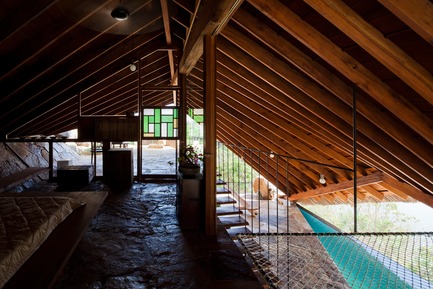
Screen House Eco Residential by Renaissance Planners & DesignersPROJECT DESCRIPTION:The existing house was dark and poor cross ventilation. Therefore we propose a new concept to have large windows, but at the same time filtering the heat from the sun. The stairs acts as an airwell with a skylight and ventilation vents.Thus improving the air circulation in the house keeping it constantly cool. The screen on the external facade not only acts as shade from the sun but also giving privacy for the user as the neighbouring houses are built closely to each other.

Photo credit:
Renaissance Planners & Designers, 2013.

A’ Design Awards 2014 Winners Announced
A' Design Award and Competition

Screen House Eco Residential by Renaissance Planners & DesignersPROJECT DESCRIPTION:The existing house was dark and poor cross ventilation. Therefore we propose a new concept to have large windows, but at the same time filtering the heat from the sun. The stairs acts as an airwell with a skylight and ventilation vents.Thus improving the air circulation in the house keeping it constantly cool. The screen on the external facade not only acts as shade from the sun but also giving privacy for the user as the neighbouring houses are built closely to each other.

Photo credit:
Renaissance Planners & Designers, 2013.

A’ Design Awards 2014 Winners Announced
A' Design Award and Competition

Screen House Eco Residential by Renaissance Planners & DesignersPROJECT DESCRIPTION:The existing house was dark and poor cross ventilation. Therefore we propose a new concept to have large windows, but at the same time filtering the heat from the sun. The stairs acts as an airwell with a skylight and ventilation vents.Thus improving the air circulation in the house keeping it constantly cool. The screen on the external facade not only acts as shade from the sun but also giving privacy for the user as the neighbouring houses are built closely to each other.

Photo credit:
Renaissance Planners & Designers, 2013.

A’ Design Awards 2014 Winners Announced
A' Design Award and Competition

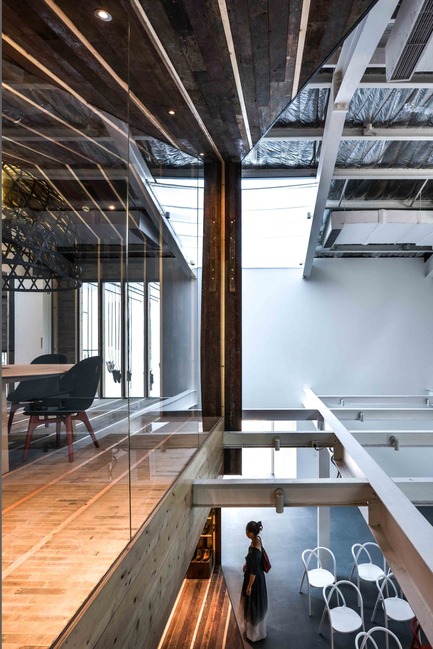
Architecture Factory Cork Institute of Technology by Marc O Riain & Neil TobinPROJECT DESCRIPTION:The Architecture Factory is a third level education and learning space situated in a disused split-level warehouse. The brief was informed primarily by cost effective occupancy and the desire for studio pedagogy. The design avoided traditional subdivision of walls and ceilings; requiring sub divided servicing and expensive firewalls. 6 shipping containers function as lecturer's offices dividing the space it into open studios separated from a mezzanine by an open boulevard acting as an exploration-learning lab, an opportunistic exhibition space, and the main circulation. Creating a visually open connection between occupants to encourage interaction between peer groups. Below the mezzanine frameless glazing minimally delineate the recessed acoustic boundaries avoiding a long monolithic horizontal interior façade. The balcony anamorphically distorts the perspectival emphasis. First floor transparencies offer excitement and vista to the activities below. Green shipping containers, reuse embodied energy and radiate a chromatic energy within the space. Roof sections are serrated creating a repetitive texture angled southward for light and away from the mezzanine windows for privacy. The resulting textural composition creates differing cognate compositions depending on whether they are viewed from above or below. Open plan studios occupy parti spaces between geometric organizations of containers in un-partitioned relief. Dedicated work-spaces with wire shelving above, function as both storage and acoustic baffle. The 6 acoustically open offices and studios function intelligibility well. Enclosed seminar rooms below the mezzanine provide more acoustically private spaces for theory delivery and discussion. Student-to-student learning is a natural consequence. The industrial heritage of the building strongly influenced how the scheme aesthetic maintained the genius loci. The use of containers reflects the manufacturing process. The white and grey provides an interior canvas carefully refined to minimize complexity. Color proportionality and density emphasizes the containers but is sensitively balanced not to perceptively dominate the space. 

Photo credit:
Janice O Connell F22 Photography

A’ Design Awards 2014 Winners Announced
A' Design Award and Competition

Architecture Factory Cork Institute of Technology by Marc O Riain & Neil TobinPROJECT DESCRIPTION:The Architecture Factory is a third level education and learning space situated in a disused split-level warehouse. The brief was informed primarily by cost effective occupancy and the desire for studio pedagogy. The design avoided traditional subdivision of walls and ceilings; requiring sub divided servicing and expensive firewalls. 6 shipping containers function as lecturer's offices dividing the space it into open studios separated from a mezzanine by an open boulevard acting as an exploration-learning lab, an opportunistic exhibition space, and the main circulation. Creating a visually open connection between occupants to encourage interaction between peer groups. Below the mezzanine frameless glazing minimally delineate the recessed acoustic boundaries avoiding a long monolithic horizontal interior façade. The balcony anamorphically distorts the perspectival emphasis. First floor transparencies offer excitement and vista to the activities below. Green shipping containers, reuse embodied energy and radiate a chromatic energy within the space. Roof sections are serrated creating a repetitive texture angled southward for light and away from the mezzanine windows for privacy. The resulting textural composition creates differing cognate compositions depending on whether they are viewed from above or below. Open plan studios occupy parti spaces between geometric organizations of containers in un-partitioned relief. Dedicated work-spaces with wire shelving above, function as both storage and acoustic baffle. The 6 acoustically open offices and studios function intelligibility well. Enclosed seminar rooms below the mezzanine provide more acoustically private spaces for theory delivery and discussion. Student-to-student learning is a natural consequence. The industrial heritage of the building strongly influenced how the scheme aesthetic maintained the genius loci. The use of containers reflects the manufacturing process. The white and grey provides an interior canvas carefully refined to minimize complexity. Color proportionality and density emphasizes the containers but is sensitively balanced not to perceptively dominate the space. 

Photo credit:
Janice O Connell F22 Photography

A’ Design Awards 2014 Winners Announced
A' Design Award and Competition

Malopolska Garden of Arts (MGA) Performing arts centre & mediatheque by Ingarden & Ewý ArchitectsPROJECT DESCRIPTION:The building of MGA introduced new spatial order to the old backyards and ruined buildings in Rajska and Szujskiego streets in Krakow. The starting point was a multifunctional hall, which was entered into the outline of the old, 19th-century horse-riding arena, used in the last years of its history as workshops and storage space for the Juliusz Słowacki Theatre in Kraków. The Małopolska Garden of Arts is a cross between two institutions: the Juliusz Słowacki Theatre and the Malopolska Voivodeship Library. The wing on Szujskiego street holds a modern art and media library, with multimedia books and music, while the section standing on Rajska street has been developed by the theatre, and is equipped with a multifunctional events hall. The new hall – operating, as a studio theatre, conference room, concert hall, and venue for banquets and exhibitions – holds retractable stages for 300 people. State-of-the-art stage technology is present overhead: fixed on hoists and cranes to the steel ceiling girders. This allows dramas and concerts to be performed, and exhibitions, film screenings, symposiums, conferences, art auctions, fashion shows, and many more events to be held. Altogether, the space of about 4300 sq.m houses a theatre together with a cosy cinema with 98 seats, a café, and premises for the organisation of educational, art-related activities. Honing the form, the architects focused on interaction with the future recipients, which is why the entire spatial form of the symbolic, openwork roofing raised over the garden from the side of Rajska Street – though not functioning as an actual roof – is there to transport the gateway to the stage out onto the street. In this way, the building delicately nudges passers-by with the skilful manipulation of the form, already at first glance giving the onlooker the impression of going beyond the borders of a garden, where culture is grown in evenly planted rows. Further proof of the sophisticated play with the space is the garden itself. Imitating flower beds, the equal bands with low greens are a metaphor of a garden: as much as the architects could afford here. A notable fact is that historically “ulica Rajska” – literally “Paradise Street” – led to the Garden of Paradise, which was later replaced by the developments of the Tobacco Works. The final impact is the result of the designers’ sensitivity to signals coming from the environment. For example, the opening in the perforated roof of the garden was formed, especially for the maple tree that grows there. In this place, the cultural life of the Kraków’s young artistic set will blossom under a shared roof. Modern ballet, contemporary theatre forms, audio and video arts, concerts, and all and any other artistic pursuits will find their home here.

Photo credit:
Marcin Czechowicz / MURATOR ©, 201

A’ Design Awards 2014 Winners Announced
A' Design Award and Competition

Malopolska Garden of Arts (MGA) Performing arts centre & mediatheque by Ingarden & Ewý ArchitectsPROJECT DESCRIPTION:The building of MGA introduced new spatial order to the old backyards and ruined buildings in Rajska and Szujskiego streets in Krakow. The starting point was a multifunctional hall, which was entered into the outline of the old, 19th-century horse-riding arena, used in the last years of its history as workshops and storage space for the Juliusz Słowacki Theatre in Kraków. The Małopolska Garden of Arts is a cross between two institutions: the Juliusz Słowacki Theatre and the Malopolska Voivodeship Library. The wing on Szujskiego street holds a modern art and media library, with multimedia books and music, while the section standing on Rajska street has been developed by the theatre, and is equipped with a multifunctional events hall. The new hall – operating, as a studio theatre, conference room, concert hall, and venue for banquets and exhibitions – holds retractable stages for 300 people. State-of-the-art stage technology is present overhead: fixed on hoists and cranes to the steel ceiling girders. This allows dramas and concerts to be performed, and exhibitions, film screenings, symposiums, conferences, art auctions, fashion shows, and many more events to be held. Altogether, the space of about 4300 sq.m houses a theatre together with a cosy cinema with 98 seats, a café, and premises for the organisation of educational, art-related activities. Honing the form, the architects focused on interaction with the future recipients, which is why the entire spatial form of the symbolic, openwork roofing raised over the garden from the side of Rajska Street – though not functioning as an actual roof – is there to transport the gateway to the stage out onto the street. In this way, the building delicately nudges passers-by with the skilful manipulation of the form, already at first glance giving the onlooker the impression of going beyond the borders of a garden, where culture is grown in evenly planted rows. Further proof of the sophisticated play with the space is the garden itself. Imitating flower beds, the equal bands with low greens are a metaphor of a garden: as much as the architects could afford here. A notable fact is that historically “ulica Rajska” – literally “Paradise Street” – led to the Garden of Paradise, which was later replaced by the developments of the Tobacco Works. The final impact is the result of the designers’ sensitivity to signals coming from the environment. For example, the opening in the perforated roof of the garden was formed, especially for the maple tree that grows there. In this place, the cultural life of the Kraków’s young artistic set will blossom under a shared roof. Modern ballet, contemporary theatre forms, audio and video arts, concerts, and all and any other artistic pursuits will find their home here.

Photo credit:
Marcin Czechowicz / MURATOR ©, 201

A’ Design Awards 2014 Winners Announced
A' Design Award and Competition

Malopolska Garden of Arts (MGA) Performing arts centre & mediatheque by Ingarden & Ewý ArchitectsPROJECT DESCRIPTION:The building of MGA introduced new spatial order to the old backyards and ruined buildings in Rajska and Szujskiego streets in Krakow. The starting point was a multifunctional hall, which was entered into the outline of the old, 19th-century horse-riding arena, used in the last years of its history as workshops and storage space for the Juliusz Słowacki Theatre in Kraków. The Małopolska Garden of Arts is a cross between two institutions: the Juliusz Słowacki Theatre and the Malopolska Voivodeship Library. The wing on Szujskiego street holds a modern art and media library, with multimedia books and music, while the section standing on Rajska street has been developed by the theatre, and is equipped with a multifunctional events hall. The new hall – operating, as a studio theatre, conference room, concert hall, and venue for banquets and exhibitions – holds retractable stages for 300 people. State-of-the-art stage technology is present overhead: fixed on hoists and cranes to the steel ceiling girders. This allows dramas and concerts to be performed, and exhibitions, film screenings, symposiums, conferences, art auctions, fashion shows, and many more events to be held. Altogether, the space of about 4300 sq.m houses a theatre together with a cosy cinema with 98 seats, a café, and premises for the organisation of educational, art-related activities. Honing the form, the architects focused on interaction with the future recipients, which is why the entire spatial form of the symbolic, openwork roofing raised over the garden from the side of Rajska Street – though not functioning as an actual roof – is there to transport the gateway to the stage out onto the street. In this way, the building delicately nudges passers-by with the skilful manipulation of the form, already at first glance giving the onlooker the impression of going beyond the borders of a garden, where culture is grown in evenly planted rows. Further proof of the sophisticated play with the space is the garden itself. Imitating flower beds, the equal bands with low greens are a metaphor of a garden: as much as the architects could afford here. A notable fact is that historically “ulica Rajska” – literally “Paradise Street” – led to the Garden of Paradise, which was later replaced by the developments of the Tobacco Works. The final impact is the result of the designers’ sensitivity to signals coming from the environment. For example, the opening in the perforated roof of the garden was formed, especially for the maple tree that grows there. In this place, the cultural life of the Kraków’s young artistic set will blossom under a shared roof. Modern ballet, contemporary theatre forms, audio and video arts, concerts, and all and any other artistic pursuits will find their home here.

Photo credit:
Marcin Czechowicz / MURATOR ©, 201

A’ Design Awards 2014 Winners Announced
A' Design Award and Competition

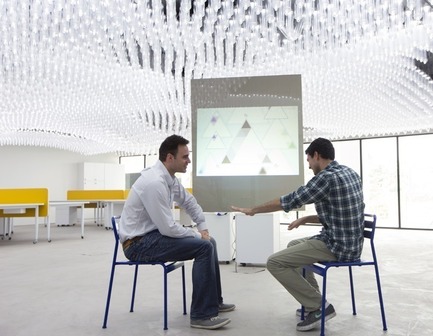
Google Campus Dublin Office Interior Design by Camenzind EvolutionPROJECT DESCRIPTION:In June 2013, Google Ireland opened the doors to its thriving new campus: Four buildings located in the heart of Dublin’s historic docklands district. With over 47000 m2 of unique office space, the Campus represents the Google EU Head-quarters and serves as the centre for sales and finances in Europe, the Middle East and Africa (EMEA).

Photo credit:
Peter Würmli

A’ Design Awards 2014 Winners Announced
A' Design Award and Competition

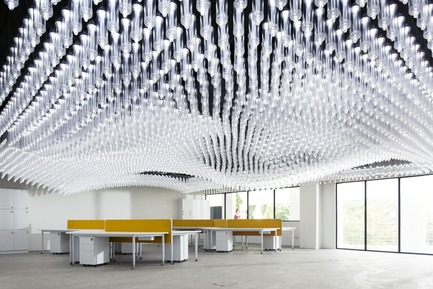
Google Campus Dublin Office Interior Design by Camenzind EvolutionPROJECT DESCRIPTION:In June 2013, Google Ireland opened the doors to its thriving new campus: Four buildings located in the heart of Dublin’s historic docklands district. With over 47000 m2 of unique office space, the Campus represents the Google EU Head-quarters and serves as the centre for sales and finances in Europe, the Middle East and Africa (EMEA).

Photo credit:
Peter Würmli

A’ Design Awards 2014 Winners Announced
A' Design Award and Competition

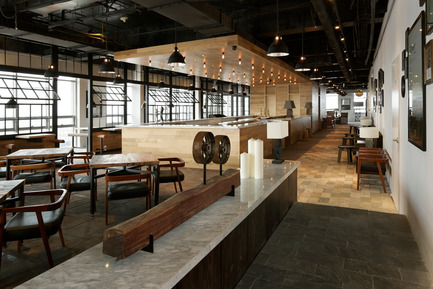
TAKEMOTO Japanese Restaurant - by Arthur Wing Fat ChanPROJECT DESCRIPTION:A new theatrical dining experience cross-over traditional Japanese cuisine. The restaurant contains a “thirty people open dining area” and “eleven VIP rooms” .The open dining area and stage like food bar were surrounded by an illuminated uplight glass walk path which made the centre stage as a statement. Natural bamboo ceiling feature with directional spot lights in a dark color open ceiling is another dramatic element to the main theme and helps drawing attention to the centre. VIP rooms were visually connected through a wood frame sliding door inserted with an engraved sandblasted glass panel of traditional fabric weaving pattern. Combination of different shades of neutral warm tone gives a rustic outlook while dark color wood made it contrasting. Natural wood and stone finishes from smooth to heavy texture together with stage lighting effect to create layers of color shade and depth.

A’ Design Awards 2014 Winners Announced
A' Design Award and Competition

Opx2 Optic Installation by Jonathon AndersonPROJECT DESCRIPTION:OPX2 is made of 8000 aluminum rods 15cm in length and 1.5mm in diameter. 3D printing technology was used to fabricate each of the 2000 connections making it possible to aggregate the structure by holding each rod at an exact angle. The modularity of parts allows for Opx2 to expand and contract to any size. The photos represent a structure that is 2m x 2m x 2m and assembled with a violet gradient of connection parts.

Photo credit:
Jonathon Anderson , 2013.

A’ Design Awards 2014 Winners Announced
A' Design Award and Competition

Una Side Table by Conor McDonaldPROJECT DESCRIPTION:the grace and simplicity of the una are achieved by capitalizing on the inherent strength and flexibility of plywood and the tension achieved through precise design considerations. the strength of the plywood affords volume and structure to the base. its flexibility and resulting tension allow the glass surface to be incorporated. by using traditional materials and manufacturing techniques in an untraditional way, una defines its own space without being foreign, both embracing and challenging the basic principles of design. 

Photo credit:
Conor McDonald, 2013.

A’ Design Awards 2014 Winners Announced
A' Design Award and Competition

Rough Chic Kitchen Cabinet Door Material by MiralisPROJECT DESCRIPTION:This product enhances the features and characteristics of wood altered by the seasons. It is textured like barn wood. The beauty of this product lies in the details of a perfectly textured wood and the authenticity of each natural characteristic cleverly revealed such as knots, cracks, spalted wood, grub holes, termite holes and/or natural splinters. This design is available in 2 different model (slab and shaker) and six different colours including natural. This product allows designers to perfectly align the rough and the chic. 

Photo credit:
Miralis and Pixi Studio