Press kit no. 837-55
Journalists, explore this publication-ready project. Create a free v2com media account to download high-resolution images.
Create a media account
Press Kit | no. 837-55
The Creations Presented as Part of the 27th Edition of the International Garden Festival Evolve Throughout the Summer
Festival international de jardins | Jardins de Métis
Under the theme Mapping
Sensitivity, Ève De Garie-Lamanque, Artistic Director, invited designers from all backgrounds to design a garden using a sensitive, fundamentally inclusive, and relational approach.
The 27th edition of the International Garden Festival is open to the public until October 4, 2026. Under the theme Mapping Sensitivity, Artistic Director Ève De Garie-Lamanque invited designers from diverse backgrounds to create gardens through a sensitive, fundamentally inclusive and relational approach.
Among the 204 project proposals submitted by designers from 29 countries, 5 were selected. A total of nearly 30 contemporary gardens are featured on site in this year’s edition. The call for submissions for the 28th edition of the Festival in 2027 will be released on September 2, 2026.
“This 27th edition once again confirms the unique place the International Garden Festival occupies on the contemporary creative scene. Receiving 204 submissions from 29 countries is a testament to the Festival’s international reach and the interest it generates among creators from around the world. What particularly delights us, however, is seeing these projects come to life and transform throughout the summer. As the plants grow, materials evolve and the light changes, the gardens reveal themselves differently with each visit. It is truly a joy to see visitors of all ages be surprised, play, contemplate, touch and inhabit these creations. It is this meeting of artistic excellence, experimentation and the pleasure of discovery that has defined the Festival’s remarkable character for the past 27 years,” says Alexander Reford, co-founder and director of the International Garden Festival.
This Year’s Theme | Mapping Sensitivity
In the wake of the triennial thematic cycle initiated a year ago, Mapping Sensitivity pursues an ongoing reflection on the poetics of space – namely, how we relate to our physical surroundings and, more broadly, to the world. Whereas Borders focused on the challenges of organizing and representing geographic space, foregrounding geopolitical concerns, the theme of the 27th edition takes le tournant sensible [the sensitive turn].
It draws its inspiration from sensitive mapping, which, far more than a simple alternative to traditional cartography, is concerned with the subjective and immaterial dimensions of a place. Sensitive mapping traces the shared representations of a space that is described, lived, and felt. It takes into account users’ real experience of a given space and the emotional relationship that they develop with it, considering cultural, phenomenological, experiential, cognitive and contextual factors.
The Winning Projects and Designers
Hugh Taylor | Manitoba, Canada + United States
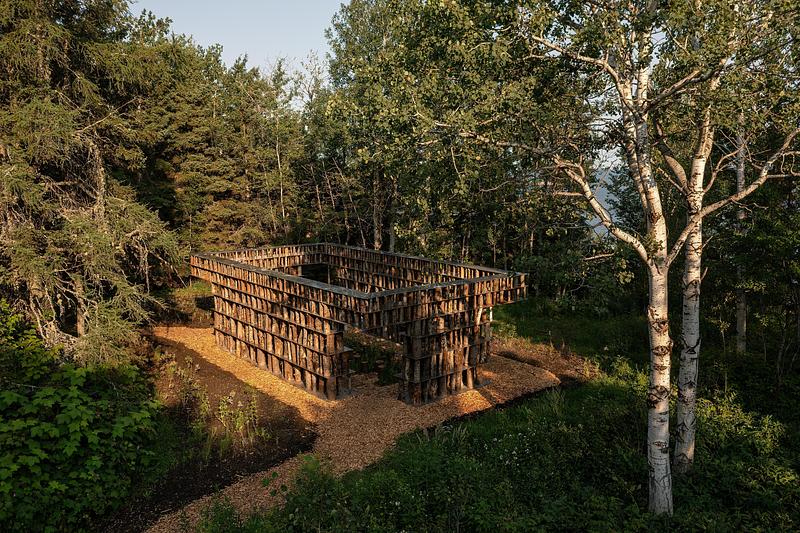
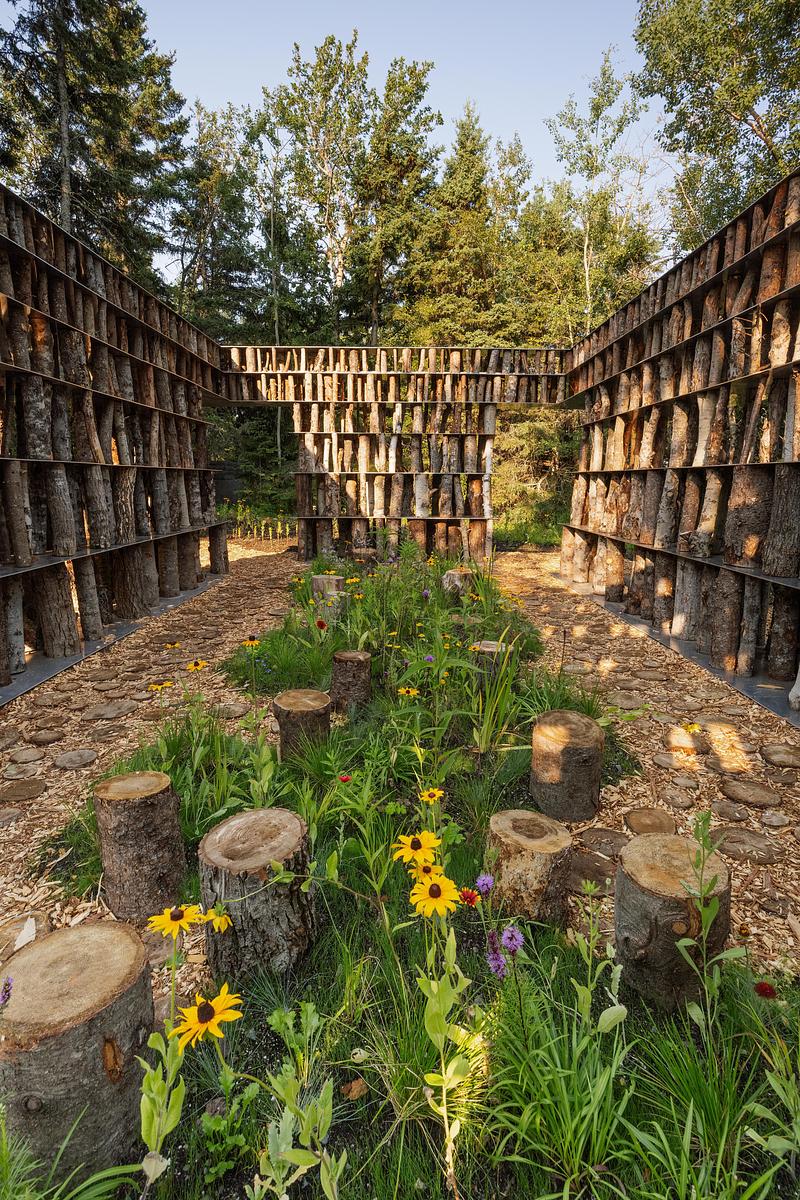
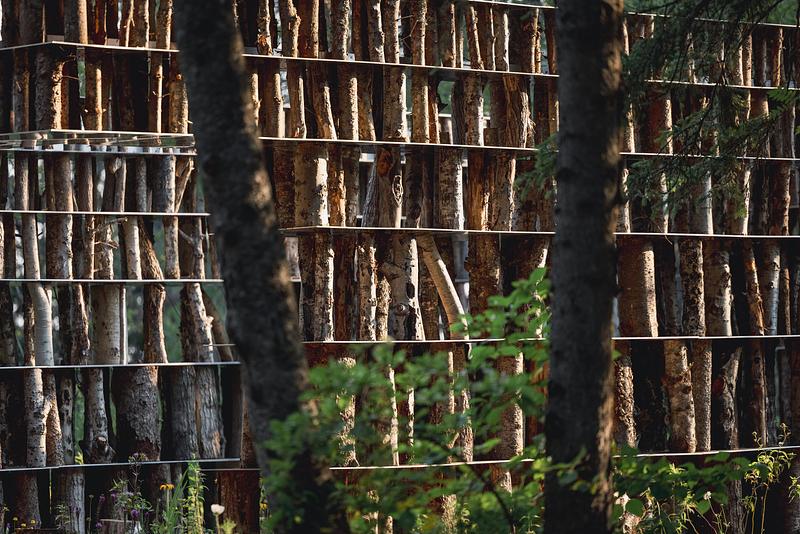
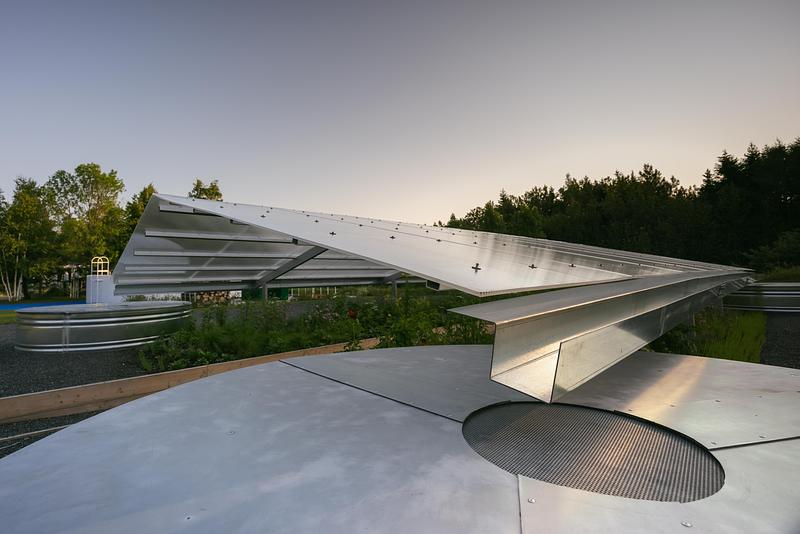
Again, a Garden is a walled garden – a pavilion constructed from cut fallen logs sandwiched between aluminium plates – within which native pollinator species are planted. It traces the flows of life in the garden and its nearby environment. Even as it provides moments for rest and reflection, the garden encourages visitors to become aware of their surroundings as a cycle where decay and life are understood as integral parts of a single system.
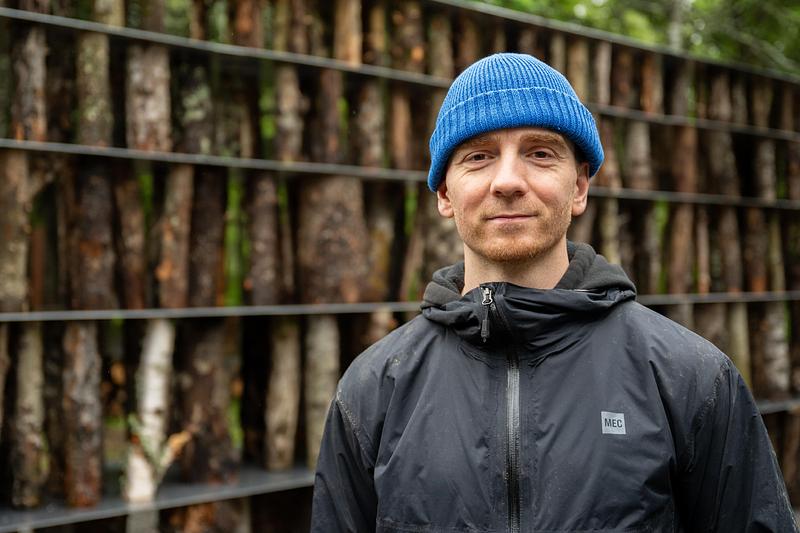
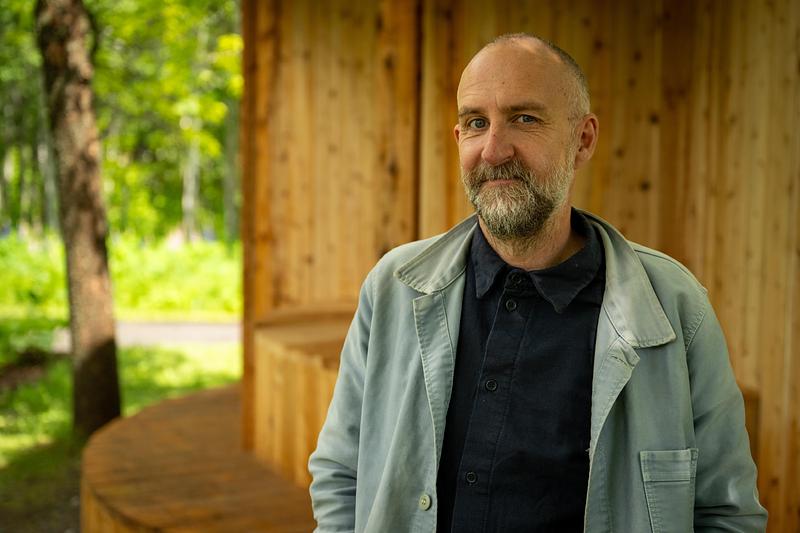
Hugh Taylor is an architectural designer from Winnipeg, Manitoba. He holds a degree in environmental design from the University of Manitoba and a master’s degree with distinction in architecture from Harvard University. In addition to pursuing his own design projects, he has worked with architectural firms such as 5458796 Architecture in Winnipeg and Herzog & De Meuron in Switzerland, and he is currently working with AW-ARCH in Cambridge, Massachusetts. In his personal work, he blends architectural precision and natural forms, in which assemblages and materiality are sensitively chosen to be responsive to natural, urban, and cultural contexts.
Ulli Heckmann | Germany + the Netherlands
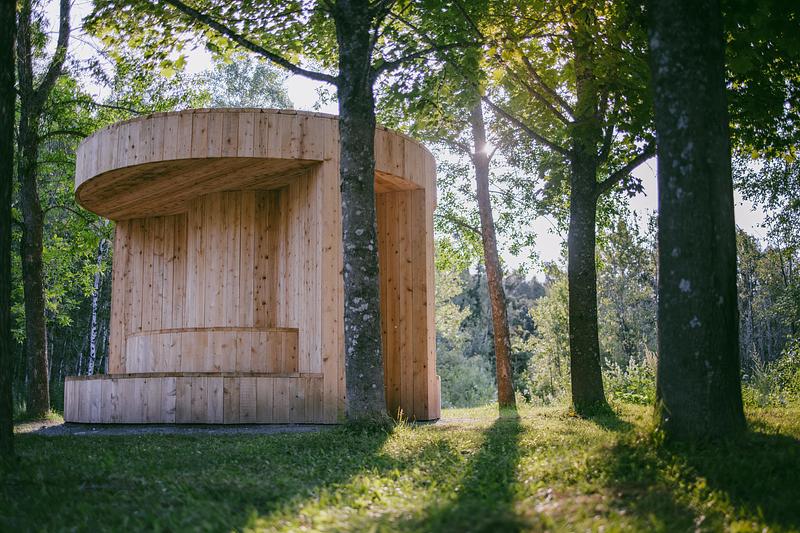
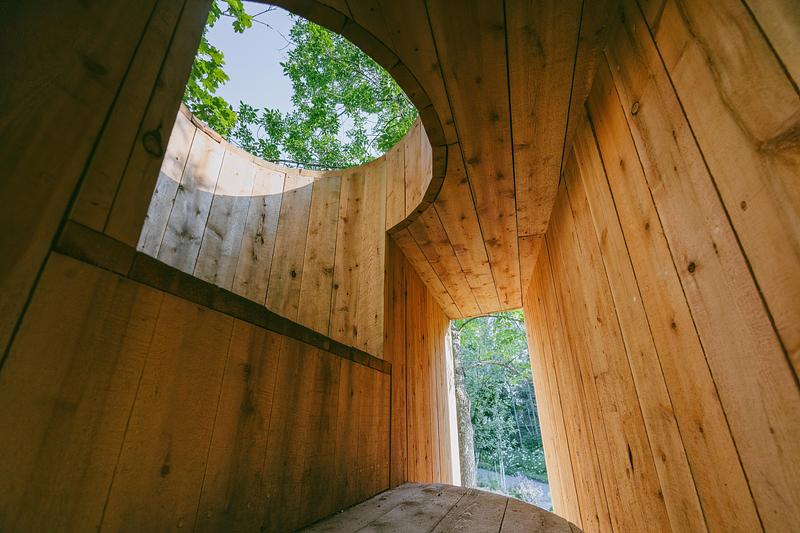
Frame is an architectural reflection about how we perceive both our environment and ourselves in a given situation. The sculptural object provides curated views and different levels of intimacy to show the complexity of spatial experience and to highlight our viewpoint as the basis of our perception. By inviting us to discover what is not visible, Frame facilitates experimentation with architectural space, as well as body and environmental awareness.
Ulli Heckmann is a German architect based in Rotterdam. He studied architecture in Bordeaux and in Darmstadt, from which he graduated in 2006. After working for several years in Germany and France, he launched his own architecture and design studio in Paris in 2013. One of the first projects he worked on was an installation for the International Garden Festival of Chaumont-sur-Loire. In 2020, he moved his practice to the Netherlands. Today he works on various design and architecture projects across Europe, ranging from furniture and interior design to residential projects and architectural installations.
Etienne Lapleau | France
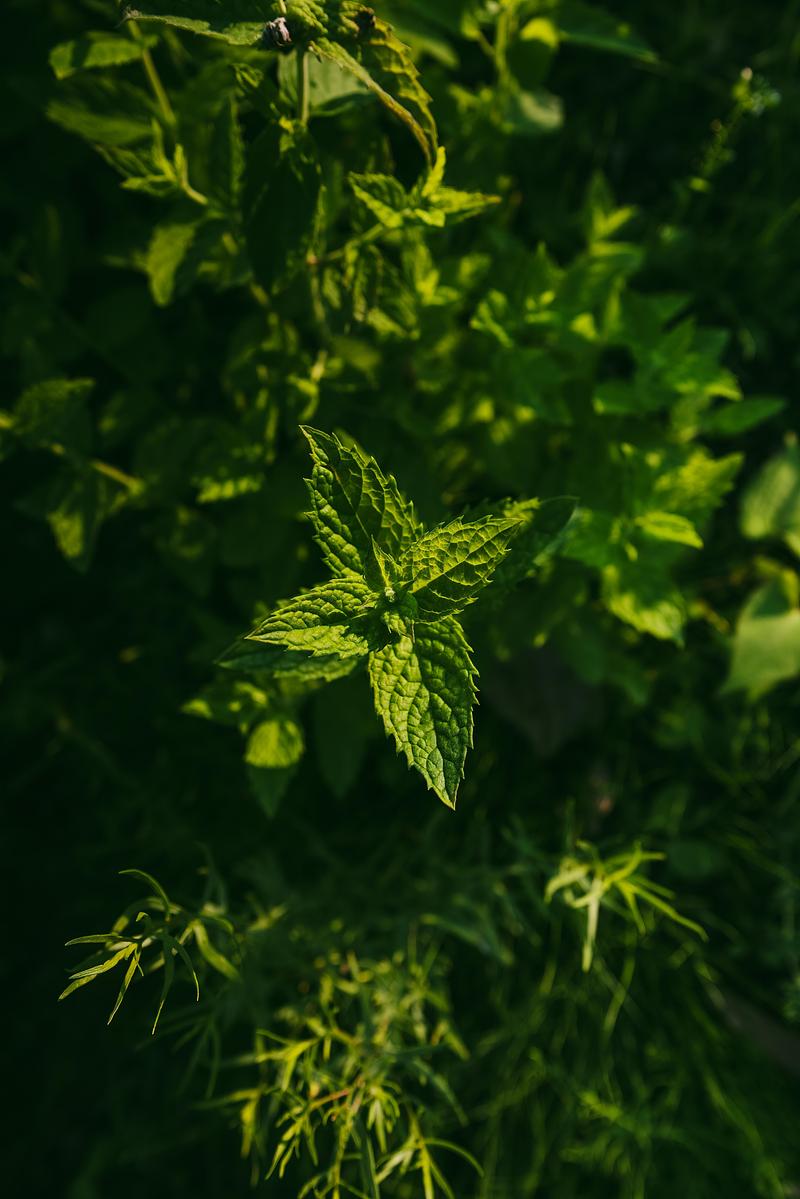
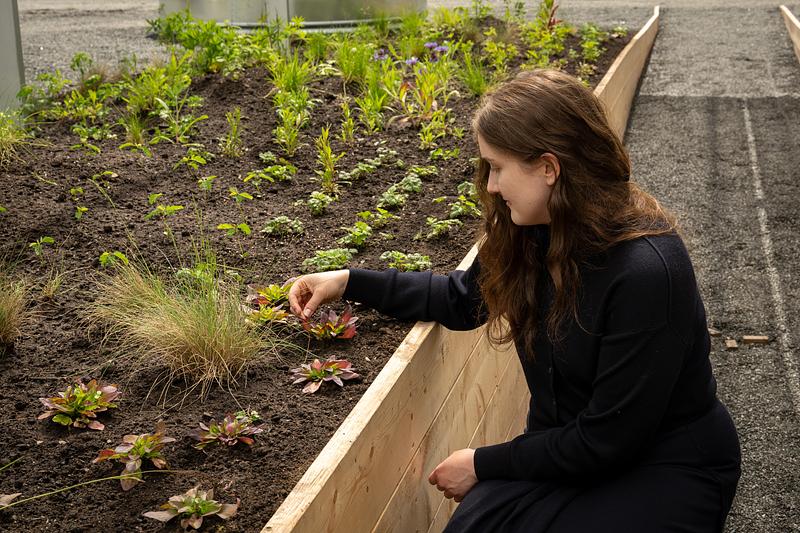
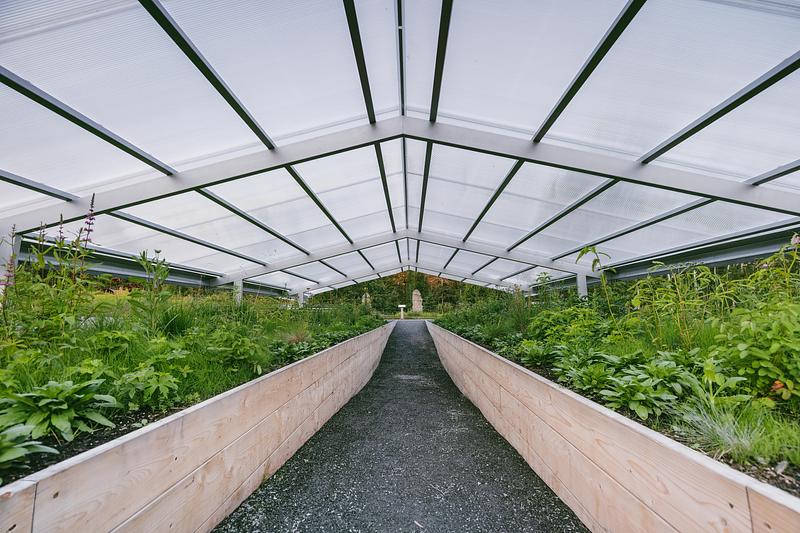
Like a sensitive map, Mentho-artemision reconstructs, in a confined space, contrasting sensations usually perceived at landscape scale. By bringing together the distinct environments in which mint and mugwort grow, the garden condenses sensory perceptions: visitors feel the transitions from dry to humid through sight, smell, and touch.
Etienne Lapleau is a landscape designer and gardener. His work falls within a culture of the botanist-gardener, with borrowings from the concepts of wild gardens and backyard habitats. He collaborates with different teams on park-creation and -restoration projects by contributing his skills in designing plantings. His creations, inspired by botany and observation of natural environments, challenge our relationship with plants through the experience of the garden.
Measured Architecture + Tamotsu Tongu, Kumpei Wakino | British Columbia, Canada
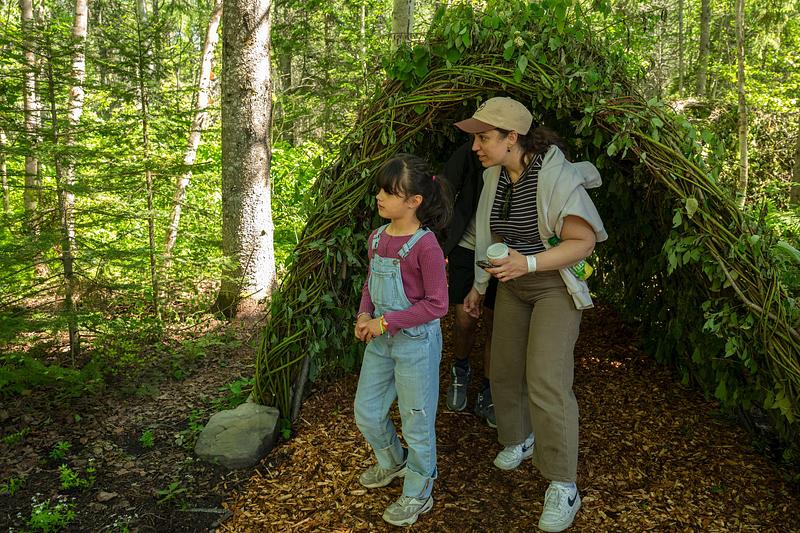
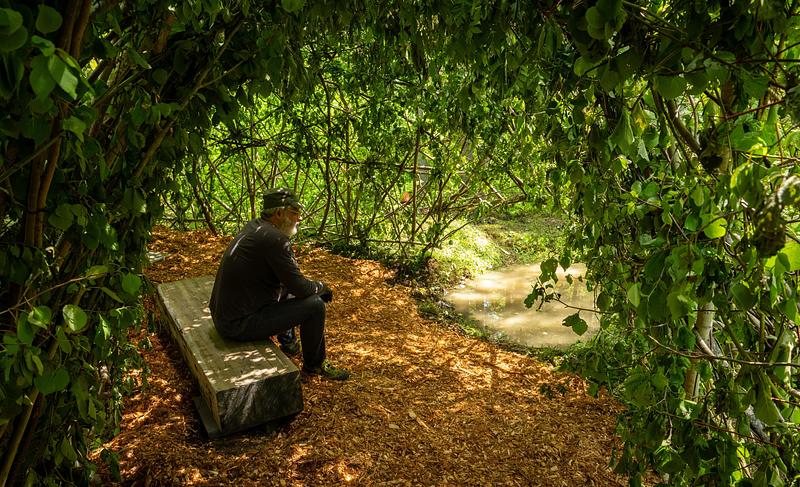
Every day we navigate digital space without question and act as if the screen itself were reality. Yet our perception of the world and our sense of being are shaped by intangible data. Tainai-Meguri envisions this digital space as a cave made tangible by a sweeping arbour. A convergence of nature, water, and light brings about a return to origin – a meditative journey in which inner and outer worlds dissolve.
This project brings together three celebrated designers from British Columbia, Canada: architect Clinton Cuddington (Measured Architecture), who leads the team; master landscape designer Tamotsu Tongu (Toko Garden Design); and landscape designer Kumpei Wakino (Kunon Landscape & Design). Tongu and Wakino represent two generations of landscape designers who have brought their knowledge, skills, and craftsmanship from Japan to Canada to create gardens that adapt the sensibilities of Japanese landscape tradition to the context and climate of Canada’s West Coast. Cuddington’s wealth of experience creating award-winning buildings within these landscapes has readied him to convene and support this interdisciplinary design team.
Ellen Harris | United States
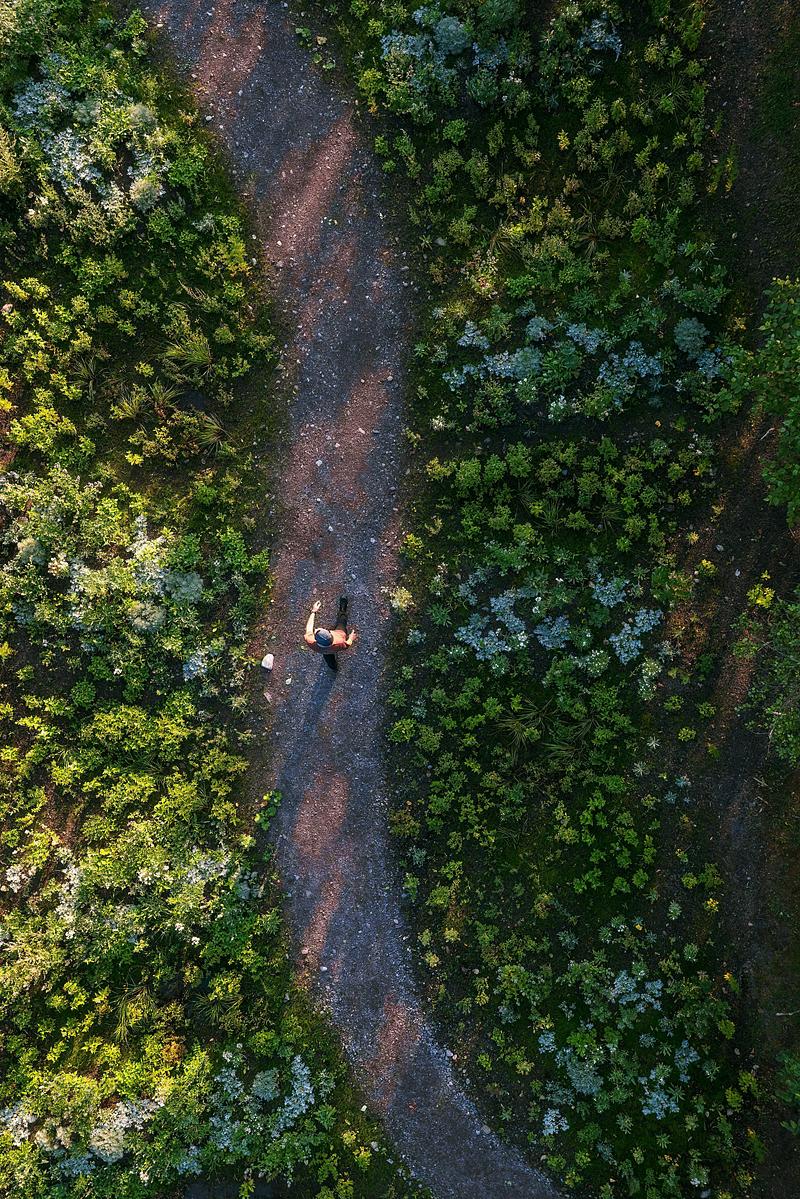
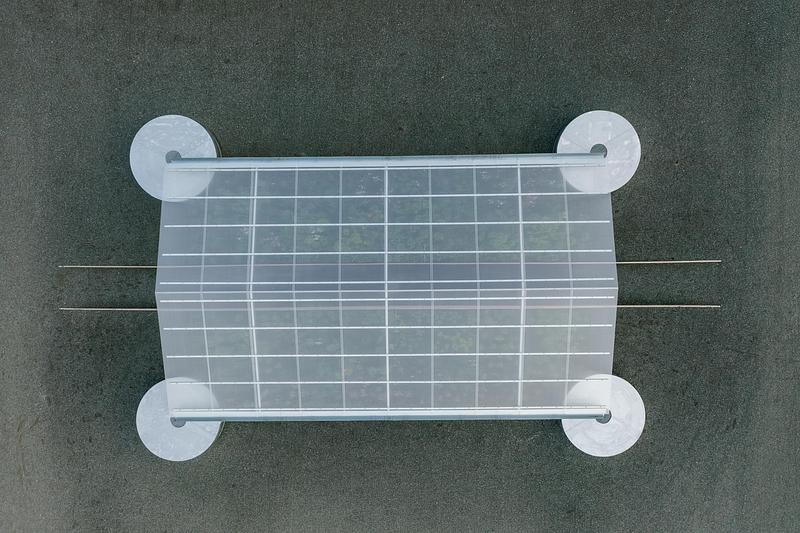
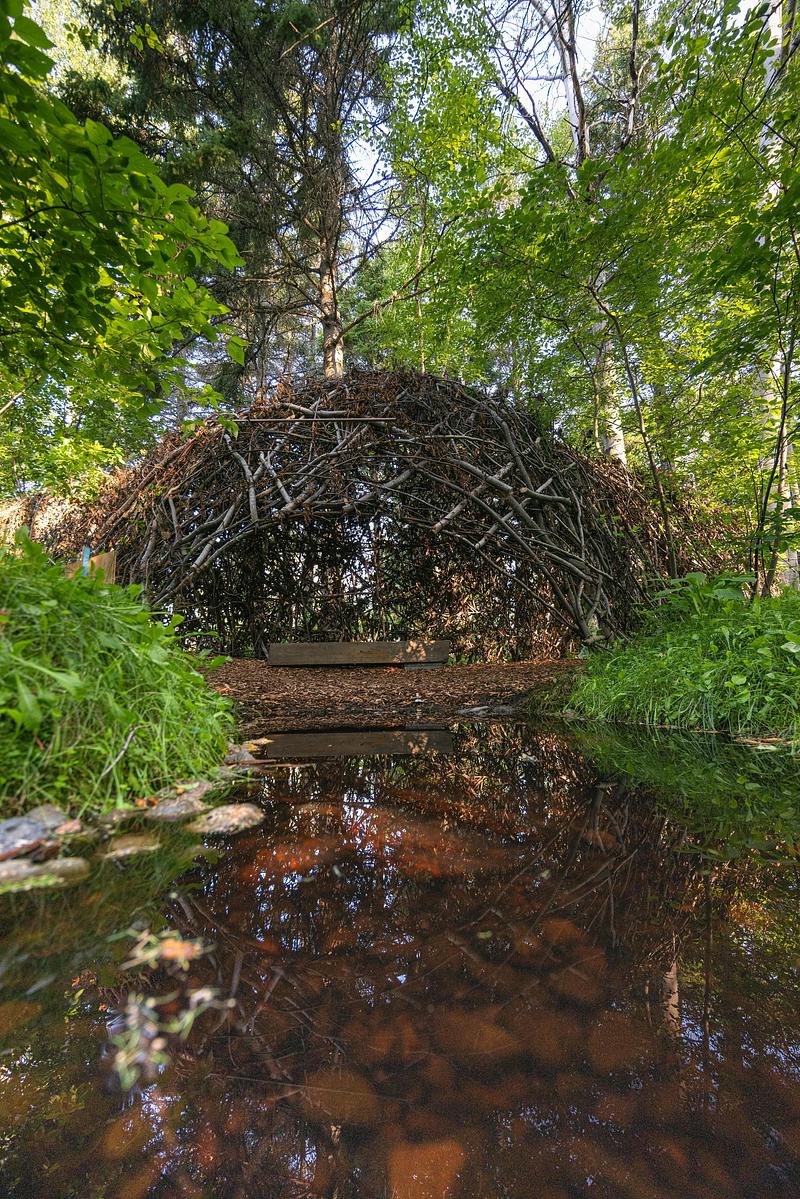
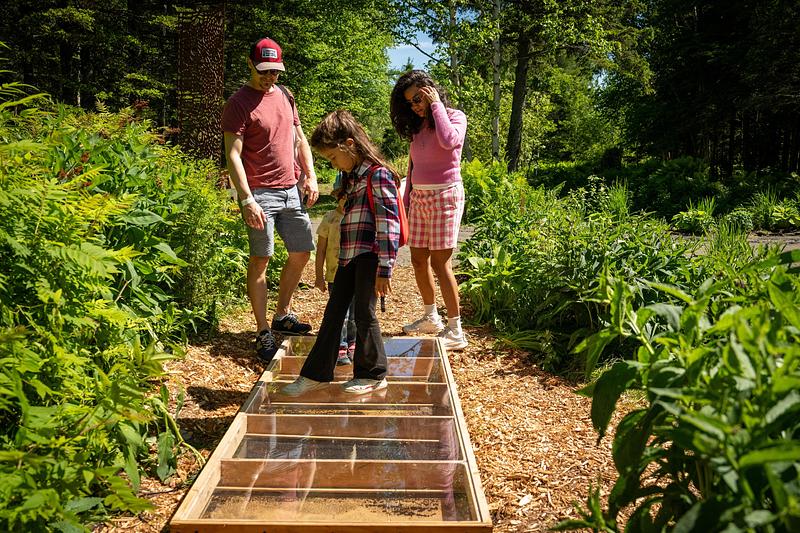
The anthropologist and political scientist James C. Scott identified the cartographic “view from above” as the position from which large-scale entities such as modern states and multinational corporations impose conditions of legibility on the subjects and territories under their control. Worm’s Eye imagines a “camouflage architecture” that frustrates this kind of top-down legibility and encourages visitors to have a different understanding of place: intimate, local, and necessarily partial.
Ellen Harris is a Luxembourg-born American architectural designer living and working in Chicago, Illinois. She holds a B.A. in architecture from Clemson University and a master’s degree from the Princeton University School of Architecture. For her graduate research, she investigated the impact of federal policies on rural communities in the United States throughout the twentieth century, particularly as they related to rural school infrastructure. She currently works as a designer in the Chicago office of Skidmore, Owings and Merrill.
Special Project: Pousses de son
Tom Jacques | Québec, Canada
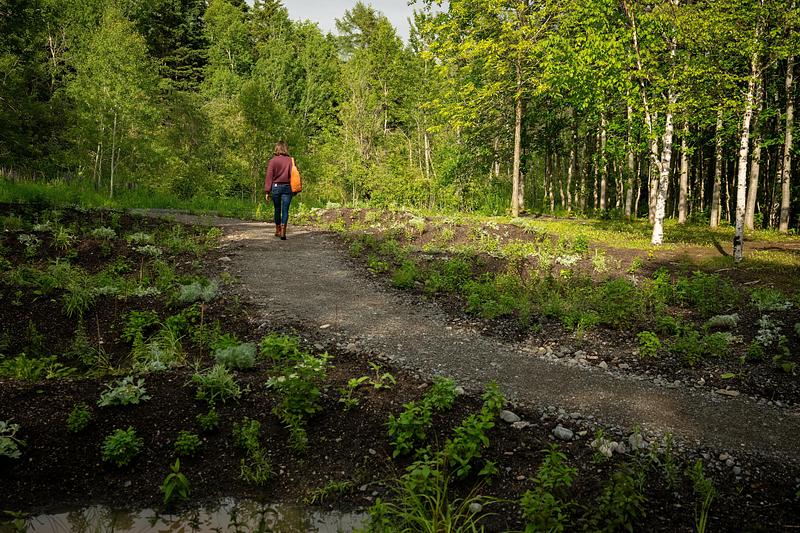
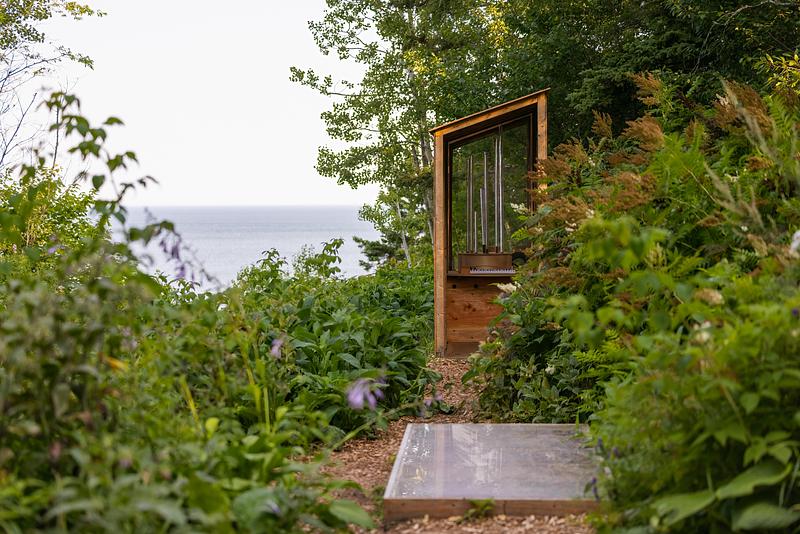
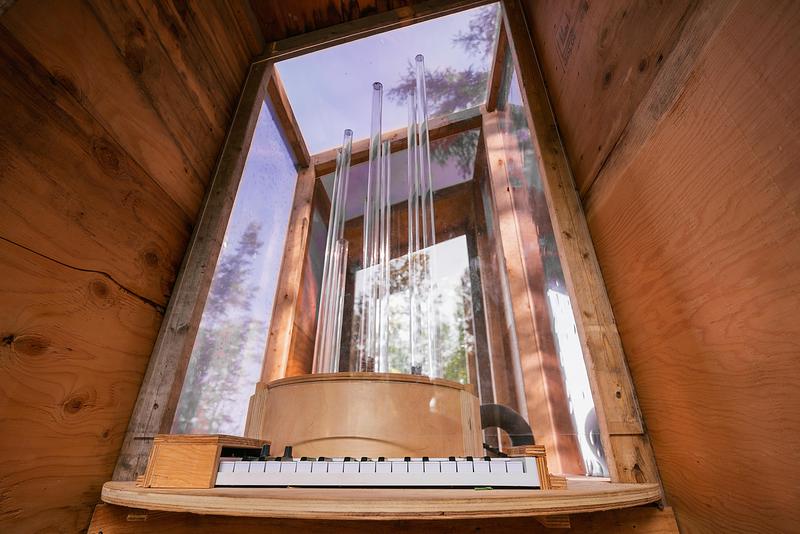
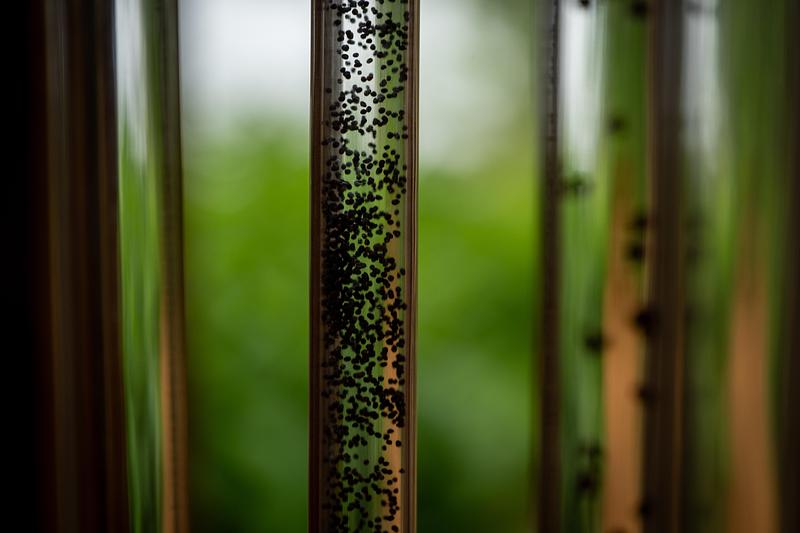
Sound and vibration surround us constantly, yet for many, they play a far less significant role than the visual. In cinema, the soundtrack generally serves the image. In many musical genres, certain noises are avoided—or even ignored—and are not considered integral elements of the music, despite being audible during a performance. Here, this experimental garden places sound at the heart of the experience. Through the acoustics of its environment, it seeks to place the visitor in a listening mode, gently drawing them into the world of the attentive walker and shaping their perception of the surrounding landscape.
Sound artist originally from and based in Rimouski (Lower St. Lawrence, Québec), Tom Jacques is recognized for his work as a composer of contemporary and experimental music, an improviser, and as a performer in several ensembles, including Bascaille, T.J.J.H., and the GGRIL. His practice also includes a significant focus on experimental instrument-making, through which he designs sound devices and transforms conventional musical instruments for new sonic possibilities and manipulation. A self-taught sound artist, he nonetheless engages with other disciplines. His sound devices are strongly influenced by his musical practice, initially centered on an eccentric and high-quality exploration of sound, which then develops into various forms: performances, compositions, and installations. The artist wishes to thank the partners of the Programme de partenariat territorial Bas-Saint-Laurent.
The Visual Identity
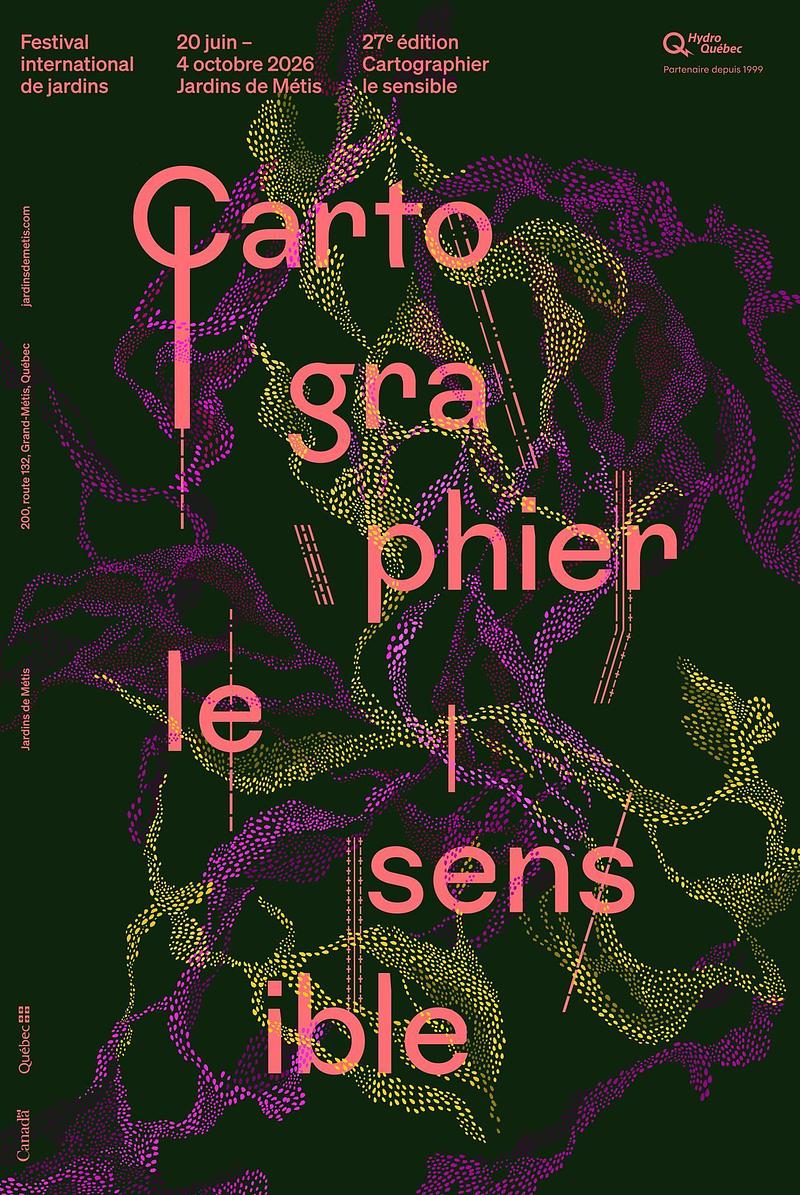
The visual identity for the current thematic cycle (2025-27) has been entrusted to bureau60a (Québec, Canada), an independent design studio. The themes of Borders and Mapping Sensitivity proved to be particularly fertile for Simon Guibord and Rachel Monnier. On the one hand, they drew inspiration from cartographic sciences, namely modern cartographic language and symbols. On the other hand, they favoured a biocentric approach, choosing to allude to the dispersion and deposition of pollen in their design. Meaningful, poetic, and subversive, bureau60a’s graphic proposal transcends territorial and temporal barriers.
About the International Garden Festival
The International Garden Festival is recognized as one of the most important events of its kind in North America and one of the world’s leading platforms for creation and research in architecture and landscape design. Since its inception in 2000, nearly 200 contemporary gardens have been exhibited in situ in Grand-Métis, as well as at off-site locations in Canada and abroad. The Festival takes place on a site adjacent to the historic gardens, creating a dialogue between history and modernity, and between conservation, tradition and innovation. Each year, the event presents some 20 new creations by approximately 70 architects, landscape architects and designers from a range of disciplines. Over the years, the International Garden Festival has presented work by some of the most influential designers of their generation, including Agence Spatiale, Appareil Architecture, Aranda\Lasch, Atelier Le Balto, Diana Balmori, Pierre Bélanger, BGL, Adrian Blackwell + Jane Hutton, Christopher Bradley-Hole, CCxA, Claude Cormier, Coryn Kempster + Julia Jamrozik, Bernard Lassus, NIPPAYSAGE, Michael Van Valkenburgh Associates, Ken Smith, Snøhetta, Stoss Landscape Urbanism, Studio Bryan Hanes - DIGSAU, Taylor Cullity Lethlean, Pierre Thibault, Topotek 1, Charles Waldheim, and Mason White + Lola Sheppard. Since 2019, the Festival has also operated La Maison d’Ariane, located in Métis-sur-Mer, and its artist residency program. The Festival acknowledges the support of the Canada Council for the Arts, Canadian Heritage, Conseil des arts et des lettres du Québec, as well as friends of the Festival and donors.
About Les Jardins de Métis / Reford Gardens
A National Historic Site of Canada and a Quebec heritage site, Les Jardins de Métis / Reford Gardens is a must-see destination for anyone visiting the Gaspé Peninsula and the Lower St. Lawrence region. A cultural space and iconic landscape, the Gardens offer visitors inspiring and restorative experiences that foster a deep connection with nature. Located at the confluence of the St. Lawrence and Mitis rivers, the Gardens were designed by horticulturist Elsie Reford between 1926 and 1958. Recognized as one of North America’s most renowned gardens and ranked among the world’s 150 great gardens, 2026 marks the beginning of the centennial celebration of Les Jardins de Métis / Reford Gardens. Hydro-Québec has been a partner of Les Jardins de Métis / Reford Gardens since 1999.
For more information
Media contact
- v2com pr + newswire
- Emadou Payette, Media Relations
- epayette@v2com-newswire.com
- 1.514.965.6182
Attachments
Terms and conditions
For immediate release
All photos must be published with proper credit. Please reference v2com as the source whenever possible. We always appreciate receiving PDF copies of your articles.
Very High-resolution image : 20.0 x 13.33 @ 300dpi ~ 14 MB
Very High-resolution image : 18.21 x 12.13 @ 300dpi ~ 31 MB
Very High-resolution image : 17.94 x 26.9 @ 300dpi ~ 60 MB
Very High-resolution image : 27.31 x 18.21 @ 300dpi ~ 34 MB

Very High-resolution image : 20.0 x 13.33 @ 300dpi ~ 13 MB
High-resolution image : 10.64 x 15.95 @ 300dpi ~ 26 MB
Very High-resolution image : 20.0 x 13.33 @ 300dpi ~ 24 MB
Very High-resolution image : 18.21 x 27.31 @ 300dpi ~ 21 MB
Very High-resolution image : 20.0 x 13.33 @ 300dpi ~ 14 MB
Very High-resolution image : 26.68 x 17.8 @ 300dpi ~ 50 MB
Very High-resolution image : 24.58 x 16.4 @ 300dpi ~ 45 MB
Very High-resolution image : 20.0 x 13.33 @ 300dpi ~ 16 MB
Very High-resolution image : 18.21 x 12.13 @ 300dpi ~ 22 MB
Very High-resolution image : 25.72 x 17.15 @ 300dpi ~ 28 MB
Very High-resolution image : 26.74 x 17.83 @ 300dpi ~ 48 MB
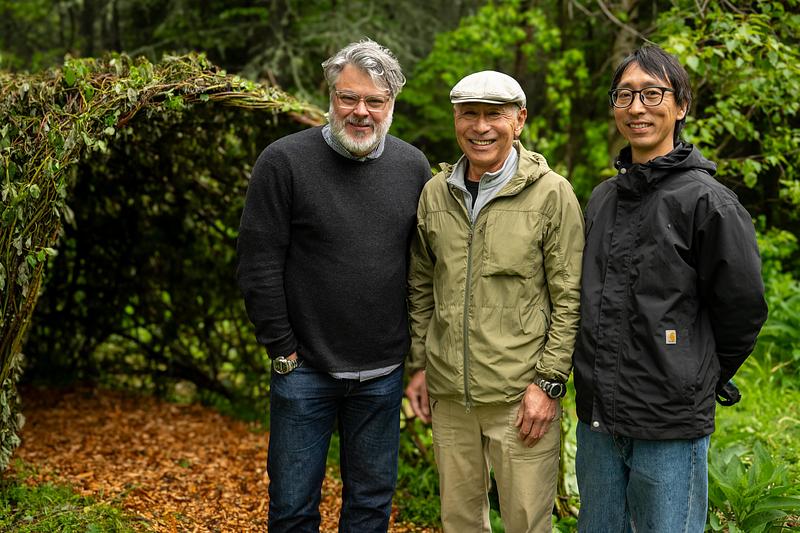
Clinton Cuddington (Measured Architecture), Tamotsu Tongu (Toko Garden Design) & Kumpei Wakino (Kunon Landscape & Design)
Very High-resolution image : 20.0 x 13.33 @ 300dpi ~ 11 MB
Very High-resolution image : 20.0 x 13.33 @ 300dpi ~ 13 MB
Very High-resolution image : 17.64 x 26.45 @ 300dpi ~ 60 MB
Very High-resolution image : 20.0 x 12.19 @ 300dpi ~ 19 MB
Very High-resolution image : 20.0 x 13.33 @ 300dpi ~ 17 MB
Very High-resolution image : 26.53 x 17.69 @ 300dpi ~ 31 MB
Very High-resolution image : 27.31 x 18.21 @ 300dpi ~ 36 MB
Very High-resolution image : 20.0 x 13.33 @ 300dpi ~ 22 MB
Very High-resolution image : 20.0 x 13.33 @ 300dpi ~ 12 MB
Medium-resolution image : 4.57 x 6.83 @ 300dpi ~ 2.5 MB

Advertising
You may also like...
Grand-Métis, Canada, 2025-09-03
2026 Call for Proposals
Festival international de jardins | Jardins de Métis
Los Angeles, United States, 2026-10-21
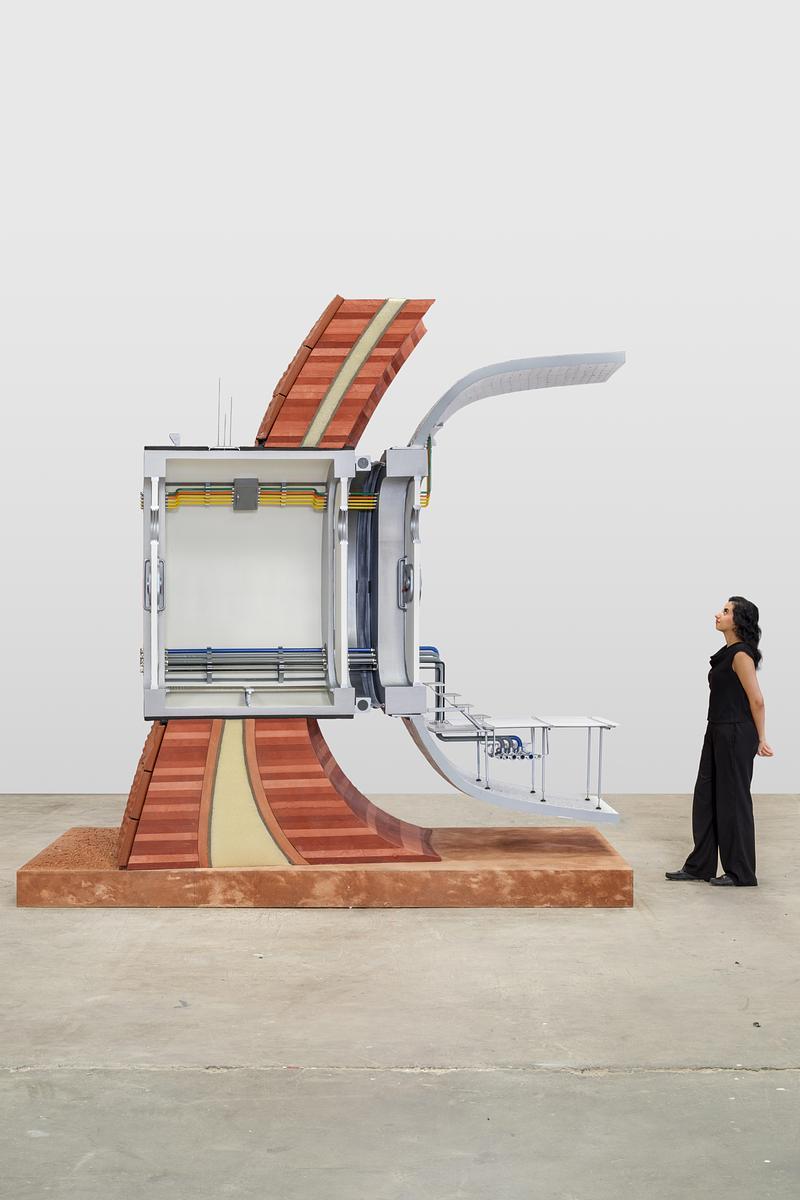
AENARA Realizes a Future Mars Habitat at Powerhouse Parramatta
AENARA
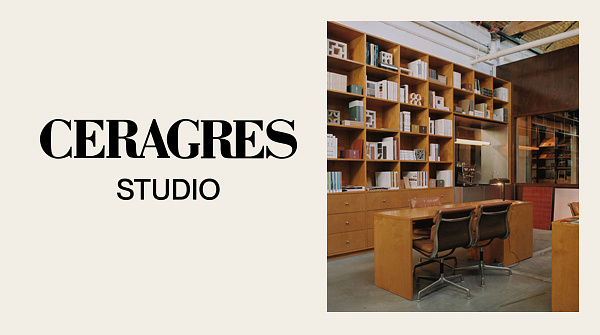
Céragrès Studio: From Concept to Material. A New Destination for Design.
Discover Céragrès Studio: a brand-new space in the heart of Mile-Ex, bringing together materials, furniture, and expertise. Designed as a true resource hub for design and architecture professionals, the Studio offers an evolving material library, a space for exploration, and a network of collaborators dedicated to bringing your projects to life.
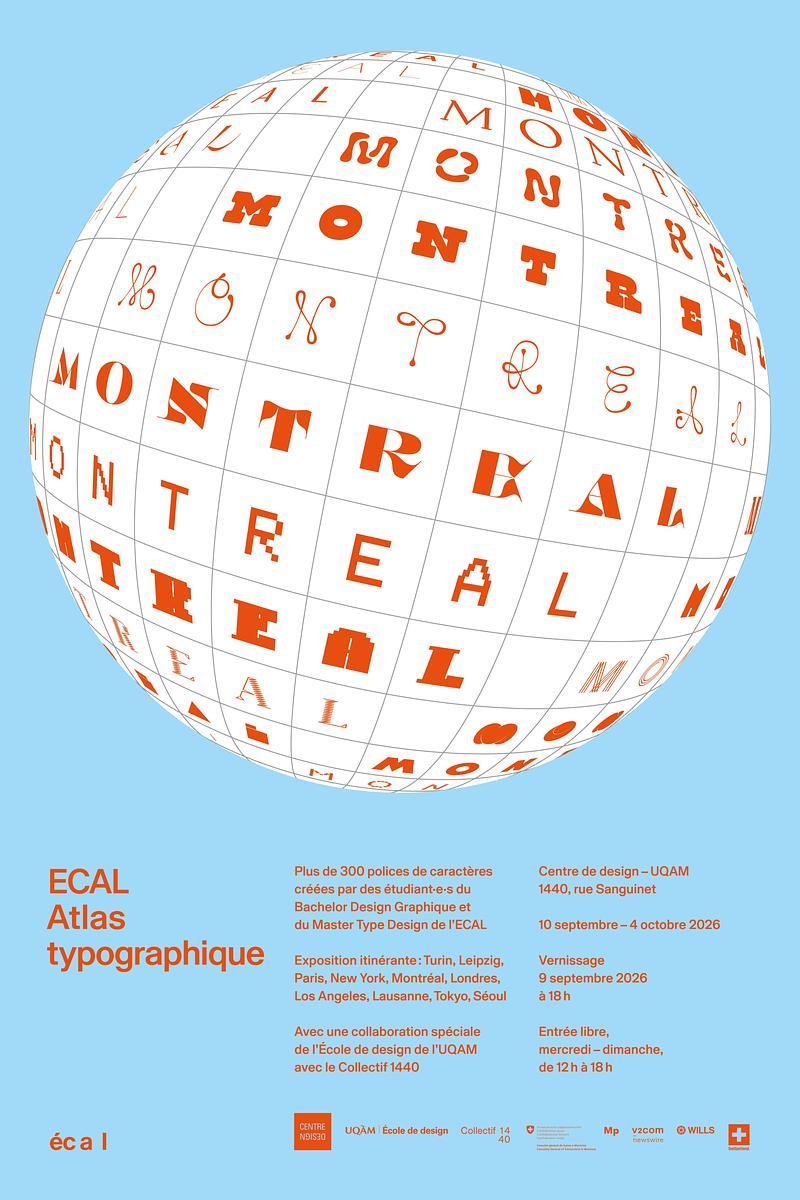
Montreal, Canada, 2026-09-08
UQAM’s Centre de design Presents "ECAL A Typographic Atlas"
Centre de design de l'UQAM
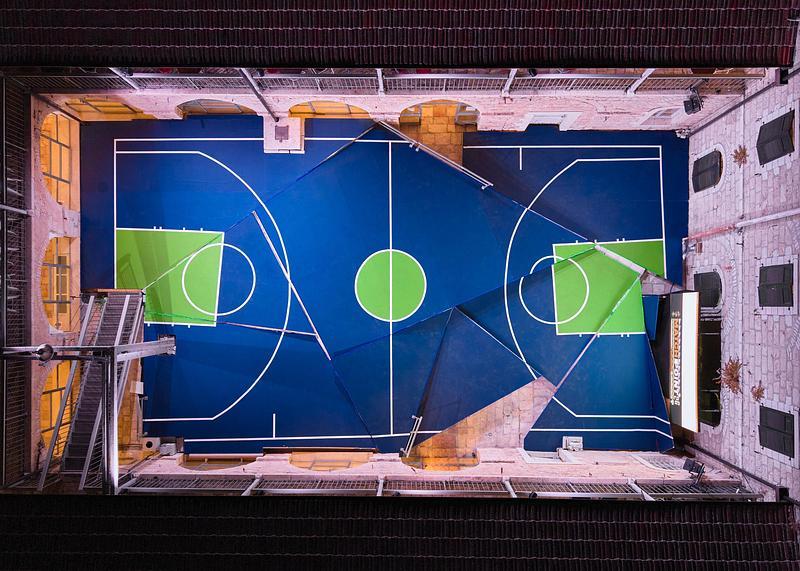
Jerusalem, Israel, 2026-08-18
Jerusalem Design Week 2026 "Match Point" – Exploring Sport Through Contemporary Design
Jerusalem Design Week
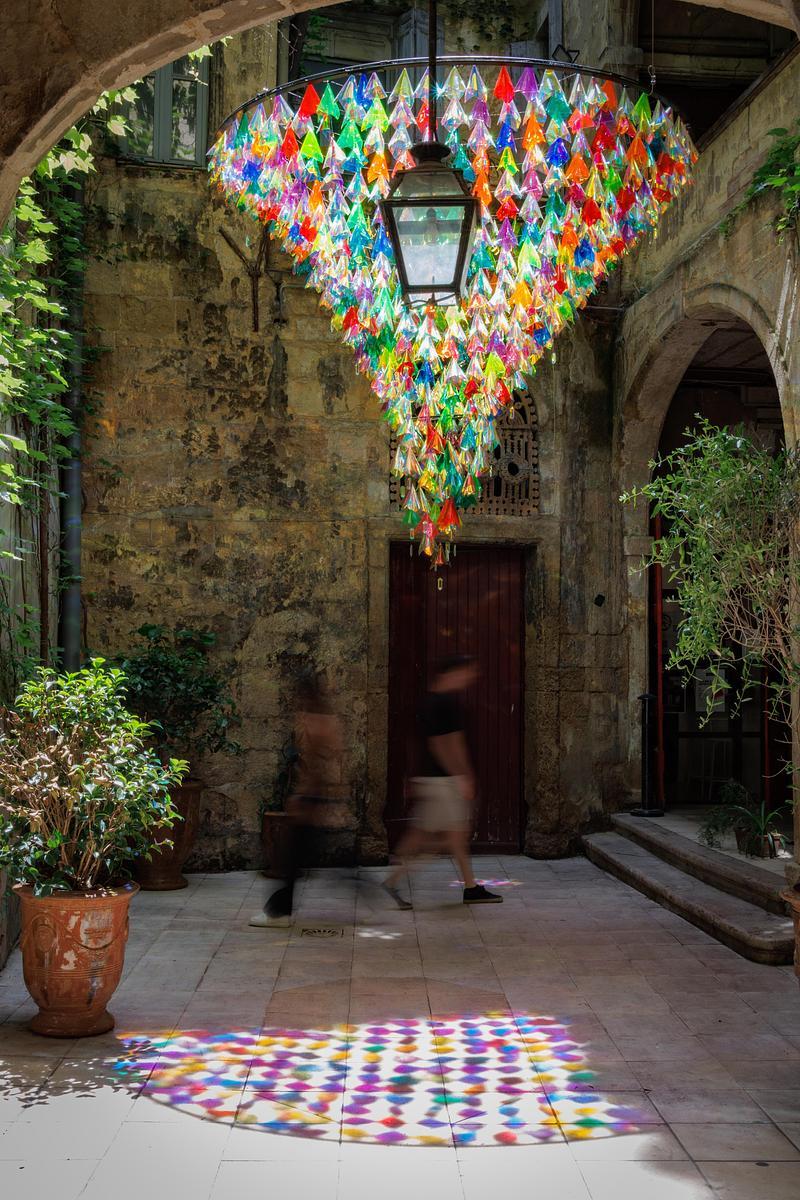
Montpellier, France, 2026-07-30
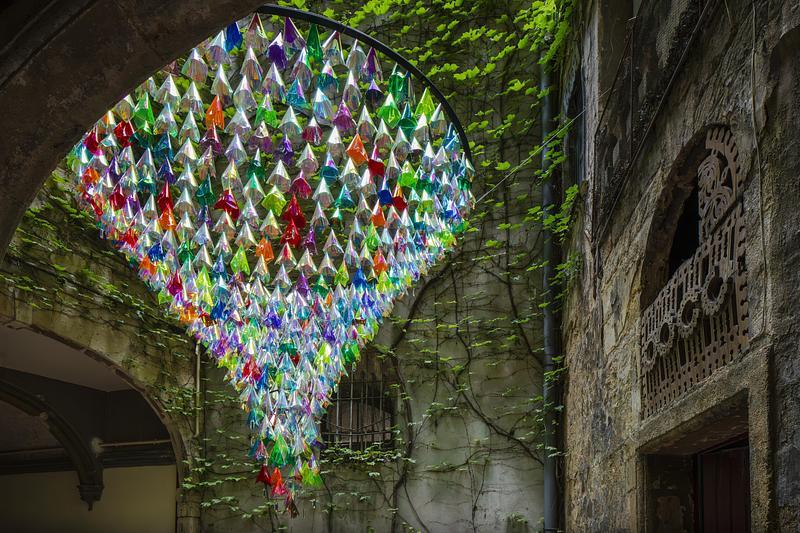
"Panache de Lumière", People's Choice Award winner of the Festival des Architectures Vives 2026
Ateliers A+
Montpellier, France, 2026-07-21
Celebrating 20 Years of the Festival des Architectures Vives in Montpellier
Champ Libre Association
Amsterdam, Netherlands, 2026-07-15
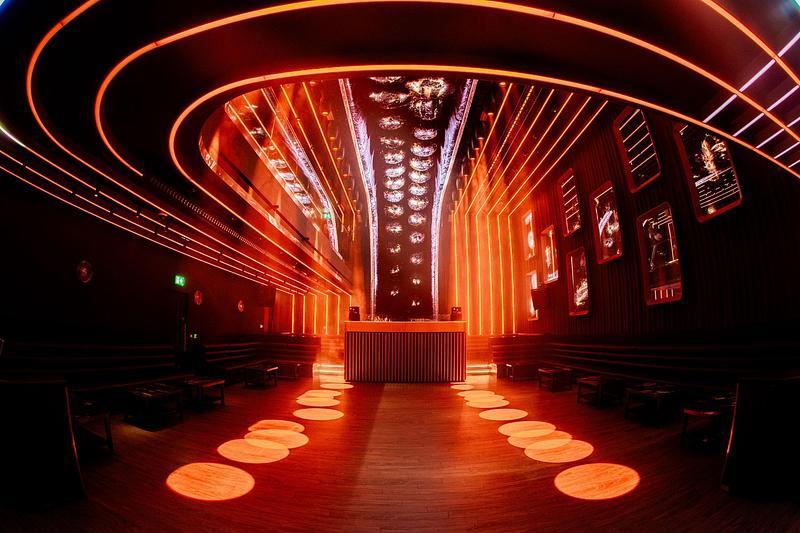
Concrete Unveils 77, an Immersive Nightlife and Event Space Hidden Beneath the Streets of London and the BoTree Hotel
concrete amsterdam
Lugano, Switzerland, 2026-07-02
6ª biennale svizzera del territorio
Istituto Internazionale di Architettura
Montreal, Canada, 2026-05-13
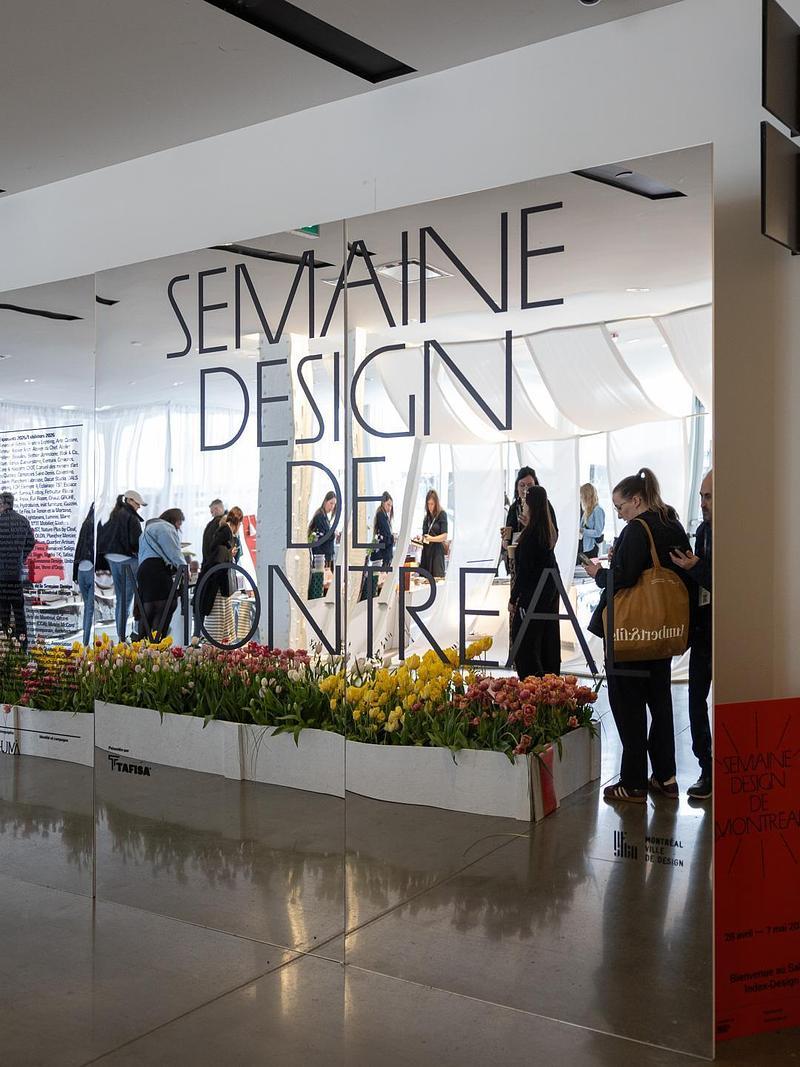
Montréal Design Week Makes a Powerful Debut
Index-Design and Archi-Design QC
Montpellier, France, 2026-04-27